
A global leader in healthcare, Medtronic plc, has completed its acquisition of the French firm Medicrea International, one of the leading spinal implant and instrument suppliers bringing advanced digital tools to the surgery suite.
Medtronic Completes Its Seventh Acquisition of 2020
2 min read Premium comments
#medtronic#medicrea#unidasi
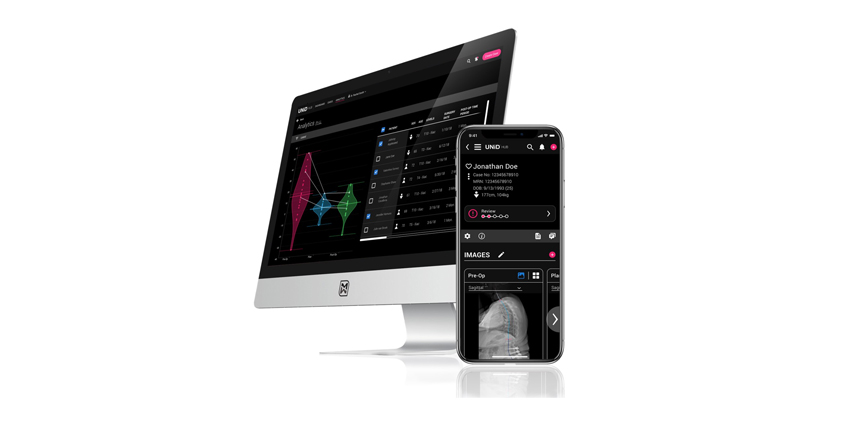
Medicrea has long been at the forefront of advancing spinal surgery through “artificial intelligence (AI), predictive modeling, and patient specific implants.” While the company brings to Medtronic Spine more than 30 CE Marked or 510(k) cleared spinal implant technologies, the UNiD™ platform was at the core of this acquisition.
Medicrea’s UNiD™ ASI (Adaptive Spine Intelligence) platform “uses a database of over 6,000 surgical cases to power algorithms that visualize multiple permutations.” According to the press release, this allows “surgeons to better understand their patient’s alignment before surgery, customize a surgical plan and use a personalized rod bent in the optimal plane to help ensure the goals of the surgery are achieved.”
Jacob Paul, senior vice president and president of the Cranial and Spinal Technologies business at Medtronic, explained the importance of data for spine care to OTW: “The landscape in the spine market is changing; it’s a new game now. It’s not enough to compete on differentiated implants and robotics alone. We all know that data is the new currency in our everyday lives, and the leaders in spine will be determined by those that can harness data to drive better algorithms and outcomes to reduce variability in surgery.”
Paul continued, “Medtronic is leading spine into a new era of artificial intelligence where we combine robotic workflows with the established UNiD brand as we usher in a new wave of personalized medicine delivered to spine surgeons for their patients.”
Medtronic purchased more than 90% of Medicrea and it represents the seventh acquisition Medtronic has completed this year. Medicrea will likely be a key addition to the entire suite of intelligent OR tools that Medtronic Spine has brought to the spine and neurosurgery operating theater. These tools, which are powered by data and machine embedded intelligence and communication capability, include the Stealth Station Navigation suite of systems, the Mazor X robotic assist systems and now, the Medicrea systems.
Medtronic is taking the spine and neurosurgeon into a very interesting and remarkable future.
Medtronic will soon request the execution of a squeeze-out procedure. In France, the squeeze-out procedure allows the majority shareholder to acquire ownership of shares held by minority shareholders. Once complete, Medicrea will become a wholly-owned subsidiary of Medtronic.
For OTW’s initial coverage of the acquisition, see “Medtronic to Acquire Medicrea.”
Author
React:
Discussion
This is a fascinating development. In my practice we've seen similar outcomes with the revised protocol. The key differentiator seems to be patient selection criteria. Has anyone else noticed the correlation with BMI thresholds?
Great point. I'd push back slightly on the conclusion, the sample size in the cited study is too small to draw population-level inferences. That said, the directional signal is compelling and worth a larger RCT.
We implemented a similar approach last year. Early results are promising but we're still gathering 12-month follow-up data. Happy to share our protocol if anyone is interested.
Join the conversation
Orthopedic professionals are discussing this. Sign in and upgrade to read every comment and add your voice.