
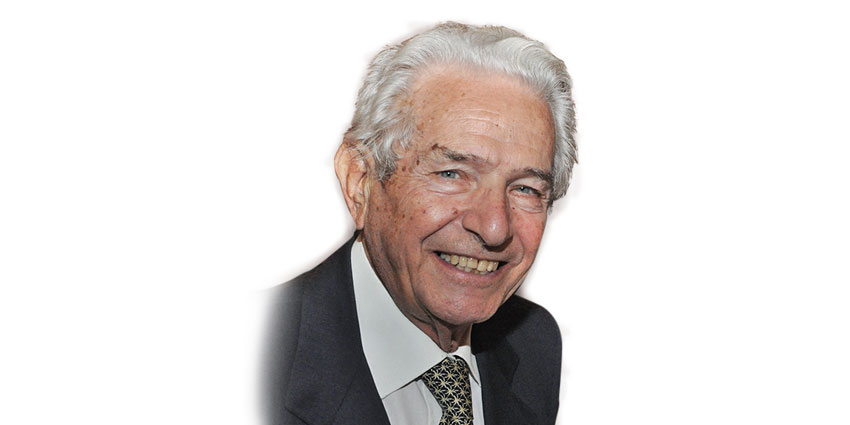
Professor Mario Randelli passed away on November 11, 2020 at the age of 92 years old. He is remembered for his pioneering vision and leadership in shoulder orthopedics.
Mario Randelli, Developer of “Randelli” Anatomical System, Remembered
1 min read Premium comments
Remembrances#mariorandelli#smrshouldersystem
Professor Randelli is perhaps best known for his work with LimaCorporate and the subsequent development began in the early ’90s of the “Randelli” anatomical system.
He was also instrumental in the development of LimaCorporate’s SMR Modular Shoulder System in 2002, At the Clinical Institute Humanitas of Milan at the time, he led a group of shoulder surgeons in support of its development.
“I would like to remember him with his sentence – ‘[…] it is important to have access not only to a single modular solution but to a system which will allow the switch from an implant to the other even during surgery’ – This revolutionary statement led to the development of a revolutionary system that today allows a greater intraoperative versatility and a better result for the patient, who can thus be treated in a very specific way,” said Luigi Ferrari, chief executive officer of LimaCorporate.
Professor Randelli performed over 20,000 orthopedic and trauma surgeries. He was also the author of over 90 publications.
A strong leader in many ways, he was the president of the Italian Society of Orthopedics and Traumatology, founder and president of the Italian Shoulder and Elbow Society and the European Society of Surgery of the Shoulder and the Elbow.
“The world of orthopedics is now losing one of its pillars. I am very proud to say Prof. Randelli has been at our side in the development of one our most successful systems. His pioneering vision and his approach to innovation will continue to be a source of inspiration for all of us,” said Ferrari.
LimaCorporate, headquartered in Italy, is a global medical device company that specializes in reconstructive and custom-made orthopedic solutions for surgeons.
Author
React:
Discussion
This is a fascinating development. In my practice we've seen similar outcomes with the revised protocol. The key differentiator seems to be patient selection criteria. Has anyone else noticed the correlation with BMI thresholds?
Great point. I'd push back slightly on the conclusion, the sample size in the cited study is too small to draw population-level inferences. That said, the directional signal is compelling and worth a larger RCT.
We implemented a similar approach last year. Early results are promising but we're still gathering 12-month follow-up data. Happy to share our protocol if anyone is interested.
Join the conversation
Orthopedic professionals are discussing this. Sign in and upgrade to read every comment and add your voice.