
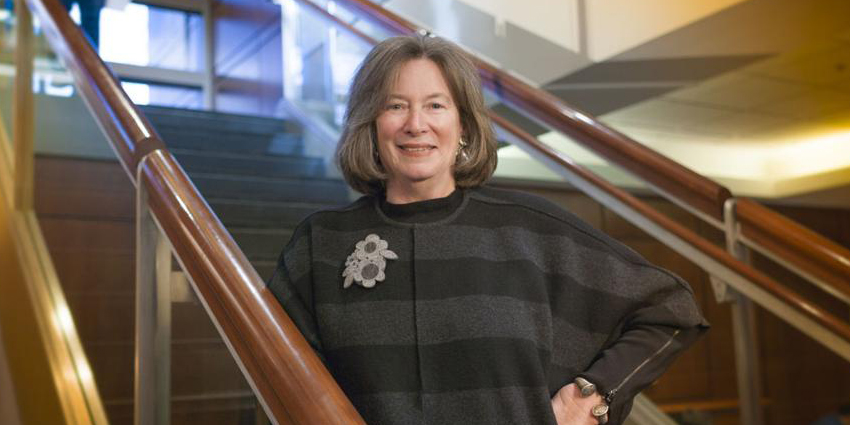
Barbara D. Boyan, Ph.D., the Alice T. and William H. Goodwin, Jr. Dean of Engineering at the Virginia Commonwealth University (VCU), has been honored with the Henry Farfan Award from the North American Spine Society (NASS). The award recognizes outstanding contributions in spine related basic science research.
Barbara D. Boyan, Ph.D. Honored with NASS’ Henry Farfan Award
3 min read Premium comments
#nass#henryfarfanaward#barbaraboyan
Dr. Boyan, also a professor of biomedical engineering, with affiliate appointments in numerous disciplines, including orthopedics, has done work that laid the groundwork for expanding knowledge of the interactions between spine implant materials, surfaces and bone physiology.
Well known for her research on the interaction of osteoblast lineage cells with biomaterials used in spine for interbody fusions, Dr. Boyan has been instrumental in advancing the understanding of the underlying concepts in bone biology and how materials’ surface properties impact osteogenesis during fusion.
The author of more than 500 peer reviewed papers, Dr. Boyan holds 23 U.S. patents and has founded a number of biomedical technology companies. She told OTW, “When I was Vice Chair of Orthopedics at the University of Texas Health Science Center I was director a National Science Foundation (NSF) Industry University Cooperative Research Center that focused on how cells are regulated in health and disease. One of the members was a Swiss company that wanted a rapid screening assay to determine how cells and tissues respond to materials used in dentistry and orthopaedics. They were successful and found an assay for determining the optimal surface to put on metal implants that would get the cells to do what we wanted, which was to support bone formation.”
Through that, says Dr. Boyan, they discovered a substantial amount of information about how bone marrow stromal cells (MSCs) recognize physical structures. “Using funding from the National Institutes of Health, we went on to design a specific surface that would allow us to obtain specific outcomes and to understand the underlying mechanisms involved in the process. We then began working with Titan Spine LLC (now Medtronic Spine), who were interested in determining if the surface on their interbody fusion device was osteogenic (it was) and if it could be modified to be even more effective.”
“Based on our belief that MSCs are smart and know where they are in terms of the chemical and physical properties of their substrate, we worked with Titan Spine to design and test surface modifications on the titanium-aluminum-vanadium alloy device.”
“We identified specific biomarkers to tell us where we were making progress toward good bone formation. One of our most exciting observations was that MSCs on the surface produce factors that tell MSCs not on the surface to become bone cells. Also, the cells on the surface tell the cells in the immune system to set up a pro-healing environment instead of a pro-inflammatory environment.”
“One of the factors that the cells on the surface make is BMP2 [bone morphogenetic protein]. If we block the ability of cells on the surface or in the peri-implant environment to respond to BMP2 produced by the surface MSCs, the osteogenic effect of the surface is lost. This points out the importance of the surface-dependent production of this growth factor to the overall bone formation that is needed to stabilize the implant. This research, slated for an upcoming edition of the Journal of Orthopaedic Research, found that the cells are producing a mix of factors that create a pro-osteogenic environment.”
A true believer in her work, Dr. Boyan has undergone surgery involving an implant with this surface. “The healing was incredibly fast with almost no pain.”
Boyan was nominated for the award by Paul J. Slosar, M.D., and Gunnar Andersson, M.D., Ph.D., retired professor and chairman emeritus of the Department of Orthopedic Surgery at Rush University Medical Center in Chicago, Illinois.
Dr. Slosar stated, “I nominated Dr. Boyan because she has an amazing talent for working in harmony with surgeons to find solutions that have clinical relevance yet require strong scientific research in order to both improve patient outcomes and change surgeon behavior. Her research is tangible to us surgeons and our patients, and it is remarkable to see such direct results. The caliber and volume of research coming from her lab is among the top in the world.”
Author
React:
Discussion
This is a fascinating development. In my practice we've seen similar outcomes with the revised protocol. The key differentiator seems to be patient selection criteria. Has anyone else noticed the correlation with BMI thresholds?
Great point. I'd push back slightly on the conclusion, the sample size in the cited study is too small to draw population-level inferences. That said, the directional signal is compelling and worth a larger RCT.
We implemented a similar approach last year. Early results are promising but we're still gathering 12-month follow-up data. Happy to share our protocol if anyone is interested.
Join the conversation
Orthopedic professionals are discussing this. Sign in and upgrade to read every comment and add your voice.