
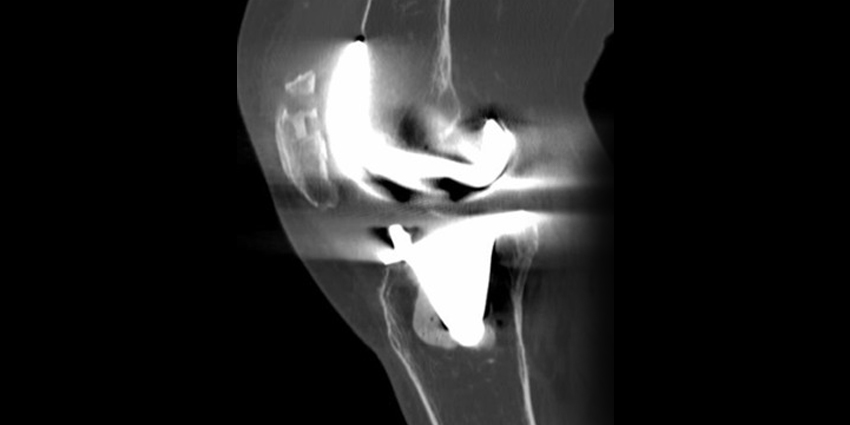
Using 682 radiographs (424 patients), researchers from Cleveland Clinic set out to see if artificial intelligence (AI) could help identify the manufacturer and model of implants for patients requiring revision surgery.
With 99% Accuracy, AI Identifies Model and Mfg In-Vivo
1 min read Premium comments
#totalkneearthroplasty#artificialintelligenceSecondary#clevelandclinic
Their work, “Artificial Intelligence to Identify Arthroplasty Implants from Radiographs of the Knee,” appears in the October 16, 2020 edition of the Journal of Arthroplasty. (https://www.arthroplastyjournal.org/article/S0883-5403(20)31119-0/fulltext)
Co-author Prem Ramkumar, M.D., M.B.A. told OTW, “As more total joint replacements go into patients from various industry manufacturers of different makes and models, it can be a challenge to identify implants for patients requiring revision surgery.”
“While the standard of care is obtaining operative reports from the primary surgeon or crowdsourcing knowledge from experienced surgeons and industry representatives, this can be a time-intensive and costly process that serves as the bottleneck in access to revision arthroplasty care. This algorithm is a proof of concept that AI can be used to automatically and accurately identify implants from plain X-rays of the joint.”
OTW asked Dr. Ramkumar how his team trained and validated the algorithm and he explained, “We used radiographs from our quaternary referral institutions as a testing and training set for both internal and external validation. Our Orthopaedic Machine Learning Lab at the Cleveland Clinic performed the work using our supercomputer to analyze and process the imaging data. Performance was evaluated by calculating the area under the receiver-operating characteristic curve (AUC), sensitivity, specificity, and accuracy, when compared with a reference standard of implant model from operative reports.”
99% Accuracy, 95% Sensitivity, 99% Specificity
“After 1,000 training epochs by the deep-learning algorithm, the model discriminated 9 implant models with an AUC of 0.99, accuracy 99%, sensitivity of 95%, and specificity of 99%,” said Dr. Ramkumar.
“The iterative capability of the algorithm allows for scalable expansion of implant discriminations and represents an opportunity in delivering cost-effective care for revision arthroplasty,” wrote the authors.
“With brilliant technology like AI,” said Dr. Ramkumar to OTW, “we hope to make this software available to all institutions and surgeons performing arthroplasty such that implant identification as a barrier to care access becomes a thing of the past.”
Author
React:
Discussion
This is a fascinating development. In my practice we've seen similar outcomes with the revised protocol. The key differentiator seems to be patient selection criteria. Has anyone else noticed the correlation with BMI thresholds?
Great point. I'd push back slightly on the conclusion, the sample size in the cited study is too small to draw population-level inferences. That said, the directional signal is compelling and worth a larger RCT.
We implemented a similar approach last year. Early results are promising but we're still gathering 12-month follow-up data. Happy to share our protocol if anyone is interested.
Join the conversation
Orthopedic professionals are discussing this. Sign in and upgrade to read every comment and add your voice.