
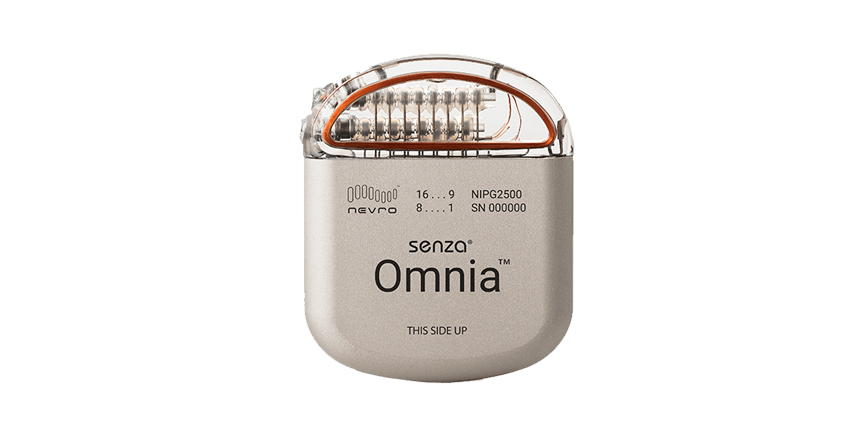
Redwood City, California based spinal cord stimulator company, Nevro Corp., announced that it plans to start manufacturing in Costa Rica. Clearly, the company sees growth on the horizon for its Senza implantable spinal cord stimulation product line.
Nevro Expands Spine Cord Stim Mfg to Costa Rica
2 min read Premium comments
#spinalcordstimulation#neuromodulation#nevrocorpSecondary
The company plans to spend about $21 million to outfit the 35,000 square foot plant between 2020-2023—for which Nevro signed a 10-year lease. The company hopes to validate the facility by 2022, and to begin manufacturing soon thereafter.
Nevro is a relative newcomer to the implantable spinal cord stimulation (SCS) market. It was founded in 2006, many years after traditional implantable spinal cord stimulation was introduced and developed by companies such as Medtronic, Boston Scientific, and St Jude (acquired by Abbott in 2017).
Nevro developed a modality to deliver pain relief that overcomes the loss of pain relief over time that is common with traditional, or tonic stimulators. The company’s HF10, which is available in the Senza and Senza II stimulators provides high-frequency (10kHz) stimulation compared to stimulation in the 20-120 Hz range.
Other companies have developed other stimulation modalities to overcome the issue, such as burst stimulation. Nevro’s patent actually covers a wide range of frequencies from 1.5 kHz to 100 kHz, effectively blocking any other company from using a useable high-frequency program in their SCS. The patent has even been upheld when Nevro challenged Boston Scientific’s use of high-frequency stimulation.
Nevro has presented data from clinical trials of the Senza device at conferences over the last few years that shows superior pain relief over other stimulation modalities, and has done research into how exactly HF10 provides relief. Studies have also shown significant reduction in the use of opioids for patients receiving the device.
Company Chairman, CEO, and President D. Keith Grossman explained the move in a press release. “Nevro has been successful through its early years with outsourced manufacturing and highly supportive supply chain partners. As part of our growth plans moving forward, Nevro is establishing insourced global manufacturing for its pipeline of future products to ensure that we have the most efficient cost structure and flexible capacity, while maintaining the highest level of quality control as we scale.”
Author
React:
Discussion
This is a fascinating development. In my practice we've seen similar outcomes with the revised protocol. The key differentiator seems to be patient selection criteria. Has anyone else noticed the correlation with BMI thresholds?
Great point. I'd push back slightly on the conclusion, the sample size in the cited study is too small to draw population-level inferences. That said, the directional signal is compelling and worth a larger RCT.
We implemented a similar approach last year. Early results are promising but we're still gathering 12-month follow-up data. Happy to share our protocol if anyone is interested.
Join the conversation
Orthopedic professionals are discussing this. Sign in and upgrade to read every comment and add your voice.