
Ankaraka, Turkey-based IMED Surgical, LLC has filed a federal lawsuit against Orthex, LLC, Dror Paley, M.D., OrthoPediatrics Corp., and Squadron Capital, LLC over an external fixation system and software.
IMED Surgical Files Federal Lawsuit Over External Fixation System
1 min read Premium comments
#orthopediatrics#orthex
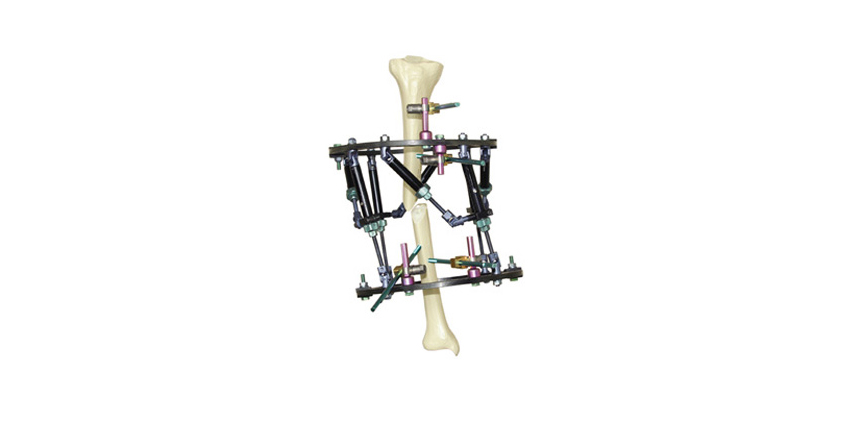
Orthopedic surgeons utilize fixators to repair broken or deformed bones. Fixators have struts that are adjusted to meet the needs of the patient.
The complaint alleges that Turkish mechanical engineer Tamer Isin developed software that could automatically calculate the required strut lengths for fixators. It further claims that Isin developed a fixator with eight struts to be used with his software. This invention was known as the Adam Frame External Fixator. The complaint asserts that Isin applied for a patent and registered his software with the U.S. copyright office.
Isin purportedly moved to the United States to commercialize his invention and founded IMED. The complaint claims that IMED engaged in a consulting agreement with Dr. Paley, an orthopedic surgeon, to help IMED “develop, refine and commercially facilitate” the invention.
IMED argues that Dr. Paley violated this agreement when he claimed an external fixation system as his own and assigned rights to the invention and intellectual property to Orthex. This includes the purported concealed filing of the “‘377 patent” called the “point and click alignment method for orthopedic surgeons, and surgical and clinical accessories and devices.” A system that IMED asserts Dr. Paley copied from IMED.
In June 2019, OrthoPediatrics acquired these technologies as part of a $60 million acquisition which OTW covered in “OrthoPediatrics Acquires Vilex.” In January 2020, OrthoPediatrics sold its adult product line, Vilex, to Squadron Capital for $25 million. This included the license to manufacture and sell products utilizing the external fixation technology. For OTW’s coverage of the transaction see “OrthoPediatrics Sells Vilex Adult Device Business.”
IMED is asking the court for unjust enrichment damages. It is also requesting that the court declare IMED the rightful owner of the ‘377 patent and related inventions and copyrights.
As of the date of the article, the parties have not filed a response.
Author
React:
Discussion
This is a fascinating development. In my practice we've seen similar outcomes with the revised protocol. The key differentiator seems to be patient selection criteria. Has anyone else noticed the correlation with BMI thresholds?
Great point. I'd push back slightly on the conclusion, the sample size in the cited study is too small to draw population-level inferences. That said, the directional signal is compelling and worth a larger RCT.
We implemented a similar approach last year. Early results are promising but we're still gathering 12-month follow-up data. Happy to share our protocol if anyone is interested.
Join the conversation
Orthopedic professionals are discussing this. Sign in and upgrade to read every comment and add your voice.