
Lewisville, Texas-based Orthofix Medical, Inc., recently announced the FDA’s 510(k) clearance for the expansion of its FIREBIRD SI fusion system product line. The clearance allows the company to make claims regarding the “macroscopic pores, microscopic roughened surface, and nano-scale surface features on the mid-shaft porous region” of the FIREBIRD sacroiliac (SI) joint fusion devices.
FDA Clears “Nano” Upgrade for SI Fusion System
1 min read Premium comments
#orthofixSecondary#sijointfusion#sacroiliacjointfusionaudio
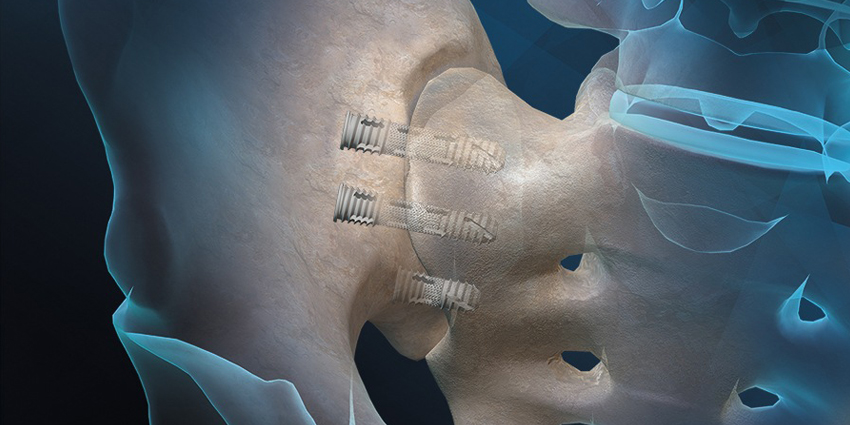
The new surface texture, achieved through additive manufacturing, or 3D printing, has been named “NANOVATE™.” The current iteration of 3D printed titanium screws, previously known as the SAMBA™ Screw are cannulated, fenestrated, and feature threaded ends with a porous mid-shaft region to encourage bone through-growth across the joint.
The devices, which are implanted through a lateral procedure, are available in 9mm, 11mm, and 12mm diameters, with the 11mm sized screws capable of providing compression through differentially-pitched threads at the proximal and distal ends.
Global President of Orthofix Spine Kevin Kenny said in a press release from the company, “The FIREBIRD SI Fusion System with NANOVATE™ technology is one of the many new differentiated solutions that Orthofix is proud to highlight during the upcoming North American Spine Society (NASS) 2020 virtual annual meeting. The clearance of the nanotechnology feature gives us the opportunity to educate surgeons about the unique benefits of the system’s nano-surface. Created through a proprietary manufacturing process, the FIREBIRD SI Fusion System is the result of our intense focus on bringing innovations to the market to enable surgeons to meet the needs of their patients.”
A company representative told OTW that NANOVATE’s “nano-scale surface features have been shown to increase proliferation and alkaline phosphatase activity (an early osteogenic differentiation marker) in human stem cells in vitro.” The company has been careful not to extrapolate those claims to clinical performance, without clinical evidence. Several studies have been published and presented at recent conferences claiming that nano-scale texturing signals osteogenic cells to differentiate and proliferate, leading to bone growth, and is the scientific basis of many attempts to modify the surface of devices made of PEEK, titanium, and other materials.
Author
React:
Discussion
This is a fascinating development. In my practice we've seen similar outcomes with the revised protocol. The key differentiator seems to be patient selection criteria. Has anyone else noticed the correlation with BMI thresholds?
Great point. I'd push back slightly on the conclusion, the sample size in the cited study is too small to draw population-level inferences. That said, the directional signal is compelling and worth a larger RCT.
We implemented a similar approach last year. Early results are promising but we're still gathering 12-month follow-up data. Happy to share our protocol if anyone is interested.
Join the conversation
Orthopedic professionals are discussing this. Sign in and upgrade to read every comment and add your voice.