
Movendo Technology Srl., an Italian biotechnology company that specializes in robotic and digital rehabilitation solutions, recently announced that its artificial intelligence (AI) platform, Silver Index©, is 15% more accurate in predicting fall risk for those 65 years of age or older than traditional evaluations.
AI Beats Traditional Evaluation in Predicting Elderly Falls
1 min read Premium comments
#artificialintelligenceSecondary#movendotechnology#silverindex
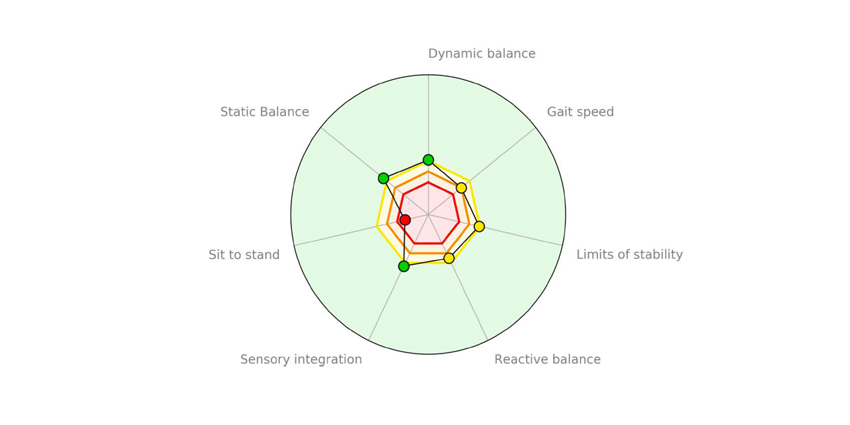
A 20-minute evaluation using the company’s hunova rehabilitation robot followed by AI analysis provides an objective report with a personalized fall risk map. The system evaluates 130 parameters from 7 exercises and evaluations.
The Silver Index was developed in conjunction with Galliera Hospital in Genoa, Italy and used in a clinical trial of nearly 100 patients. The resulting study, published in PLOS ONE in June 2020, titled, “Development and validation of a robotic multifactorial fall-risk predictive model: A one-year prospective study in community-dwelling older adults,” found that robotic assessment when combined with clinical evaluation was significantly more reliable than clinical assessment alone. The receiver operating characteristic (ROC) curve, a measure of specificity and sensitivity, for the best model using clinical and robotic variables was 0.81, while the best model using only clinical variables was 0.67.
Falls, which happen to 30% of people over 65 years old each year, are a major cause of accidental injury and death globally, and the leading cause of injury deaths in the U.S. for the 65 and over population. The healthcare costs associated with falls is estimated at nearly $50 billion in the U.S., alone.
Not only does predicting falls get elderly patients the attention they need before they injure themselves, but the detail provided by the multifactorial analysis of Silver Index shows specific areas that can be improved to reduce the risk. For example, the system accounts for limits of stability and balance, and sit-to-stand measurements. If these factors are implicated in an increased risk of falling, tailored exercises to address shortcomings can be prescribed.
Movendo Technology also offers the “knee index,” which helps a surgeon to develop pre- and post-surgical rehabilitation plans.
Author
React:
Discussion
This is a fascinating development. In my practice we've seen similar outcomes with the revised protocol. The key differentiator seems to be patient selection criteria. Has anyone else noticed the correlation with BMI thresholds?
Great point. I'd push back slightly on the conclusion, the sample size in the cited study is too small to draw population-level inferences. That said, the directional signal is compelling and worth a larger RCT.
We implemented a similar approach last year. Early results are promising but we're still gathering 12-month follow-up data. Happy to share our protocol if anyone is interested.
Join the conversation
Orthopedic professionals are discussing this. Sign in and upgrade to read every comment and add your voice.