
Charles Jordan, M.D., an orthopedic trauma surgeon at Miami Orthopedics & Sports Medicine Institute, knows firsthand the challenges of treating a long bone injury from a traumatic impact such as a bad car accident or a fall from a great height.
3D Printed Graft Cage: Game Changer?
2 min read Premium comments
Secondary#longboneinjury#trumatchgraftcage
The recovery is long and, in some cases when the bone won’t heal, amputation is necessary. A new 3D printed graft cage may offer a better prognosis for these patients, however, he told OTW.
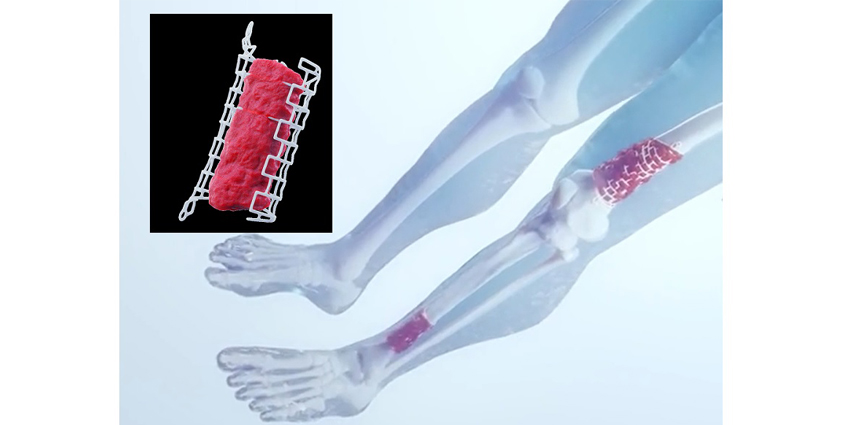
The TruMatch Graft Cage by DePuy Synthes, a part of the Johnson & Johnson Medical Devices Company, is designed for faster healing and requires fewer follow-up procedures.
It is the “missing puzzle piece” when it comes to treating long bone injuries, he said.
Jordan was the first surgeon to use the new graft cage that acts as a scaffold to keep the bone in place, and is made of a resorbable material.
He explained that the graft cage supports the bone graft while also filling in the defects in the bone. The coating with osteoconductive calcium phosphate promotes mineralization at the surface of the implant and conversion to bone.
Each cage is printed to the patient’s exact specifications. Another benefit of the TruMatch Graft Cage, he said, was that all the patient-specific information can be collected just from a basic CT. No special imaging tests are required.
“Using the TruMatch Graft Cage made for a more elegant operation,” he said. “The cage was designed to go around the intramedullary nail. It looked like a W with an outer wall and inner wall of scaffolding with the graft inside. It was really cool.”
His patient has been doing well after the procedure and he is optimistic that she will heal at a faster rate than the normal six month recovery window.
Calling it a great tool, he added that he expects the indications for its use will be expanded to other injuries that are difficult to heal.
The TruMatch Graft Cage is 3D printed in 10 days. Its scaffolding allows the bone graft to stay in its desired location during the healing process. It can be used with common rigid fixation devices such as intramedullary nails and plates/screws.
Author
React:
Discussion
This is a fascinating development. In my practice we've seen similar outcomes with the revised protocol. The key differentiator seems to be patient selection criteria. Has anyone else noticed the correlation with BMI thresholds?
Great point. I'd push back slightly on the conclusion, the sample size in the cited study is too small to draw population-level inferences. That said, the directional signal is compelling and worth a larger RCT.
We implemented a similar approach last year. Early results are promising but we're still gathering 12-month follow-up data. Happy to share our protocol if anyone is interested.
Join the conversation
Orthopedic professionals are discussing this. Sign in and upgrade to read every comment and add your voice.