
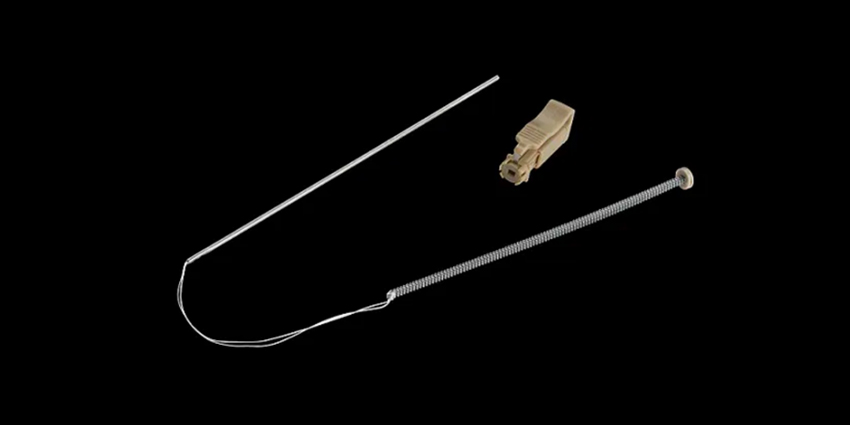
A novel, nitinol based, superelastic treatment for syndesmosis fixation, hallux valgus reconstruction, and tarsometatarsal fixation is the first product from Silicon Valley-based company, Panther Orthopedics. Brand named, PUMA, the system is the first and only Food and Drug Administration cleared superelastic syndesmosis device. It features a spring-like design that offers continuous compression without the need to over-tension.
Superelastic Treatment for Ankle Syndesmosis
2 min read Premium comments
Secondary#anklesyndesmosis#Pantherorthopedics#pumasystem
“I consider the PUMA System to be a game changer. Its novel technology allows me to provide the best care available to my patients. Its biomechanics marry perfectly with biology, stability, fixation and strength. I have used it for almost two years in a wide range of patients, from athletes to high energy trauma, and have seen excellent outcomes with no complications,” said Kent Ellington, M.D., orthopedic surgeon, foot and ankle at OrthoCarolina in Charlotte, North Carolina.
“The PUMA System is a nitinol-based fixation device for the ankle syndesmosis which provides stabilization without over-compression or loosening with cyclical loading. Nitinol has a proven safety record in foot and ankle surgical repair and reconstruction implants. Bringing nitinol into use for ankle syndesmotic injuries in the PUMA System is a novel innovation with significant advantages over existing screw or endobutton type fixation devices,” added Edward Tang, M.D., sports medicine and foot and ankle surgeon at Contra Costa Regional Medical Center in Martinez, California.
“The PUMA System provides significant syndesmotic stabilization while also allowing for more normal ankle biomechanics. The biomechanical and clinical advantages of this implant have led to improved patient outcomes after these ankle injuries,” he added.
With the PUMA system, there is no need for over-compression of the distal tibiofibular syndesmosis which can sometimes lead to crushing of the microvasculature mal-reduction and a stiff joint.
During the device’s initial commercialization, users reported positive mid-term clinical outcomes for more than 50 patients with up to 22 month follow-up.
“We are excited about our clinical results demonstrating excellent joint healing and early return to mobilization and physical activity. We confirmed satisfactory radiographic syndesmosis healing with reduction in the ankle mortise in 100% of these patients and there was no evidence of lysis device migration or syndesmotic widening. Additionally, there were no infections, soft tissue complications or devices requiring removal or revision surgeries,” said Kathy Stecco, M.D., chief executive officer and co-founder of Panther Orthopedics,
Panther Orthopedics develops superelastic fixation devices for orthopedic trauma and sports medicine applications. The PUMA System, which is only available in the U.S., is its first product. It is indicated for syndesmosis fixation, hallux valgus reconstruction, and tarsometatarsal fixation.
Author
React:
Discussion
This is a fascinating development. In my practice we've seen similar outcomes with the revised protocol. The key differentiator seems to be patient selection criteria. Has anyone else noticed the correlation with BMI thresholds?
Great point. I'd push back slightly on the conclusion, the sample size in the cited study is too small to draw population-level inferences. That said, the directional signal is compelling and worth a larger RCT.
We implemented a similar approach last year. Early results are promising but we're still gathering 12-month follow-up data. Happy to share our protocol if anyone is interested.
Join the conversation
Orthopedic professionals are discussing this. Sign in and upgrade to read every comment and add your voice.