
A Hackensack, New Jersey-based orthobiologics firm, Royal Biologics, LLC., has announced its acquisition of the Fibrinet system from Vertical Spine, LLC.
Royal Biologics Acquires ICBG Alternative, Fibrinet
2 min read Premium comments
Secondary#fibrinet#royalbiologics#verticalspine
Vertical Spine was a 2010 spinoff from Cascade Medical Enterprises, LLC. The purchase bolsters Royal Biologics’ live-cell allograft and autograft processing portfolio. The company also markets demineralized bone matrix (DBM) under the tradename Maxx fuse, and amniotic fluid and tissue products under the Amnio-Maxx name. They also manufacture a bone marrow and platelet rich plasma (PRP) extraction system called Maxx Cell as well as live-cell therapies, Cryo-Cord and Magnus, which were launched earlier in 2020. Both products are available without traditional cryo-protectants, such as dimethyl sulfoxide (DMSO), which are shown to be toxic to allograft cells and tissue at the surgical site.
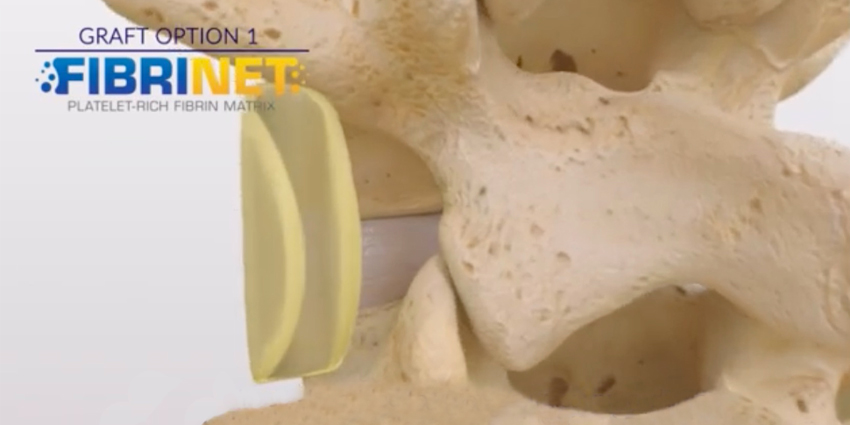
Fibrinet is a unique product that involves the extraction and concentration of the patient’s platelets to produce a platelet rich plasma (PRP). Instead of injecting PRP directly, as in some pain relief therapies, the platelets are mixed with a proprietary fluid that forms a platelet rich fibrin matrix (PRFM) after centrifugation. The membrane is then used at the fusion site, and can be mixed with other bone graft extenders. The system attempts to bring the benefits of autologous bone graft, such as live cells that secrete growth factors, to stimulate fusion without the risks of donor site morbidity that are seen when harvesting iliac crest bone graft (ICBG) marrow.
The company reports a pair of studies that found use of the system resulted in a successful fusion rate of 100%, and significant improvement in Oswestry Disability Index (ODI) at 12-month follow-up. It should be noted that these studies were presented at international congresses, not published in peer-reviewed journals. Good rates of fusion, though more realistic, were reported in a 2018 study published in the European Spine Journal. There, the rate of radiographic fusion was found to be 92.4%, and significant improvements in Visual Analog Scale (VAS) scores for back and leg pain were reported. Additionally, at 12 months, opioid use decreased by 38% from baseline, and 68% of employed patients were able to return to work.
The price point for Fibrinet makes it accessible to ambulatory surgical centers. James Yue, M.D., Co-Chief and Orthopedic Spine Surgeon at Midstate Medical Center, points out the benefits, “During this pandemic, a time when patients are having difficulty receiving operations in major hospital systems, the transition of procedures to ambulatory surgery centers has become even more desired and essential.”
Royal Biologics Chief Executive Officer Salvatore Leo stated, “FIBRINET’S technology now allows surgeons to harvest a patient’s autologous cells and create a unique platelet-rich fibrin membrane-scaffold to be used at the point of care in most spinal fusion procedures… We are extremely excited to add FIBRINET to our growing portfolio of autologous and live cellular therapies.”
Author
React:
Discussion
This is a fascinating development. In my practice we've seen similar outcomes with the revised protocol. The key differentiator seems to be patient selection criteria. Has anyone else noticed the correlation with BMI thresholds?
Great point. I'd push back slightly on the conclusion, the sample size in the cited study is too small to draw population-level inferences. That said, the directional signal is compelling and worth a larger RCT.
We implemented a similar approach last year. Early results are promising but we're still gathering 12-month follow-up data. Happy to share our protocol if anyone is interested.
Join the conversation
Orthopedic professionals are discussing this. Sign in and upgrade to read every comment and add your voice.