
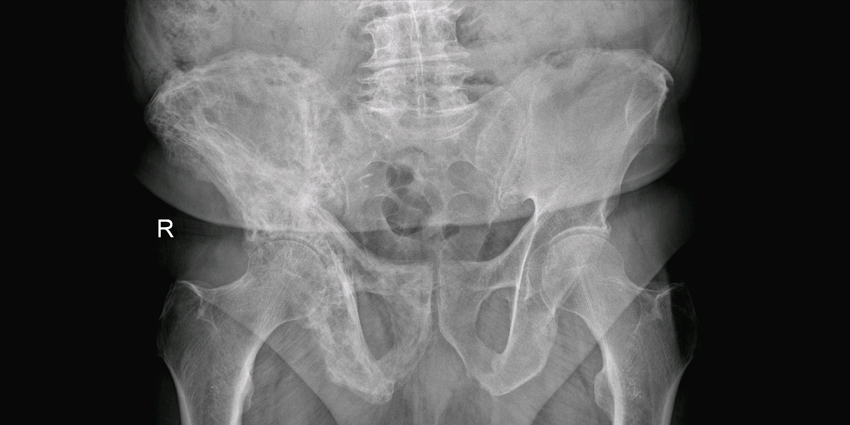
Citing a lack of well-powered studies looking into Paget’s disease of bone in individuals undergoing primary total hip arthroplasty (THA), researchers from Duke University, Maimonides Medical Center, and Lenox Hill Hospital at Northwell Health united to fill a gap in the literature.
New Adverse Event THA Data for Paget’s Patients
2 min read Premium comments
#totalhiparthroplastySecondary#pagetsdisease
Their work, “Paget’s Disease in Primary Total Hip Arthroplasty Is Associated with Greater In-Hospital Lengths of Stay, Costs, and Complications,” was published in the August 14, 2020 edition of The Journal of Arthrosplasty.
“Paget’s disease is common in older Caucasians and effects 2 to 3% of the population over 55 years of age,” noted co-author Nicholas Hernandez, M.D., an orthopedic surgeon at Duke University. And yet, he explained, this patient cohort has a different adverse event pattern.
“Prior studies have demonstrated some adverse events following primary THA in this patient sub-population compared to healthy peers, limitations of these studies include small sample sizes, not comparing outcomes in a matched-control population, nor controlling for multiple confounding variables. In addition, we could not find any studies evaluating the cost of care for patients with Paget’s undergoing THA; which is important as institutions focus on improving the quality of care while decreasing costs.”
When OTW asked about the lack of research attention to Paget’s, Hernandez replied that “prior studies of this population are often small, perhaps related to the frequency of this disease in the THA population.”
Using the PearlDiver database, researchers highlighted Paget’s patients undergoing primary THA and matched them to non-Paget’s patients in a 1:5 ratio by age, sex, and comorbidities. This resulted in 21,714 patients, with 3,619 in the Paget’s group and 18,095 in the non-Paget’s cohort. Variables assessed were length of stay, episode of care costs, medical/surgical complications, and implant-related complications.
Tough News for Paget’s Patients
“Compared to the matched cohort,” said Dr. Hernandez to OTW, “Paget’s patients undergoing primary THA had significantly…
- Longer length of stay (p<0001)
- Higher 90-day total global episode of care costs (p<0001)
- Higher 90-day medical and surgical complications (p<0001)
- Higher implant-related complications (p<0001).
In Conclusion
“The study can be used by orthopaedists and other medical professionals to properly counsel and educate these patients of the potential complications which may arise following THA. Institutions can consider optimizing these patients prior to surgery to decrease length of stay, complications, and, as a result, potentially reduce costs.”
Author
React:
Discussion
This is a fascinating development. In my practice we've seen similar outcomes with the revised protocol. The key differentiator seems to be patient selection criteria. Has anyone else noticed the correlation with BMI thresholds?
Great point. I'd push back slightly on the conclusion, the sample size in the cited study is too small to draw population-level inferences. That said, the directional signal is compelling and worth a larger RCT.
We implemented a similar approach last year. Early results are promising but we're still gathering 12-month follow-up data. Happy to share our protocol if anyone is interested.
Join the conversation
Orthopedic professionals are discussing this. Sign in and upgrade to read every comment and add your voice.