
The International Congress for Joint Reconstruction (ICJR), an organization offering unparalleled orthopedic educational events and content, is partnering with Orthopedics This Week Virtual Conventions to deliver a robust learning experience titled, “ICJR Insights: Advances in Hip & Knee Arthroplasty.”
ICJR, Orthopedics This Week Team Up for Hip and Knee Education
2 min read Premium comments
#hiparthroplasty#kneearthroplasty#icjr#otwvirtualconvention
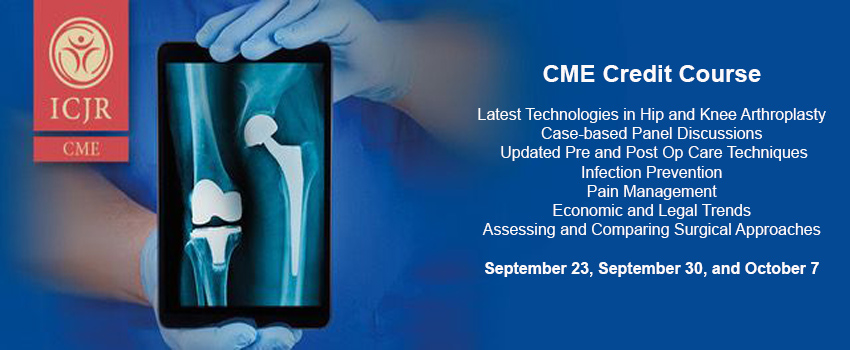
The event, designed to assist surgeons in remaining up to date on the latest techniques and technologies for managing hip and knee arthroplasty patients, features didactic presentations and case-based panel discussions. The esteemed faculty members will address issues related to technology for improving outcomes, challenging primary and revision cases, and infection prevention and management.
On four consecutive Wednesdays, participants will experience case-based panel discussions led by luminaries of the joint replacement world. The webinars will be held on September 23, September 30, and October 7.
Residents, fellows and practicing surgeons will gain information on how to identify and compare surgical techniques for total hip arthroplasty (THA) and total knee arthroplasty (TKA), including new technologies intended to improve outcomes. They will also learn about the ideal preoperative and postoperative care to support optimal patient outcomes and reduce length of stay for total joint arthroplasty, including pain management. Faculty will also provide detailed information on how to evaluate and compare options for the diagnosis, treatment, and prevention of infection following THA or TKA.
By the end of the convention, participants will be able to identify, assess, and compare surgical approaches, tools, and techniques for THA and TKA, as well as have a deeper understanding of current economic and legal trends in healthcare and their potential effects on orthopedic practices. Lastly, attendees will be capable of identifying strategies and techniques for the prevention and management of complications associated with THA and TKA.
This event carries the gravitas of the ICJR, an organization respected for its transparency and inclusivity…an organization that has a solid track record of generous philanthropic contributions for research and education.
Earn CMEs, but also interact with faculty, other attendees, and our industry partners from the convenience and comfort of your home or office. In addition, let your fingers do the browsing as you move through the booths in the Virtual Exhibit Hall and learn more about new products and technologies.
Co-chair Cory Calendine, M.D., an orthopedic surgeon specializing in adult reconstruction of the hip and knee and robotic-assisted procedures, is with the Bone and Joint Institute of Tennessee in Franklin, Tennessee. He stated, “Rising to meet the changing times, our virtual course this year highlights the most important foundational joint replacement principles combined with education around the latest technology. The goal is for all—presenters and participants—to leave and provide enhanced treatment for the patients we serve. I hope you can join us.”
Author
React:
Discussion
This is a fascinating development. In my practice we've seen similar outcomes with the revised protocol. The key differentiator seems to be patient selection criteria. Has anyone else noticed the correlation with BMI thresholds?
Great point. I'd push back slightly on the conclusion, the sample size in the cited study is too small to draw population-level inferences. That said, the directional signal is compelling and worth a larger RCT.
We implemented a similar approach last year. Early results are promising but we're still gathering 12-month follow-up data. Happy to share our protocol if anyone is interested.
Join the conversation
Orthopedic professionals are discussing this. Sign in and upgrade to read every comment and add your voice.