
On August 14, 2020, the FDA proposed that non-invasive bone growth stimulators should be allowed to be marketed through the 510(k) clearance process rather than the currently required premarket approval (PMA) process.
FDA Proposes Non-Invasive Bone Growth Stimulator Reclassification
2 min read Premium comments
Secondary#bonegrowthstimulator#fda510k#reclassification
That means manufacturers of non-invasive stimulators will only have to demonstrate their stimulator is substantially equivalent to a previously approved device. No more clinical trials, no more spending tens of millions of dollars to prove safety and effectiveness.
The FDA is doing this by proposing to “down-classify” the bone growth stimulators from class III to class II. In a Federal Register posting, the FDA said, “there is sufficient information to establish special controls, which in addition to general controls, will provide reasonable assurance of the safety and effectiveness of the device.”
Non-Invasive Bone Growth Stimulators
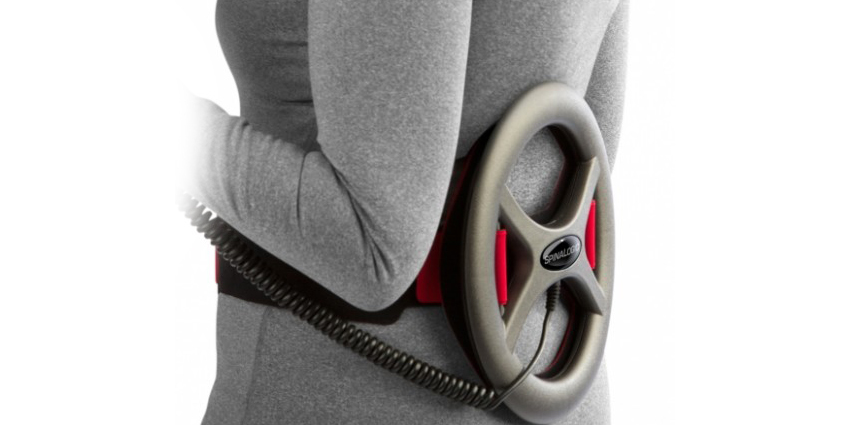
According to the FDA, non-invasive bone growth simulators are “typically composed of a waveform generator and transducer (e.g., coils, electrodes, and/or ultrasound transducers). Patient-contacting surfaces include the transducers, lead wires, and the device outer casing. Non-invasive bone growth stimulators utilize an electrical component to produce an output electrical, magnetic, or ultrasonic waveform that is delivered to a treatment site via a non-invasively applied transducer (e.g., electromagnetic coil or ultrasound transducer) or electrodes (e.g., capacitor plates).”
Non-invasive stimulators were automatically classified as class III devices in 1979 with the PMA for the Bio Osteogen System 202. Since then, five additional original PMAs have been approved for non-invasive bone growth stimulators. In 2005, RS Medical Corporation petitioned the FDA to reclassify their stimulator. The agency referred the petition to its ortho advisory panel. The panel recommended to keep the devices in class III.
The panel said there was insufficient evidence presented “to control for the risk of inconsistent or ineffective treatment because there is a lack of knowledge about how waveform characteristics (e.g., pulse duration, amplitude, power, frequency), including potential modifications to the device, affect the clinical response to treatment.” The agency agreed with the panel.
FDA Rethinks Classification
In 2015, the FDA’s Center for Devices and Radiological Health (CDRH) conducted a retrospective review of all PMA product codes with active PMAs approved prior to 2010 for the purpose of reclassification. Non-invasive bone growth stimulators were one of those PMA product codes. The proposal to down-classify stems from that review.
The FDA says it will continue to regulate invasive bone growth stimulators as a class III device, subject to PMA requirements.
Public Comment Requested
The agency is looking for public comment on the proposed down-classification. You’ve got until October 14 to comment. Send your comments to: Dockets Management Staff (HFA-305), Food and Drug Administration, 5630 Fishers Lane, Rm. 1061, Rockville, MD 20852.
Author
React:
Discussion
This is a fascinating development. In my practice we've seen similar outcomes with the revised protocol. The key differentiator seems to be patient selection criteria. Has anyone else noticed the correlation with BMI thresholds?
Great point. I'd push back slightly on the conclusion, the sample size in the cited study is too small to draw population-level inferences. That said, the directional signal is compelling and worth a larger RCT.
We implemented a similar approach last year. Early results are promising but we're still gathering 12-month follow-up data. Happy to share our protocol if anyone is interested.
Join the conversation
Orthopedic professionals are discussing this. Sign in and upgrade to read every comment and add your voice.