
The FDA has granted NovoPedics, Inc.’s MeniscoFix a Breakthrough Device Designation. The device, according to the company, is the first mechanically functional total meniscus replacement device designed to be gradually resorbed by the body and replaced by new tissue.
Breakthrough Designation to NovoPedics’ Meniscus Replacement
2 min read Premium comments
Secondary#meniscusreplacement#novopedics
“Significant Advantages”
Gaining the designation, means the FDA believes the device offers significant advantages over existing products from results of in vivo proof-of-concept studies. These pre-clinical studies were largely funded by the Department of Defense’s Armed Forces Institute of Regenerative Medicine.
The FDA says breakthrough designation is designed “to speed up the development, assessment, and review, while preserving the statutory standards for premarket approval, 510(k) clearance, and De Novo marketing authorization.”
MeniscoFix
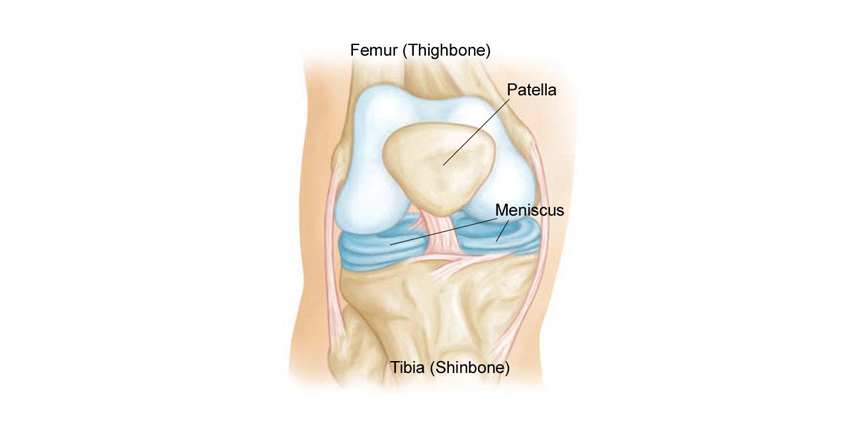
MeniscoFix is a polymer fiber-reinforced scaffold for total meniscus replacement, “designed to be gradually resorbed by the body and be replaced by new tissue. It represents an innovative approach to replace damaged meniscal tissue with a patented fiber-reinforced design similar to the native meniscus. It is designed to be attached to both soft tissue and bone, thus potentially enabling its use in total meniscus replacement surgery.”
NovoPedics Co-Founder Charles Gatt, M.D. said, in contrast to partial meniscus replacement devices, MeniscoFix is “uniquely designed to be securely fixed within bone tunnels and to support mechanical loads along the entire implant periphery, making it potentially useful even in patients with a compromised meniscal rim.”
Pentagon Funding
In announcing the designation on September 14, 2020, the company also noted a June 2020, $4.42 million grant through the Defense Department’s Joint Warfighters Medical Research Program, to the research and development teams at Rutgers University and NovoPedics (Michael G. Dunn, Ph.D., Principal Investigator and NovoPedics Co-Founder) to support further pre-clinical development of the device.
This matters to the military because approximately 800,000 meniscectomies are performed annually in the U.S. civilian population, and about 20,000 are done on military personnel. Meniscal tears occur approximately 10 times more frequently in the military than in the civilian population, and the rate increases significantly with age.
Breakthrough Device Program
The Breakthrough Devices Program, according to the FDA, offers manufacturers the chance to interact with the FDA’s experts through several different program options to address topics as they arise during the premarket review phase, which can help manufacturers receive feedback from the FDA and identify areas of agreement in a timely way. Manufacturers can also expect prioritized review of their submission.
To qualify for the program, sponsors need to meet two criteria.
First, the device provides for “more effective treatment or diagnosis of life-threatening or irreversibly debilitating human disease or conditions.” Second, the device meets at least one of the following: breakthrough technology, no approved or cleared alternatives exist, offers significant advantages over existing approved or cleared products, and device availability is in the best interest of patients.
You can learn more about the program in Sections II and IV of the Breakthrough Devices Program final guidance.
Author
React:
Discussion
This is a fascinating development. In my practice we've seen similar outcomes with the revised protocol. The key differentiator seems to be patient selection criteria. Has anyone else noticed the correlation with BMI thresholds?
Great point. I'd push back slightly on the conclusion, the sample size in the cited study is too small to draw population-level inferences. That said, the directional signal is compelling and worth a larger RCT.
We implemented a similar approach last year. Early results are promising but we're still gathering 12-month follow-up data. Happy to share our protocol if anyone is interested.
Join the conversation
Orthopedic professionals are discussing this. Sign in and upgrade to read every comment and add your voice.