
Medical technology company Stryker Corporation has just launched a very interesting new ankle fusion system which was designed based on 25,000 CT images of bones across different populations. Clearly, it was designed to fit a wide range of patients.
Ankle System Based on 25,000 CT Images Launched
1 min read Premium comments
Secondary#anklefusionsystem#axsos3anklefusionsystem#tibiotalarjoint
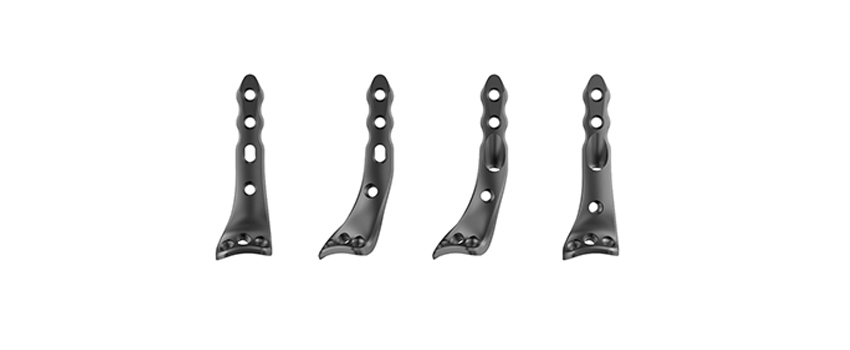
The AxSOS 3 is meant to be used for the tibio-talar joint and includes titanium plates and streamlined instrumentation. This means less customization is needed. The system was designed using SOMA, Stryker’s proprietary orthopedic design and development system that applies data from over 25,000 CT bone images.
The titanium used in the plates has a well-documented record of biocompatibility. The system was also designed for easy screw insertion and removal with a conically shaped screw head with rounded threads and one free thread path.
“Stryker’s Trauma & Extremities portfolio offers marketing-leading implants for the treatment of long and small bone fractures, as well as extremity joint replacements,” said North American President, Trauma & Extremities Division Mike Panos.
“The AxSOS 3 Ankle Fusion System joins the company’s robust family of titanium products, providing a complete range of options for surgeons and their patients.”
The main benefits for surgeons are less OR time, more stable implants, and ease of use in a variety of types of patients.
“The CP design utilized in Stryker’s forefoot and hindfoot plating systems served as the inspiration to take this technology into ankle fusions,” said Keith Wapner, M.D., at Penn Medicine in Philadelphia, one of the design surgeons. “Integrating the stability of plate fixation with the compression of the CP screw allows for a stable ankle fusion construct,” he added.
Michael Coughlin, M.D., of University of California, San Francisco, was also one of the design surgeons. He said, “We combined Stryker’s CP technology from Anchorage 2 with the company’s AxSOS 3 screw system and incorporated several additional instruments to assist with alignment and compression. The system is designed to provide surgeons with a dependable, user-friendly, intuitive technology option.”
Stryker, headquartered in Kalamzoo, Michigan, offers products and services in Orthopedics, Medical and Surgical and Neurotechnology.
Author
React:
Discussion
This is a fascinating development. In my practice we've seen similar outcomes with the revised protocol. The key differentiator seems to be patient selection criteria. Has anyone else noticed the correlation with BMI thresholds?
Great point. I'd push back slightly on the conclusion, the sample size in the cited study is too small to draw population-level inferences. That said, the directional signal is compelling and worth a larger RCT.
We implemented a similar approach last year. Early results are promising but we're still gathering 12-month follow-up data. Happy to share our protocol if anyone is interested.
Join the conversation
Orthopedic professionals are discussing this. Sign in and upgrade to read every comment and add your voice.