
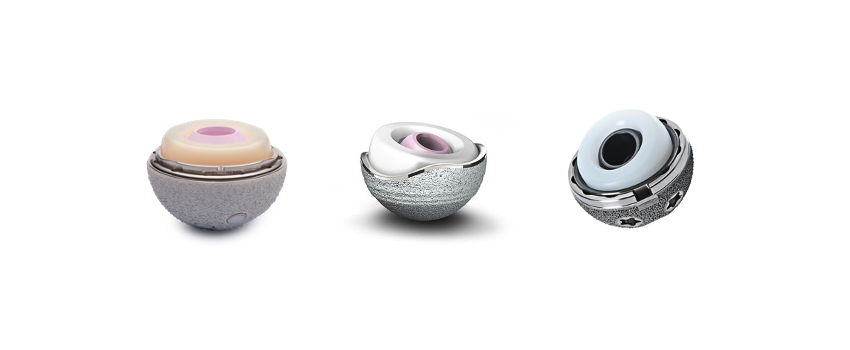
What can one surgeon and 143 consecutive dual mobility cups teach us about joint stability? Quite a bit, says new research from Mount Sinai Health System, Long Island Jewish Medical Center, and Lenox Hill Hospital, all in New York City.
7-Year Outcome Data for Modular Dual Mobility Cups
2 min read Premium comments
#totalhipreplacementSecondary#hipsurgery#dualmobilitycup
The study, “Minimum 7-Year Outcomes of Dual Mobility Acetabular Cups in Total Hip Arthroplasty Patients” appears in the June 2020 edition of the Journal of Hip Surgery.
Steven F. Harwin, M.D. is chief of Advanced Technology, Total Hip and Knee Arthroplasty, and professor of Orthopaedic Surgery at the Icahn School of Medicine at Mount Sinai in New York City. He commented to OTW, “Depending on the surgical approach used, dislocation of a total hip replacement is one of the most common reasons for revision surgery. The modular dual mobility implant uses a dual mobility concept which increases what we call the ‘jump distance’ so as to make the hip more stable and less likely to dislocate.”
“In addition, using a dual mobility concept allows the use of larger heads, which again provide a more stable construct and a better range of motion. The polyethylene component is thicker, and we have found no evidence of polyethylene wear.”
“It was those characteristics which led surgeons to pursue resurfacing implants, but these had the unintended consequence of metal ion production. The modular dual mobility implant provides better stability and a better range of motion. Our seven-year follow up study found no unintended consequences.”
Their study included 77 females and 66 males (mean age of 65 years). The researchers determined aseptic, septic, and all-cause survivorship via Kaplan-Meier analysis, the Harris Hip Scores, postoperative complications, and radiographs were also assessed.
Dr. Harwin: “Using a modular dual mobility articulation, our study over seven years showed no dislocations (eliminated dislocation). Size for size, the modular dual mobility articulation provides a better range of motion than even a resurface prosthesis. There were no implant related failures and all-cause survivorship was over 98.6% at seven years minimum follow up. Patient satisfaction was high, and complications were low. Our study showed that the implant was safe as well as effective.”
“This work has already affected clinical practice positively by reducing the need for constrained liners in revision surgery and providing a stable reconstruction with excellent range of motion especially for young active patients. The modular dual mobility is my implant of choice for primary total hip replacement. Personally, I have implanted over 1,100 modular dual mobility implants with excellent clinical outcomes and no primary dislocations.”
Author
React:
Discussion
This is a fascinating development. In my practice we've seen similar outcomes with the revised protocol. The key differentiator seems to be patient selection criteria. Has anyone else noticed the correlation with BMI thresholds?
Great point. I'd push back slightly on the conclusion, the sample size in the cited study is too small to draw population-level inferences. That said, the directional signal is compelling and worth a larger RCT.
We implemented a similar approach last year. Early results are promising but we're still gathering 12-month follow-up data. Happy to share our protocol if anyone is interested.
Join the conversation
Orthopedic professionals are discussing this. Sign in and upgrade to read every comment and add your voice.