
In a true “world’s first,” the Pivot Guardian Distraction System, manufactured by Stryker Corporation, is bringing ease and reproducibility to hip surgeons worldwide. The system addresses a clinical issue that may have been underreported and insufficiently examined—postoperative groin pain.
Stryker Delivers World’s First Post-Free Hip Arthroscopy
2 min read Premium comments
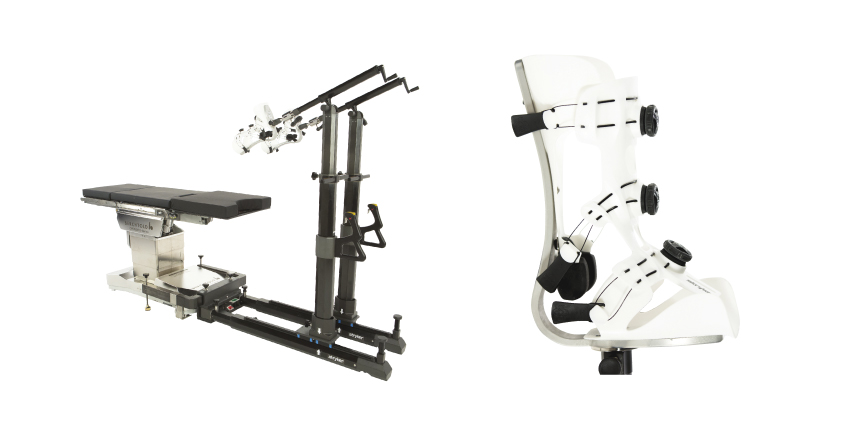
#strykerSecondary#pivotguardiandistractionsystem
Ryan Murphy, marketing manager for Stryker Sports Medicine, told OTW, “Hip arthroscopy is rapidly rising, with an estimated 98,000 such procedures performed in 2015 and 193,000 done in 2019. Traditionally, hip arthroscopy for femoral acetabular impingement (FAI) was being done by putting patients on a table, putting a post between the legs, and then placing the patient’s feet in boots and pulling, creating a counterforce to create distraction.”
“The problem is that this action puts pressure on the groin area and can involve risks such as nerve palsy, numbness, and soft tissue tearing. You can imagine that this is an underreported complication as patients may not want to have that uncomfortable conversation with their surgeons.”
Richard C. Mather III, M.D., M.B.A., who has experience with the Pivot Guardian system, commented to OTW, “While much of the literature indicates that any numbness will subside, in fact it can last up to six weeks and in some cases is permanent.”
Providing a clinical snapshot of a portion of the surgery, Dr. Mather said, “We achieve post-free distraction by creating a counterforce to the distraction vector. The amount of distraction is then verified with fluoroscopy and the distraction force can be referenced on the gauge. A final fluoroscopy image confirms adequate distraction to facilitate access. You then suspend the proximal capsule leaflet, dilating the portal and the intermuscular plane and then inserting a transport cannula. The next step is to pass sutures into the proximal leaflet to protect and suspend the capsule. Be mindful that you pass the sutures through the entire thickness of the capsule to preserve as much capsule as possible.”
Groin-related complications are not the only issue with this surgery, says Dr. Mather. “The literature indicates that foot and ankle-related complications can also occur after traditional hip arthroscopy. The traction results in heel slippage, which leads to foot and ankle complications. With Pivot Guardian, there is a heel cup in the boot to ensure foot stabilization and keep the heel down. The specially fabricated boots—made using the Boa Closure System®—reduce slippage, which may decrease complications related to pressure points.”
Speaking to the patient satisfaction aspect of FAI surgery, Dr. Mather told OTW, “The fact is that the Pivot Guardian provides reassurance to the patient and surgeon. If someone undergoes a traditional hip arthroscopy and then has groin pain…even if it is transient the patient remains anxious because they know it can return. With the Stryker system, there is peace of mind.”
Author
React:
Discussion
This is a fascinating development. In my practice we've seen similar outcomes with the revised protocol. The key differentiator seems to be patient selection criteria. Has anyone else noticed the correlation with BMI thresholds?
Great point. I'd push back slightly on the conclusion, the sample size in the cited study is too small to draw population-level inferences. That said, the directional signal is compelling and worth a larger RCT.
We implemented a similar approach last year. Early results are promising but we're still gathering 12-month follow-up data. Happy to share our protocol if anyone is interested.
Join the conversation
Orthopedic professionals are discussing this. Sign in and upgrade to read every comment and add your voice.