
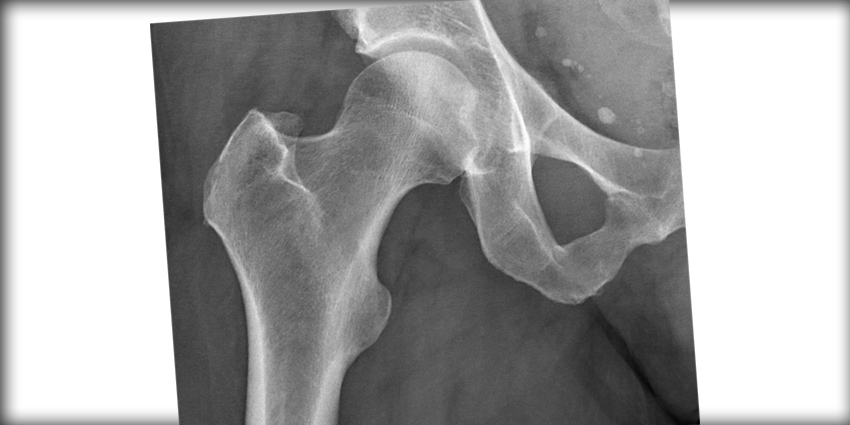
When hip joint space width needs to be assessed, both standing and supine anteroposterior pelvic radiographs can provide accurate measurements, according to a new study.
Standing and Supine Radiographs Accurate for Hip Joint Width
1 min read Premium comments
Secondary#hiparthroscopy#hipjointspacewidth#weightbearingimaging
Joint space width can be used to predict whether there will be poor outcomes from hip arthroscopy or not. A joint space of less than 3 mm is a risk factor (as is age, presence of osteoarthritis and reduced motion) for potentially poor outcomes.
A new study is suggesting that standing and supine radiographs can better measure hip joint width and therefore offer total hip arthroplasty patients with potentially better outcomes as compared with periacetabular osteotomy.
In the study, “No Differences in Hip Joint Space Measurements between Weightbearing or Supine Anteroposterior Pelvic Radiographs,” published online in the journal Arthroscopy on July 28, 2020, researchers analyzed standing and supine anteroposterior radiographs of 86 patients.
Overall, 146 hips were assessed by two independent reviewers blinded to patient positioning. Joint space width measurements were made at the medial, lateral, and central aspects of the sourcil line. Each reviewer was asked to repeat a subset of the measurements to assess intra-rate reproducibility.
The researchers found no significant differences between joint space width measurement made with the two different types of radiographs (p = 0.46)
Equivalence testing proved statistical equivalence between the two based on an equivalence threshold of ±0.5 mm. Inter-rate reliability demonstrated good agreement between the two reviewers with an overall ICC of 0.77 (95% CI: 0.734-0.809). Individual ICC’s for each reviewer was 0.84 (95% CI: 0.758-0.889) and 0.798 (95% CI: 0.721-0.851), respectively.
The researchers wrote, “Joint space width measurements on standing and supine pelvic radiographs were not significantly different, and their interrater agreement and intra-rater reproducibility demonstrated good reliability and repeatability. Therefore, either may be utilized to assess joint space width, including measurements that may impact treatment decisions for hip arthroscopy.”
Author
React:
Discussion
This is a fascinating development. In my practice we've seen similar outcomes with the revised protocol. The key differentiator seems to be patient selection criteria. Has anyone else noticed the correlation with BMI thresholds?
Great point. I'd push back slightly on the conclusion, the sample size in the cited study is too small to draw population-level inferences. That said, the directional signal is compelling and worth a larger RCT.
We implemented a similar approach last year. Early results are promising but we're still gathering 12-month follow-up data. Happy to share our protocol if anyone is interested.
Join the conversation
Orthopedic professionals are discussing this. Sign in and upgrade to read every comment and add your voice.