
Tampa, Florida-based PainTEQ, LLC. has launched enrollment for the multicenter, prospective study of its sacroiliac (SI) joint fusion system, LinQ™.
Prospective Study Announced for Sacroiliac Joint Fusion Device
2 min read Premium comments
Secondary#sijointfusion#sacroiliacjointfusion#painteq
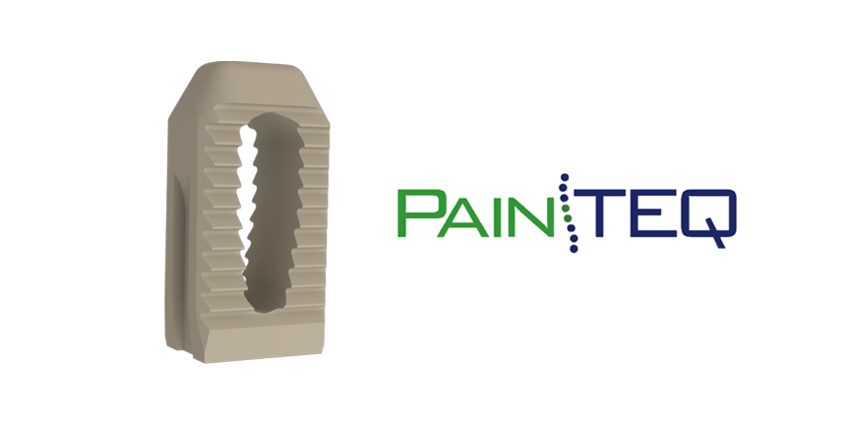
The LinQ is an allograft spacer with a graft window that is inserted in the SI joint space with a minimally invasive posterior approach. The procedure involves decortication of the joint and packing the graft window with demineralized bone matrix prior to insertion.
The LinQ is a fairly unique design in the SI joint fusion market, which is dominated primarily by threaded devices that typically span joint space. Other devices intended for a posterior approach include the threaded cage, Rialto, from Medtronic, Inc., and the Catamaran from Tenon Medical, Inc., which works like a butterfly joint used in woodworking to hold the sacrum to the ilium.
The study, named SECURE for “Single-arm, Multicenter, Prospective, Clinical Study on a Novel Minimally Invasive Posterior SI Fusion Device” is planned to recruit 100 patients suffering from confirmed SI joint pain across 9 centers. Inclusion criteria require at least 6 months of non-surgical care, a typical requirement for payers to reimburse for the procedure.
The study will primarily investigate pain, adverse events, neurological progression, and need for surgical reintervention. “This landmark study represents the first prospective data acquired, in a multicenter fashion, on a posterior fusion approach for the treatment of SI joint dysfunction,” said Co-Primary Investigator on the SECURE Study, Jason Pope, M.D., chairman of the Pacific Spine and Pain Society and president of Evolve Restorative Center in Santa Rosa, California.
The surgeon who performed the first surgery in the study, Patrick Buchanan, M.D., of Spanish Hills Interventional Pain Management in Camarillo, California, said, “It’s a safer procedure by going posteriorly, which has led to quicker post-op recovery times and better patient outcomes. My first patient reports 80 percent pain relief. Prior to the SI joint fusion, he was only able to walk 10 minutes at a time. Now he is walking one-and-a-half to two miles a day.”
A recent retrospective study of 16 patients conducted at the Kansas University Medical Center was published on the company’s website, “Initial Experience with a Minimally Invasive Sacroiliac Fusion Device, a Retrospective Case Series.” The study reports that pain, measured by the numeric rating scale (NRS) was reduced by 5.9 points (87%). The amount of opioids, reported as morphine milligram equivalents (MME), taken by patients dropped by over 60% at the latest follow-up. Finally, the authors reported that SI joint fusion was nearly as good as a diagnostic injection at relieving pain.
Author
React:
Discussion
This is a fascinating development. In my practice we've seen similar outcomes with the revised protocol. The key differentiator seems to be patient selection criteria. Has anyone else noticed the correlation with BMI thresholds?
Great point. I'd push back slightly on the conclusion, the sample size in the cited study is too small to draw population-level inferences. That said, the directional signal is compelling and worth a larger RCT.
We implemented a similar approach last year. Early results are promising but we're still gathering 12-month follow-up data. Happy to share our protocol if anyone is interested.
Join the conversation
Orthopedic professionals are discussing this. Sign in and upgrade to read every comment and add your voice.