
Governing bodies need to do more to prevent recurrent injuries in rugby players and to support them after retirement from sport, Durham University researchers say.
Recurrent Injuries Bedevil Rugby Players Post-Retirement
2 min read Premium comments
#osteoarthritisSecondary#rugbyinjuries
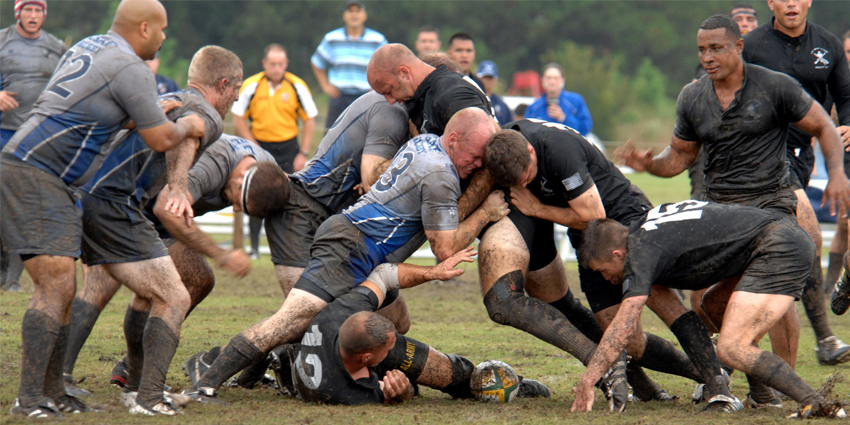
In the study, “Cumulative Sport-Related Injuries and Longer Term Impact in Retired Male Elite- and Amateur-Level Rugby Code Athletes and Non-Contact Athletes: A Retrospective Study,” amateur rugby union and league players continued to suffer from back pain and severe joint pain even after they stopped playing.
The reason the researchers say is the cumulative effect of all their injuries. The findings were published in the journal Sports Medicine on July 16, 2020.
Dr. Karen Hind of the Department of Sport and Exercise Sciences at Durham University in Durham, England, and lead author said, “It is clear from these findings that playing rugby union or rugby league is associated with lasting impacts in terms of injury and pain. Although there have been initiatives and rule changes to try and make the game safer, the rates of injury across a player’s entire career are still very high. The game is now also faster and players are bigger than they used to be so the impacts are greater.”
For the study, Hind and her colleagues compared the types and number of injuries suffered by 254 male elite rugby code players, amateur rugby code players and non-contact athletes like cricketers. All of athletes between the ages of 21 and 82 were retired from sports.
According to the data collected, the most common injury was concussion, with most suffering at least one during their career and experiencing long-term effects from the injury.
Almost half of the players had a knee ligament injury with a quarter of them reporting issues with the injury after retirement. In addition, the prevalence of osteoarthritis in these players was double that reported to non-contact athletes.
“Many of the ex-players who took part in this study competed in rugby football over a decade ago when the sport was more about evasion. The injury levels for these individuals are up to nine-fold higher than for former non-contact athletes of a similar age,” Hind added.
“What we need to consider is that the game today is more about players running through opponents rather than evading—this is inevitably going to increase injury risk.”
Durham University collaborated on the study with Auckland University of Technology in New Zealand as part of the Global Rugby Health Research Network and the UK Rugby Health Project which was built on the original New Zealand Rugby Health Study.
Hind said that the study points to the need for better injury recovery in rugby, adding that “a case could be argued for less players on the pitch and providing more opportunity for evasion.”
“Medics also have a role to play in encouraging sensible injury recovery times which clubs need to support,” she added. “Importantly, our findings highlight a need for programmes to support professional players post-retirement in managing the long-term impacts of injuries sustained during their career.”
What the study highlights for Jon Sleightholme, a former international rugby player who represented England 12 times at senior level and was part of the team that won the Five Nations Championship in 1996, is the need for long term support and education for retired players to help them manage these conditions as they get older.
Author
React:
Discussion
This is a fascinating development. In my practice we've seen similar outcomes with the revised protocol. The key differentiator seems to be patient selection criteria. Has anyone else noticed the correlation with BMI thresholds?
Great point. I'd push back slightly on the conclusion, the sample size in the cited study is too small to draw population-level inferences. That said, the directional signal is compelling and worth a larger RCT.
We implemented a similar approach last year. Early results are promising but we're still gathering 12-month follow-up data. Happy to share our protocol if anyone is interested.
Join the conversation
Orthopedic professionals are discussing this. Sign in and upgrade to read every comment and add your voice.