
The letter must have hit like a bomb on June 19, 2020 at the headquarters of the American Academy of Orthopaedic Surgeons (AAOS).
No Confidence Diversity Letter Rocks AAOS
7 min read Premium comments
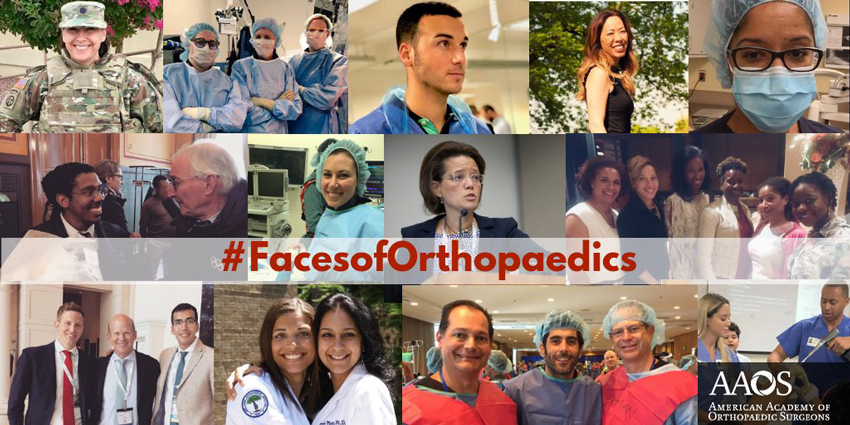
#aaos#concernedfacesoforthopaedics
A consortium of Black and Brown surgeon members of the Academy calling itself Concerned Faces of Orthopaedics, sent a letter of “No Confidence” to the new Academy president.
Signed by 80 surgeons, the letter stated the Academy’s history of addressing “diversity, inclusion and discrimination has been abysmal.” Because of the Academy’s continued “opposition to consider, debate, or incorporate tactics and strategies designed to support its diverse members,” the letter serves as a “vote of no confidence in the leadership of the AAOS.”
The letter must have stung extra hard because the current and immediate past leadership has been very public about efforts to get the Academy to look more like the patients surgeons serve and keep the organization relevant to future orthopedic surgeons.
Joseph A. Bosco, III M.D., the Academy’s president replied immediately.
In a June 22, 2020 letter to concerned members, Bosco wrote, “The simple truth is that, despite our best efforts and intensions, we have not made visible progress in forming a more diverse and inclusive AAOS.”
Immediate past president, Kristy Weber, M.D. told OTW, “The current and past culture of orthopaedic surgery (and the AAOS) is not inclusive or diverse, as evidenced by all available metrics, and I wholeheartedly agree that we MUST change in order to be relevant to future members or society. The recent focus of the AAOS Board of Directors is on strategy, governance, and culture with the end goal to implement real change toward the specific issues raised by Concerned Faces.”
Diagnosis
In typical surgeon fashion, the “Concerned Faces” diagnosed the pain, identified the mechanisms of action, and went to work to fix the problem.
Noting that after the horrific murders of unarmed Black men under the color of law, Bosco, indicated that the Academy “stands” with its members of color and, “…although words are important, deeds matter most.” But from the standpoint of the Concerned Faces, recent AAOS deeds “have clearly demonstrated that, to the governance of the Academy, diversity doesn’t matter.”
Mechanisms of Action
These acts, according to the group include:
- Demotion of the Diversity Advisory Board from a committee of the Board of Directors itself, to a committee that no longer has direct responsibilities to act nor report to the Board on matters regarding diversity, equity and inclusion.
- No monetary, administrative, or statistical resources allocated directly from the AAOS to data proven pipeline programs who successfully identify, recruit, and retain underrepresented minorities and women into Orthopedic Surgery in general and into the Academy in particular.
- Recent election of an overwhelmingly white, all male AAOS Nominating Committee, which is responsible for guiding the selection process of the presidential line and determining the at-large membership of the Board of Directors.
Since the delivery of the letter, the group told OTW they removed a claim that the Academy had defunded diversity societies.
The group reminded Bosco that he has stated as an Academy principle, “…our Academy and its leadership ought to look more like the population we serve.”
However, this year, as in the majority of years past, there were no women and no underrepresented minority members elected to the Nominating Committee. “It is reasonable to conclude that the selection of an all-male and overwhelming white group to this critically important committee may, in fact, be in line with the Academy’s actual principles.
“In light of the past and present actions of the AAOS, it is difficult to have faith in the words submitted by its current leadership. James Baldwin, noted American novelist, essayist and activist once said, ‘I can’t believe what you say, because I see what you do.’”
History
In 2002, the AAOS’ Board of Directors adopted an AAOS policy statement on social justice that read:
“Physicians should work actively to eliminate discrimination in health care, whether based on race, gender, socioeconomic status, ethnicity, religion, or any other social category.”
“The Academy has been slow to enact this policy with the patient populations it serves, and especially within its own membership. It took 6 years from the adoption of this policy before the first (and only) Black president of the AAOS was elected and another 17 years before the Academy elected its first woman to lead the organization,” stated the No Confidence letter.
A Plan
In November 2018, the group said it engaged Academy leadership to address issues of the “lack of inclusion of its diverse members in educational activities and the misrepresentation of black [sic] and latinx [sic] populations in educational testing.”
At the request of then AAOS President Weber, the group presented a list of concerns and solutions to the Diversity Advisory Board (DAB) for incorporation into its strategic plan. These solutions were targeted to “counteract the Academy’s lack of progress in resolving issues facing its female and underrepresented minority fellows and trainees.”
The recommendations included:
- Third-party audit of AAOS diversity and inclusion efforts to date by a certified Diversity, Equity and Inclusion consultant.
- Request for designated representation on each AAOS Committee and their leadership to be led by the Committee Appointment Program.
- AAOS to institute a Chief Diversity Officer to report directly to the Board of Directors and CEO
- Development of strategic goals to support AAOS Diversity efforts including increasing the numbers of underrepresented orthopaedic surgeons with defined resource allocation and measurement instruments specifically for this purpose.
However, according to the group, none of these recommendations were presented to the AAOS Board of Directors in April 2019. Subsequently, the Board approved a strategic plan “devoid of any of the recommendations submitted by the organizations and individuals within the Academy specifically tasked to represent the underrepresented.”
Time to Act
This failure comes at a time when, “creating safe and equitable learning and work environments for underrepresented minorities and women is absolutely critical…events in this country have highlighted the syndemic nature of race, discrimination and health inequity.”
The group demands the following:
Governance
- An examination of and commitment to change AAOS policies and bylaws in order to create a mechanism to ensure inclusion of members from underrepresented in medicine demographics at the levels of the Board of Directors, Board of Councilors/Specialties and AAOS Committees
- Mandatory Unconscious Bias training as a prerequisite for nomination by the Nominating Committee for ABOS Membership. This may include a recurring web based longitudinal assessment (WLA) with a list of articles, books, and book chapters generated yearly
- Assessment and Accountability – Urgent evaluation by a credible independent third party, regarding current and planned diversity and inclusion efforts by the AAOS
- A public dashboard to reflect the current state and future progress of achieving diversity targets, methods and instruments to measure its progress across its operations, membership, income equity, training and development, culture to include
- Establishing a Chief DEI Office and Officer who reports directly to the CEO and BOD of AAOS with line item resources fully controlled by the CDO to be allocated/reallocated for administrative support including access to professional statistical analysis
- Racial Justice and Equity Committee established to address institutionalized racism and resulting healthcare disparities in musculoskeletal care and research
Education of AAOS Members
- Funding allocated/reallocated for data collection and publication of the annual demographics of orthopaedic residency and fellowship training programs, faculty, program directors and chairs. Line item funding for data collection, statistical analysis, and continuous publication of data focused on current musculoskeletal health and treatment disparities affecting underrepresented minorities and women.
- A measurable commitment to developing the pipeline of orthopaedic surgeons from underrepresented demographic groups at all levels of education
- Strategic, long-term partnerships with budgeted, sufficient, dedicated resource allocation for the expansion of pipeline programs, especially those with demonstrated success at the GME, UME and K-12 levels.
- Faculty Development and Training Requirements of the AAOS Committee on Education
- Establish mandatory minimum of CME requirements on issues of diversity, equity, inclusion and systemic racism
- Mandatory leadership training at the program levels for chairs, program directors and program coordinators
- Inclusion of non-biased standardized test questions for the Orthopaedic In-training Examination reflective of issues of diversity, equity, inclusion and disparities
- A reporting system reflecting the ability of all US orthopedic surgery training programs to establish and maintain a safe environment designed to facilitate racial, ethnic, gender, socioeconomic, and sexual orientation diversity
- Line item resources to be allocated/reallocated for administrative support including access to professional statistical analysis.
AAOS Leadership Response
AAOS President Bosco’s quick response indicates the Academy takes the vote of no confidence seriously.
Bosco acknowledges that recent events “have rightfully raised awareness of the chronic issues regarding race, specifically systemic inequality and health disparities, which continue to plague our society. As the voice of orthopaedics and orthopaedic surgeons, our Academy ought to be leaders in the fight for racial and healthcare equality. We cannot hope to achieve this, without the unified effort of all our allies – including your group.”
He said he has instructed A.J. Johnson, M.D., the chair of our Diversity Advisory Board (DAB) and Eric Carson, M.D., president of the J. Robert Gladden Orthopedic Society, to reach out to Concerned Faces and “begin discussion on how we can work together to accomplish our goal.”
He added that the DAB will report directly to the AAOS Board of Directors while also maintaining its role within the Membership Council. “In the upcoming weeks, we will share with you a draft detailing our action plan. You will find several of your suggestions already incorporated into this plan.”
Bosco concluded, “Organizational change, especially cultural change takes time. Thus, diversifying our organization will not happen as quickly as we would like. However, with your engagement, I am certain we can and will achieve our goal of an Academy that looks more like the members, volunteers, and patients it serves.”
What Is to Be Done?
To channel James Baldwin, the Concerned Faces have told AAOS leadership they cannot believe what has been said because they see what has been done.
We will report back soon on the make-up of Concerned Faces and what’s being done.
Author
React:
Discussion
This is a fascinating development. In my practice we've seen similar outcomes with the revised protocol. The key differentiator seems to be patient selection criteria. Has anyone else noticed the correlation with BMI thresholds?
Great point. I'd push back slightly on the conclusion, the sample size in the cited study is too small to draw population-level inferences. That said, the directional signal is compelling and worth a larger RCT.
We implemented a similar approach last year. Early results are promising but we're still gathering 12-month follow-up data. Happy to share our protocol if anyone is interested.
Join the conversation
Orthopedic professionals are discussing this. Sign in and upgrade to read every comment and add your voice.