
St. Louis, Missouri-based ulrich medical USA, Inc. is launching its new Momentum® Posterior Spinal Fixation System. The system was developed in the U.S. by the direct American subsidiary of ulrich GmbH & Co.KG, based in Ulm, Germany.
Nationwide Commercial Launch of ulrich’s Posterior Fixation System
1 min read Premium comments
Secondary#ulrichmedical#posteriorfixation#momentumposteriorspinalfixationsystem
The Momentum system effectively replaces the flamenco™ system cleared in 2011 and offers upgraded functionality to the uCentum system cleared in 2013. The company is particularly known for its wide range of vertebral body replacement systems.
The company received U.S. FDA 510(k) clearance in October 2019, after which it conducted an alpha launch at a limited number of facilities in “hundreds of procedures.”
Company Chief Commercial Officer Erika Strecker-Laskey described the experience and feedback of surgeons who participated in the alpha launch, “After completing hundreds of procedures during the alpha launch, Momentum has already made its mark with an enthusiastic reception and positive reviews from our alpha surgeon users.”
She commented on the impact of the pandemic, and the resiliency of those interested in using them, “Even amid the healthcare challenges presented by the COVID-19 crisis, we have seen steadily-increasing use of Momentum during this time and a growing demand for more sets.”
A Pennsylvania surgeon who performed several procedures during the alpha launch period, Christopher Wagener, M.D., described the product as giving surgeons “exactly what they need, both simplicity and reliability.”
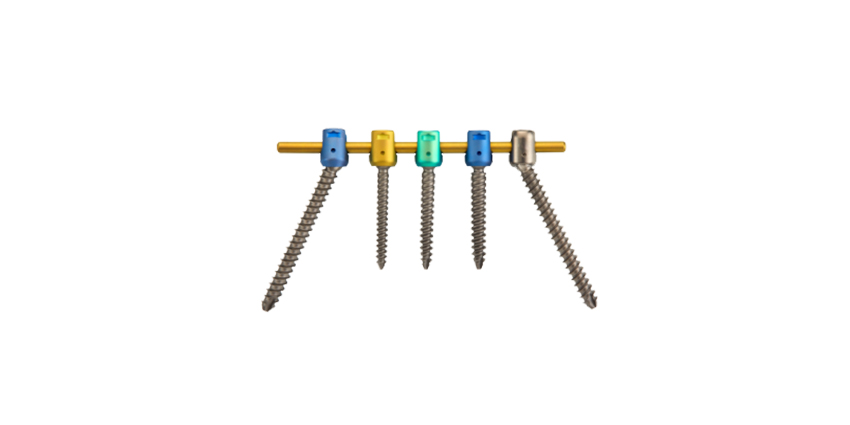
The system includes both cannulated and non-cannulated polyaxial, reduction, and iliac screws. It is also compatible with the company’s neon3® Universal occipital-cervical-thoracic (OCT) Spinal Stabilization System through the use of transition rods and connectors. The system is offered with a range of screw diameters and lengths, as well as titanium and cobalt chrome rods. Single-use drills and taps are included to provide consistent performance. Momentum is intended for use for spine fixation for thoracolumbar and sacroiliac from as high as the T1 vertebrae.
Author
React:
Discussion
This is a fascinating development. In my practice we've seen similar outcomes with the revised protocol. The key differentiator seems to be patient selection criteria. Has anyone else noticed the correlation with BMI thresholds?
Great point. I'd push back slightly on the conclusion, the sample size in the cited study is too small to draw population-level inferences. That said, the directional signal is compelling and worth a larger RCT.
We implemented a similar approach last year. Early results are promising but we're still gathering 12-month follow-up data. Happy to share our protocol if anyone is interested.
Join the conversation
Orthopedic professionals are discussing this. Sign in and upgrade to read every comment and add your voice.