
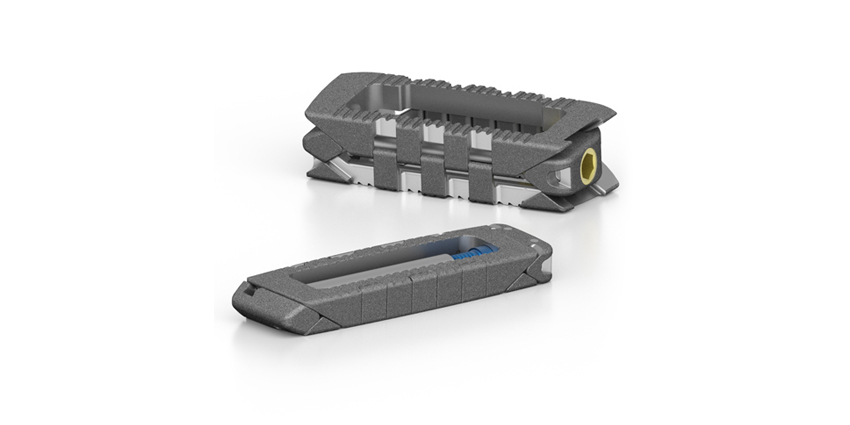
The ProLift® series of expandable lumbar interbody fusion devices was first cleared by the FDA in 2016. Life Spine, Inc.’s expandable portfolio now includes devices for posterior lumbar interbody fusion (PLIF), transforaminal lumbar interbody fusion (TLIF), and lateral lumbar interbody fusion (LLIF).
Life Spine Initiates Prolift Lateral Interbody Study
1 min read Premium comments
#lifespineSecondary#lumbarfusion#laterallumbarinterbodyfusion#prolift
The company recently announced that it will begin a prospective clinical trial of the ProLift Lateral Expandable System to generate clinical data in support of the device’s efficacy.
Michael Butler, company president and CEO, regards data from research and clinical studies as “incredibly important to our organization and to the spine community.” He continued to describe the current state of research and clinical studies for the company, “The PROLIFT Lateral study is one of eight active studies being executed by Life Spine currently as a part of our dedication to researching the safety and efficacy of our products. Anecdotally, we have received excellent feedback regarding the PROLIFT Lateral System, but it is integral to our core goals to validate this feedback and ensure our products are advancing the standards of spine care.”
In addition to the eight studies mentioned by Butler, the company regularly tests products in its in-house cadaver lab. Over 350 surgeons have also trained there.
Many spine devices do not undergo clinical trials, as they are cleared by the FDA or granted CE marking simply by being compared to a predicate device with similar design and materials. Life Spine appears to be going the extra mile to back up its devices with clinical data, some of which may be necessary to maintain approvals under the now-postponed EU MDR rollout.
Author
React:
Discussion
This is a fascinating development. In my practice we've seen similar outcomes with the revised protocol. The key differentiator seems to be patient selection criteria. Has anyone else noticed the correlation with BMI thresholds?
Great point. I'd push back slightly on the conclusion, the sample size in the cited study is too small to draw population-level inferences. That said, the directional signal is compelling and worth a larger RCT.
We implemented a similar approach last year. Early results are promising but we're still gathering 12-month follow-up data. Happy to share our protocol if anyone is interested.
Join the conversation
Orthopedic professionals are discussing this. Sign in and upgrade to read every comment and add your voice.