
What is the natural history of the dysplastic hip and how does a periacetabular osteotomy affect it? For skeletally mature patients with intact cartilage, periacetabular osteotomy is the preferred treatment for acetabular dysplasia.
How Does Osteotomy Affect Acetabular Dysplasia?
2 min read Premium comments
Secondary#acetabulardysplasia#periacetabularosteotomy
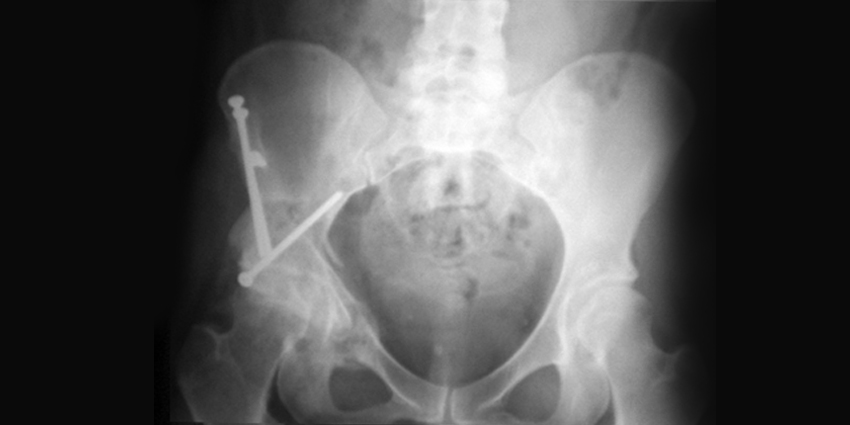
Researchers from the Mayo Clinic, Washington University in St. Louis and the University of Utah decided to assess the long-term radiographic natural history of dysplatic hips after periacetabular osteotomy based on the final position of the acetabular fragment.
The study, “Hitting the Target: Natural History of the Hip Based on Achieving an Acetabular Safe Zone Following Periacetabular Osteotomy,” appears in the June 23, 2020 edition of The Journal of Bone and Joint Surgery.
Rafael J. Sierra, M.D., a co-author on the study who is with the Department of Orthopedic Surgery at Mayo Clinic in Rochester, Minnesota, explained the team’s objectives to OTW. “Evaluating the natural history of the dysplastic hip and how this is influenced by surgical intervention has proven challenging for decades. This paper represents the culmination of a series of investigations our team has performed over the past several years.”
“We first delineated the natural history of the native dysplastic hip against native hips with normal morphology (PMID: 27071391). Understanding this relationship was fundamental as a control group to the subsequent study, which defined how natural history of the native dysplastic hip is restored to that of a normal hip in most cases by periacetabular osteotomy (PMID: 31094985).”
“In that study, patient outcomes were not uniform, and one hypothesis was that differences in surgical technique, namely positioning of the acetabular fragment, could be accounting for these differences.”
Asked why it is important to base it on the final position, he added, “Periacetabular osteotomy is a complex reconstructive procedure that involves 3-dimensional reorientation of the osteotomized acetabular fragment. There is only one true perfect correction for every patient and deviations from this in any plane can yield suboptimal hip biomechanics.”
In this study, the researchers assessed periacetabular osteotomy performed by four hip preservation surgeons to treat acetabular dysplasia from 1996 to 2012 at three institutions. They wrote, “There were 288 patients with a mean clinical and radiographic follow-up of 9 years (range, 5 to 21 years). Postoperative radiographs made at the first clinical visit were used to determine if the acetabular fragment fell into a safe zone according to the absence of retroversion, a lateral center-edge angle (LCEA) of 25° to 40°, an anterior center-edge angle (ACEA) of 25° to 40°, and a Tönnis angle of 0° to 10°. Every available subsequent radiograph was assessed for degenerative changes by the Tönnis classification (grades 0 to 3)…”
Dr. Sierra told OTW, “This study demonstrates that hip natural history following periacetabular osteotomy is improved by achieving radiographic targets commonly described as normal for a native hip. Furthermore, while attention in most literature places emphasis on coronal plane correction with lateral center-edge angle and Tönnis angle, our data suggests that sagittal and axial plane correction as measured by version and anterior center-edge angle are more predictive of a successful outcome.”
Regarding future work, he noted, “Two of the most important unanswered questions in periacetabular osteotomy are, 1) what is the ideal correction for a given patient? and, 2) can we reproducibly hit this target? The current study is an important first step toward question #1, however, future studies may aim to delineate patient-specific corrections and technologies such as navigation and 3-D printing may enable more reproducible outcomes toward question #2.”
Author
React:
Discussion
This is a fascinating development. In my practice we've seen similar outcomes with the revised protocol. The key differentiator seems to be patient selection criteria. Has anyone else noticed the correlation with BMI thresholds?
Great point. I'd push back slightly on the conclusion, the sample size in the cited study is too small to draw population-level inferences. That said, the directional signal is compelling and worth a larger RCT.
We implemented a similar approach last year. Early results are promising but we're still gathering 12-month follow-up data. Happy to share our protocol if anyone is interested.
Join the conversation
Orthopedic professionals are discussing this. Sign in and upgrade to read every comment and add your voice.