
Memphis based Wright Medical Group has announced that the first shoulder arthroplasty procedure using groundbreaking BLUEPRINT Mixed Reality Technology was performed at the Mayo Clinic in Rochester, Minnesota.
Holographic Shoulder Surgery (!) at The Mayo
2 min read Premium comments
#shoulderarthroplasty#wrightmedicalSecondary#mayoclinic
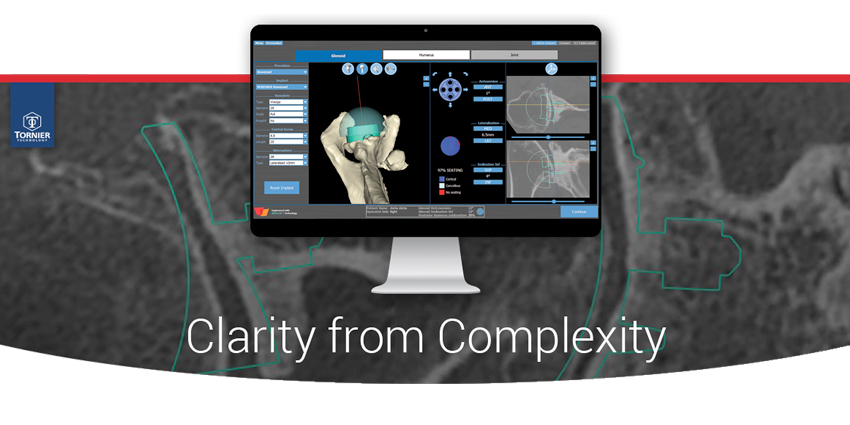
Joaquin Sanchez-Sotelo, M.D., Ph.D., performed the surgery utilizing Wright’s BLUEPRINT system which provides a 3-D holographic view of the patient’s pre-operative plan.
According to Wright, the Mixed Reality Application “enables a surgeon to maintain a direct view of the surgical site and simultaneously visualize and manipulate a holographic representation of the patient’s native anatomy and pre-operative plan. By using hand gestures and voice commands, the surgeon can interact with a more robust data set to optimize the position of the 3-D holographic models displayed by the Mixed Reality application. This can allow the surgeon to replicate the pre-operative plan as closely as possible given the availability of information while operating.”
Dr. Sanchez-Sotelo described the experience this way: “I was able to visualize, rotate, and tilt three-dimensional holographic objects right in front of the surgical field. As mixed reality continues to develop, it will provide a very unique, cost-effective tool for execution of our surgical plan.”
Robert Palmisano, president and CEO of Wright Medical, told OTW, “A major milestone during the Mixed Reality development process was the integration of the Mixed Reality Visualization software within the existing BLUEPRINT™ ecosystem. Integrating with the BLUEPRINT™ ecosystem and the automatic segmentation capabilities enables a surgeon to load a CT image set, plan a case and walk into the OR with Mixed Reality Visualization in minutes.”
There is, of course, a learning curve as Palmisano explained, “The BLUEPRINT™ Mixed Reality application was developed to have an intuitive and user-friendly interface, utilizing simple hand and voice gestures, which can shorten the learning curve. The application aligns with the BLUEPRINT™ 3D planning software so a surgeon with BLUEPRINT™ planning experience will be in a familiar environment when using Mixed Reality in surgery. In preparation for use in the OR, the team at Wright also provides focused training to surgeons and their team to ensure they are fully prepared for use in surgery.”
Importantly, Wright Medical has baked into the system the ability to integrate case planning optimization in the modules later on, as Palmisano explained to OTW. “Future BLUEPRINT™ Mixed Reality modules will leverage real-time data acquisition and artificial intelligence (AI) algorithms during the procedure to provide potential alternative surgical plan options. Surgeons will be able to utilize these critical pieces of information to optimize their plans in real time while in surgery.”
Note: Dr. Sanchez-Sotelo and Mayo Clinic have financial interest in Wright Medical Group N.V. Mayo Clinic will use any revenue it receives to support its not-for-profit mission in patient care, education and research.
Author
React:
Discussion
This is a fascinating development. In my practice we've seen similar outcomes with the revised protocol. The key differentiator seems to be patient selection criteria. Has anyone else noticed the correlation with BMI thresholds?
Great point. I'd push back slightly on the conclusion, the sample size in the cited study is too small to draw population-level inferences. That said, the directional signal is compelling and worth a larger RCT.
We implemented a similar approach last year. Early results are promising but we're still gathering 12-month follow-up data. Happy to share our protocol if anyone is interested.
Join the conversation
Orthopedic professionals are discussing this. Sign in and upgrade to read every comment and add your voice.