
Orthofix Medical Inc. has received both FDA 510(k) clearance and European CE Mark approval for the company’s JuniOrtho Plating System to correct deformities internally in kids and small stature adults. It took the FDA about four months to clear the system.
FDA and EU Regulators Clear New Pediatric Plating System
2 min read Premium comments
#fda510kclearance#orthofixSecondary#pediatricdeformities
This lies at the heart of orthopedics, which in the Greek language means straightening (ortho) children (paidos).
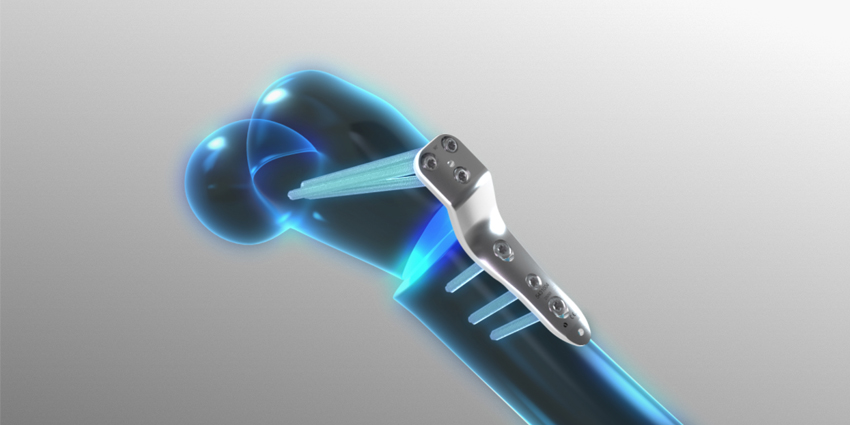
JuniOrtho Plating System
According to the FDA clearance summary, the system is intended for “internal fixation and stabilization of fractures, osteotomies, mal-unions and non-unions of long bones of the lower limb,” and is indicated for “internal fixation and stabilization of femoral and tibial fractures, osteotomies, mal-unions and non-unions.”
Indications include:
- Varus, valgus, rotational and/or shortening osteotomies
- Femoral neck and/or pertrochanteric fractures
- Proximal and distal metaphyseal fractures
- Pathological and impeding pathological fractures
The system consists of various plate size and shape ranges, designed, according to FDA documents, “to accept locking and cortical bone screws, which are available in a variety of diameters and lengths, in order to support internal fixation and stabilization of fractures, osteotomies, mal-unions and non-unions in long bones of lower limbs.” The implants would be offered both in sterile and non-sterile packaging configurations.
Pre-Operative Planning Software
In a July 20, 2020 press release, the company said the system is complemented by a pre-operative planning software option that “streamlines the implant selection prior to the surgical procedure. This unique platform enables the surgeon to accurately plan the osteotomy position to visualize the implant in relation to the anatomy. This aids in the selection of the precise size of device to ensure the best fit and optimal positioning for the patient’s body.
That’s a long way from the old days when it was necessary to manually plan deformity correction surgery using tracing paper and scissors.
“Specifically developed to be used in combination with the JuniOrtho Plating System, the software is currently available in Europe and planned for release in the U.S. later this year.”
Commenting in the press release, Philip McClure, M.D., an orthopedic surgeon at the International Center for Limb Lengthening in Baltimore, Maryland, said the field of deformity correction is “rapidly evolving with multiple technical and technological advances every year. External fixators are an incredibly powerful tool in caring for deformities in children around the world. Improved designs of internal fixation devices have allowed us to provide complimentary options to external fixators to benefit our patients and their families.”
Company President and CEO Jon Serbousek noted Orthofix can now offer surgeons both internal and external fixation systems with an expanded portfolio of pediatric deformity care solutions.
Author
React:
Discussion
This is a fascinating development. In my practice we've seen similar outcomes with the revised protocol. The key differentiator seems to be patient selection criteria. Has anyone else noticed the correlation with BMI thresholds?
Great point. I'd push back slightly on the conclusion, the sample size in the cited study is too small to draw population-level inferences. That said, the directional signal is compelling and worth a larger RCT.
We implemented a similar approach last year. Early results are promising but we're still gathering 12-month follow-up data. Happy to share our protocol if anyone is interested.
Join the conversation
Orthopedic professionals are discussing this. Sign in and upgrade to read every comment and add your voice.