
A seed funding round, led by Cove Fund II, closed after oversubscribing the $2.5 million goal for Carlsmed, Inc. The company, based in San Diego, California, plans to use the money to accelerate the clinical launch of its aprevo™ system. Wavemaker Three-Sixty Health, Device of Tomorrow Capital and individuals invested as well.
Carlsmed Raises $2.5M to Accelerate Launch of Custom Spine Implant
1 min read Premium comments
#carlsmedSecondary#aprevo#patientspecific
Mike Benvenuti, Co-Manager of Cove Fund II is bullish on the Carlsmed and its technology. Benvenuti said in a press release, “Carlsmed’s team has the deep industry experience and operational expertise to lead the much-needed shift to personalized medicine for challenging complex spine cases and beyond.”
Mike Cordonnier, Carlsmed CEO and co-founder, said, “Surgeons and patients across the spectrum that have postponed treatment for debilitating spinal conditions will soon have access to an affordable and streamlined system for personalized spine surgery.”
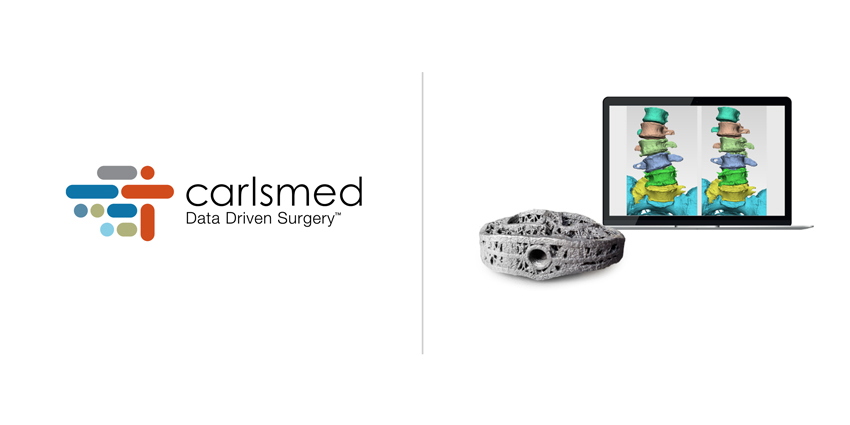
The aprevo™ system allows for the creation of 3D-printed patient-specific custom titanium interbody fusion devices based on preoperative imaging. The devices do not yet have FDA-clearance.
In addition to successful fundraising, Carlsmed has appointed Alexander Arrow, M.D. C.F.A. as chief financial officer and Shariq Hussain as chief information officer. Arrow previously held the CFO position at Protagenic Therapeutics, Inc., and was CEO of Zelegent, Inc. and other executive roles in the medtech industry. Hussain was co-founder, CEO, and CTO of IntelliGuard.
Carlsmed, Inc. currently has offices at the EvoNexus incubator in La Jolla, California, as well as an office in Seattle, Washington. EvoNexus specializes in tech, life science, and fintech startups. Carlsmed’s surgeon advisory board includes many well-known key opinion leaders in spine surgery such as Chris Ames, M.D., Shay Bess, M.D., Gregory Mundis Jr., M.D., and Justin Smith, M.D.
Author
React:
Discussion
This is a fascinating development. In my practice we've seen similar outcomes with the revised protocol. The key differentiator seems to be patient selection criteria. Has anyone else noticed the correlation with BMI thresholds?
Great point. I'd push back slightly on the conclusion, the sample size in the cited study is too small to draw population-level inferences. That said, the directional signal is compelling and worth a larger RCT.
We implemented a similar approach last year. Early results are promising but we're still gathering 12-month follow-up data. Happy to share our protocol if anyone is interested.
Join the conversation
Orthopedic professionals are discussing this. Sign in and upgrade to read every comment and add your voice.