
A new study out of New York’s Hospital for Special Surgery (HSS) has updated outcome data for superior capsular reconstruction for irreparable rotator cuff tears or re-tears.
Capsular Reconstruction Outcome Data From HSS
1 min read Premium comments
#rotatorcufftearSecondary#superiorcapsularreconstruction#shoulder
The study from which this data emanates, “Clinical Outcomes following Arthroscopic Shoulder Superior Capsular Reconstruction,” is available online as part of the AAOS 2020 Virtual Education Experience.
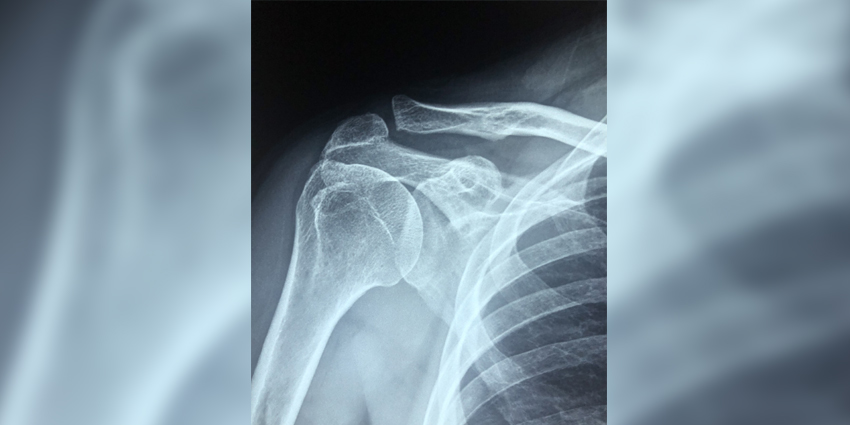
Rotator cuff injuries whether from wear and tear or acute trauma are common. And while arthroscopic surgery is successful in repairing complete tears, there is still a high re-tear rate. And in some cases, the rotator cuff cannot be repaired primarily.
The superior capsular reconstruction technique involves using a graft to reconstruct the superior capsule of the shoulder in the area where the irreparable rotator cuff is.
The HSS team looked at data from 72 patients who had undergone arthroscopic superior capsular reconstruction with dermal allograft at the Hospital for Special Surgery between 2012 and 2017. Almost half of the patients in the study had a history of failed rotator cuff repair.
According to data collected via patient-reported outcome surveys including Single Assessment Numeric Evaluation (SANE), American Shoulder and Elbow Surgeons (ASES) and University of California at Los Angeles, most of the patients experienced significant improvements in forward elevation, abduction, and external rotation after survey.
Patient scores in these surveys averaged 80%, 78% and 85%, respectively. Five patients did need a second operation, but there were no other complications.
“This technique has proven to be effective for patients with irreparable tears,” concluded Joshua S. Dines, M.D., Hospital for Special Surgery sports medicine surgeon and senior study author.
“As we continue to do more outcomes research, we become more precise at predicting the best candidates for each technique. While not for everyone, this has emerged as a great option for patients who may not be right for a reverse shoulder replacement.”
Dine and his colleagues plan on future research to look at long-term outcomes and results.
Author
React:
Discussion
This is a fascinating development. In my practice we've seen similar outcomes with the revised protocol. The key differentiator seems to be patient selection criteria. Has anyone else noticed the correlation with BMI thresholds?
Great point. I'd push back slightly on the conclusion, the sample size in the cited study is too small to draw population-level inferences. That said, the directional signal is compelling and worth a larger RCT.
We implemented a similar approach last year. Early results are promising but we're still gathering 12-month follow-up data. Happy to share our protocol if anyone is interested.
Join the conversation
Orthopedic professionals are discussing this. Sign in and upgrade to read every comment and add your voice.