
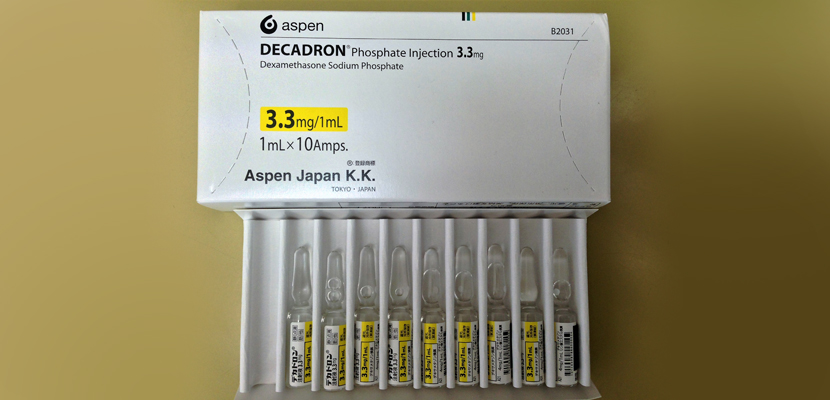
Preliminary results out of the University of Oxford RECOVERY study show that a common and inexpensive steroid drug, dexamethasone, is an effective treatment for COVID-19.
Will COVID-19 Lead to Dexamethasone Shortage?
1 min read Premium comments
Secondary#dexamethasone#drugshortage#spineinjection
These positive results may have a ripple effect to other medical specialties that rely on the drug. The study found that ventilated patients who were randomized to receive dexamethasone died at one-third of the rate compared with those who received usual care. A smaller effect was seen in patients requiring oxygen, and no effect in patients who did not require respiratory intervention.
While this is great news for those suffering from COVID-19, the Spine Intervention Society cautions that a shortage of dexamethasone may be coming. Dexamethasone is commonly used in transforaminal epidural injections and a shortage could mean that alternatives may need to be considered for patients suffering from myelopathy or radiculopathy. The society has issued a series of guidelines that will help save the drug for those whose lives it may save, while still helping patients needing spinal injections.
The guidelines, published on the organization’s website and emailed to members, include recommendations regarding use of dexamethasone with preservative, obtaining the steroid from a compounding pharmacy, use of alternative steroids, and risk mitigation strategies.
Preservative-free dexamethasone is preferred for spinal injections, but it is the form that is most likely to be in short supply. There is little-to-no evidence that benzyl alcohol, the primary preservative used, is neurotoxic, so it is likely to be safe for use in transforaminal epidural injections.
The guidelines list alternative particulate steroids such as methylprednisolone, betamethasone, and triamcinolone for lumbar transforaminal epidural injections. Additional recommendations suggest the safe use of non-particulate steroids for interlaminar and caudal epidurals at any level, rather than just cervical transforaminal injections. Concerns with using compounding pharmacies included potential sterility issues, as highlighted by a 2012 fungal meningitis outbreak from the New England Compounding Company.
While the recommendations are intended to guide practitioners, “Clinical judgment on a case-by-case basis is recommended when selecting the optimal route of epidural injection to balance safety and effectiveness.”
Author
React:
Discussion
This is a fascinating development. In my practice we've seen similar outcomes with the revised protocol. The key differentiator seems to be patient selection criteria. Has anyone else noticed the correlation with BMI thresholds?
Great point. I'd push back slightly on the conclusion, the sample size in the cited study is too small to draw population-level inferences. That said, the directional signal is compelling and worth a larger RCT.
We implemented a similar approach last year. Early results are promising but we're still gathering 12-month follow-up data. Happy to share our protocol if anyone is interested.
Join the conversation
Orthopedic professionals are discussing this. Sign in and upgrade to read every comment and add your voice.