
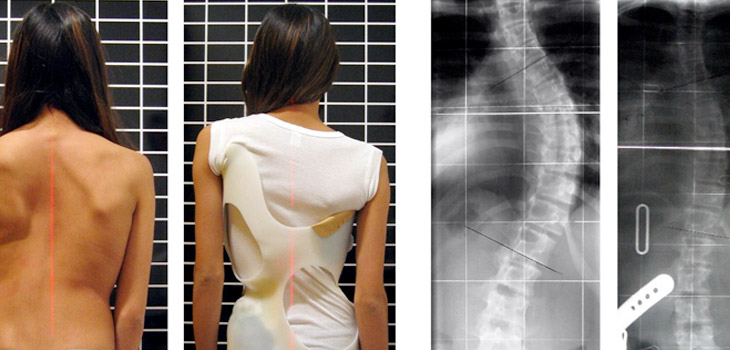
Because there is a lack of evidence and agreement on the most effective guidelines for bracing in adolescent idiopathic scoliosis (AIS), an international team of surgeons set out to review, survey and update best practices. The team reviewed the literature, surveyed 55 expert physicians, nurse practitioners, researchers, physician assistants, orthotists, and physical therapists, and did another survey that included 31 pediatric orthopedic surgeons who were members of the International Pediatric Orthopaedic Think Tank.
Updated Best Practices for Idiopathic Scoliosis Issued
2 min read Premium comments
#adolescentidiopathicscoliosis#scoliosisbracing
Co-author Benjamin D. Roye, M.D., M.P.H., associate professor with Columbia University Medical Center in New York City explained the genesis of the study to OTW, “We found substantial variability amongst the same group of providers and across groups of providers on several topics. We then went on to develop a 66-question survey that covered various indications for bracing, including brace prescription, brace type, radiographic assessment, physical activities, discontinuing bracing, and PSSE [Physiotherapeutic Scoliosis-Specific Exercises] in bracing. Based on those responses, we developed a second questionnaire, and, in an iterative manner, developed a third and fourth questionnaire.”
The researchers held dinners and meetings with practitioners and pulled together various opinions about treatment plans. They then did a Delphi questionnaire and distributed it to doctors all around the country.
“The dinners were done as part of the initial survey of physicians and other care providers,” said Dr. Roye. “The Delphi process, which is the name of what was used in the development of this best practice guidelines which relies on developing consensus among recognized experts in the field when detailed objective data from controlled research is lacking.”
Dr. Roye explained the team’s methodology to OTW, “Each questionnaire refined questions based on the previous answers to try come up with a question that generates consensus which is defined as 80% agreement. After the iterative questionnaires, the process moved to the in-person meeting which was designed to generate consensus on items that have approached consensus, but not quite there (so generally those with 70-79% agreement). By discussing the items, the statements could be re-phrased (usually more broadly) to become agreeable to a larger number of voters.”
“There was no single finding that would be considered most important. The fact that we were able to come up with general guidelines is what is most important—a framework from which more prospective research can be built from.”
“For example, we agreed that bracing for less than six hours a day is not indicated in AIS (as it is useless), and while some people think this number may be higher (eight hours) everyone could agree on six hours. We also agreed on general factors that define high risk for progression (factors related to curve size and growth remaining) and that high-risk curves should be braced for a minimum of 18 hours per day.
Regarding how this may change the daily practice of orthopedics, Dr. Roye commented to OTW, “The concept behind these Best Practice Guidelines is that hard data is generally lacking, so developing consensus to build a framework both to guide practitioners and guide parameters for research is helpful. When tremendous variability exists in managing a problem, that generally doesn’t mean that there are a lot of equally good ways to treat the problem, but rather that we don’t know what the best way to treat it. Removing the variability lets us study what we are doing and invariably improve the quality of care.”
Author
React:
Discussion
This is a fascinating development. In my practice we've seen similar outcomes with the revised protocol. The key differentiator seems to be patient selection criteria. Has anyone else noticed the correlation with BMI thresholds?
Great point. I'd push back slightly on the conclusion, the sample size in the cited study is too small to draw population-level inferences. That said, the directional signal is compelling and worth a larger RCT.
We implemented a similar approach last year. Early results are promising but we're still gathering 12-month follow-up data. Happy to share our protocol if anyone is interested.
Join the conversation
Orthopedic professionals are discussing this. Sign in and upgrade to read every comment and add your voice.