
A California woman has filed a class-action lawsuit against Blue Shield of California (Blue Shield) on behalf of herself and others similarly situated, alleging the insurance provider wrongfully denied claims for the use of a specific device to treat spinal stenosis.
Blue Shield of California Sued Over coflex Denial
1 min read Premium comments
#coflexSecondary#spinalstenosis#bluecrosscalifornia
Representing Kathryn Segalle and the class, law firm Gianelli & Morris filed suit in the superior court of the state of California for the county of Los Angeles.
The class action complaint is for declaratory and injunctive relief in connection with Blue Shield’s alleged violation of California Business and Professions Code Section 17200, which applies to unfair competition. Unfair competition includes “any unlawful, unfair or fraudulent business act or practice and unfair, deceptive, untrue or misleading advertising.”
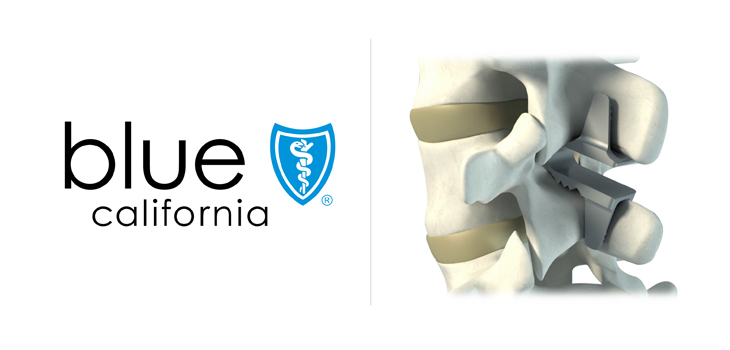
Segalle’s individual complaint is for breach of contract and breach of implied covenant of good faith and fair dealing. Segalle alleges Blue Shield wrongfully denied claims for the use of the coflex® medical device to treat spinal stenosis. A single-piece titanium implant, the coflex Interlaminar Stabilization® device goes in the back of the spine and treats moderate to severe cases of spinal stenosis. coflex was developed by Paradigm Spine, LLC, and acquired by Alachua, Florida-based RTI Surgical, Inc. in March 2019.
In the complaint, Segalle claims that Blue Shield improperly denies coflex as an investigational procedure, which is not eligible for coverage. Segalle cites Blue Shield’s own medical policies and definition of investigational. She argues that coflex does not fit into Blue Shield’s investigational categorization.
In support of her position, Segalle provides a history of coflex. The complaint asserts that the Food and Drug Administration (FDA) granted coflex pre-market approval in 2012. It alleges that since the FDA’s pre-market approval, peer-reviewed clinical studies have supported the use of coflex. Further, the complaint claims that surgeons are continuing to use coflex in the treatment of spinal stenosis and medical societies support its use.
As of the date of this article, Blue Shield had not filed a response.
Author
React:
Discussion
This is a fascinating development. In my practice we've seen similar outcomes with the revised protocol. The key differentiator seems to be patient selection criteria. Has anyone else noticed the correlation with BMI thresholds?
Great point. I'd push back slightly on the conclusion, the sample size in the cited study is too small to draw population-level inferences. That said, the directional signal is compelling and worth a larger RCT.
We implemented a similar approach last year. Early results are promising but we're still gathering 12-month follow-up data. Happy to share our protocol if anyone is interested.
Join the conversation
Orthopedic professionals are discussing this. Sign in and upgrade to read every comment and add your voice.