
Inspiren, a technology company founded and led by nurses, has developed a truly innovative device to help fight COVID-19 and ensure that staff are adequately protected at all times. Since the inception of the pandemic, Inspiren’s founding nurses have been on the front lines at hospitals in New York City and Central New Jersey, identifying the needs of staff. The company’s flagship product? The iN.
Bedside Device Contact Traces, Improves Staff Safety
3 min read Premium comments
#bedsidemonitor#contacttracing#inspiren
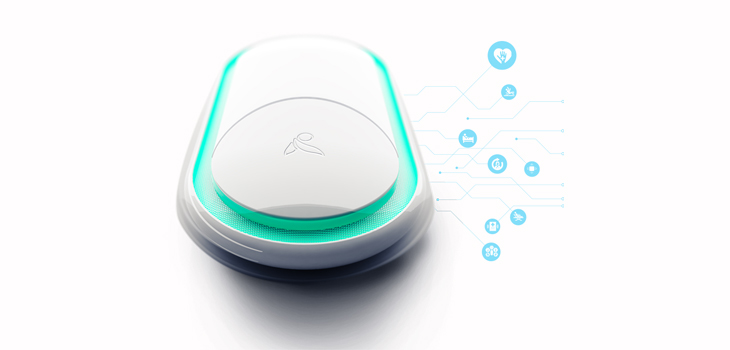
iN, an easy to install, wall mounted device, is at the bedside, essentially performing contact tracing. Inspiren provides feedback as to who entered the room, how long they were there, how close they were to the patient, and if PPE (personal protective equipment) was properly secured throughout the visit.
“Our mission has always been to protect patients and safeguard staff,” says Michael Wang, RN, CEO of Inspiren. “The collective efforts of clinicians and technologists working side by side over the last few years have manifested this mission. It is an honor to be able to provide peace of mind to those who are selflessly putting themselves on the front lines to care for patients.”
Commenting on the “backstory” was Paul Coyne, president and co-founder of Inspiren, who told OTW, “Inspiren CEO, Mike Wang, and I were great friends and study partners in nursing school. We stayed in touch after he became a cardiothoracic nurse and I moved into the field of informatics. During his time at the bedside, Mike recognized an opportunity to significantly improve patient care through remote ambient monitoring as clinicians cannot have eyes on patients at all times.”
“We met and brainstormed to envision a world where smart sensors analyzed, not the EHR [electronic heath records], but the actual digital and physical environment of the patient room, to automatically detect patient behavior, intelligently notify caregivers of risk, and provide clinical management insight into behavioral trends. From this idea, Inspiren was born. We developed a team of nurses, healthcare executives, technology delivery experts, and computer vision engineers to create the product and bring it to life.”
Coyne explained to OTW how he and his team developed this innovative device. “When building the device, we needed to look into the future and determine what kind of information we would want to collect in the clinical environment that maybe wouldn’t be leveraged immediately. Our goal was to minimize hardware changes and focus on firmware/software upgrades based on the sensing data we were collecting.”
“To accomplish this, we needed to decide on what sensors would give us the best opportunity to understand the full context of clinical situations. This was a challenging process because we always had to keep cost in mind and in some cases, it was hard to justify implementing sensing technology that was future looking. With that said, our goal as a company is to protect patients and safeguard staff so it ultimately was our mission that drove our development decisions.
As for how they plan to roll out the technology in other hospitals, Coyne told OTW, “First and foremost, it’s about making healthcare organizations successful and helping them to meet their goals. We are here to reduce adverse events, shed light on patient/resident behavior, and automate manual activity like charting and documentation. If we can do this consistently, our strategy is to make the industry aware of these successes along with our longer-term vision and grow organically within the industry. To prepare for this growth we have secured a number of partnerships to help us with installation and clinical implementation of our technology. This was an important step to ensure we have the resources to implement with speed and efficiency.”
The year 2019 was a banner period for Inspiren as the company received more than 20 international innovation awards for its hybrid sensing computer vision, IoT, and audio/video monitoring platform from organizations including TIME, Edison, SXSW, Fast Company, and the American Nurses Association.
Author
React:
Discussion
This is a fascinating development. In my practice we've seen similar outcomes with the revised protocol. The key differentiator seems to be patient selection criteria. Has anyone else noticed the correlation with BMI thresholds?
Great point. I'd push back slightly on the conclusion, the sample size in the cited study is too small to draw population-level inferences. That said, the directional signal is compelling and worth a larger RCT.
We implemented a similar approach last year. Early results are promising but we're still gathering 12-month follow-up data. Happy to share our protocol if anyone is interested.
Join the conversation
Orthopedic professionals are discussing this. Sign in and upgrade to read every comment and add your voice.