
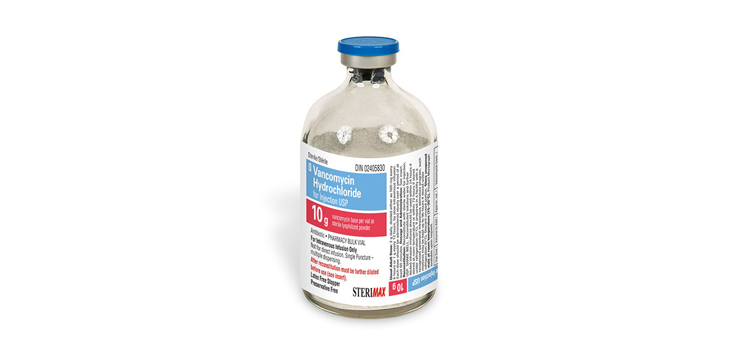
It may just be “the way it is done” when surgeons sprinkle vancomycin powder topically throughout the surgical site after spine surgery or joint reconstruction and before wound closure. Surely, this antibiotic on the World Health Organization’s List of Essential Medicines will help to combat infection.
Vancomycin Versus Surgical Site Infection Study Review
4 min read Premium comments
#surgicalsiteinfection#mrsa#vancomycinpowder
However, where is the evidence-based data to support the use of the powder?
Some question whether the drug is efficacious, cost-effective, or possibly even counterproductive. Many publications and presentations at orthopedic congresses attempt to address these questions, though few investigate the basic science, dose response, or include randomization.
A new study from the University of California Los Angeles (UCLA) took a look at vancomycin in an in vivo mouse model. The publication, “Progress not panacea: vancomycin powder efficacy and dose evaluated in an in vivo mouse model of spine implant infection,” appears in the June 2020 issue of The Spine Journal.
The study authors implanted spine implants infected with bioluminescent Staphlococcus aureus. They found that mice treated with vancomycin powder prior to wound closure had significantly fewer persistent infections. Further, there was a dose response showing greater infection rates with smaller doses of vancomycin.
The authors pointed out that vancomycin was ineffective at completely eliminating infection in all mice that received treatment. The work suggests that vancomycin powder can be effective, even in lower doses for patients that may have contraindications for high concentrations of vancomycin.
Is Vancomycin Powder Cost Effective?
Another consideration on the minds of surgeons and, especially hospital administrators, is the cost effectiveness of vancomycin. A pair of studies published in 2019 calculated the cost effectiveness of using vancomycin powder for hip arthroplasty, and lumbar laminectomy. Both studies calculated the absolute risk reduction, or the number of infections that must be prevented based on the costs associated with the infection to justify the cost of using the drug.
The study published in the journal Orthopedics, “Efficacy and Cost-effectiveness of Topical Vancomycin Powder in Primary Cementless Total Hip Arthroplasty,” found that, though there was no statistically significant difference in the study cohorts given vancomycin or not, there was an absolute risk reduction of 0.98%, suggesting that a $12 dose of vancomycin powder results in a savings of $904 per patient. A larger trial may provide the statistical significance lacking in this 309-patient study.
The second study, published in the Global Spine Journal, “The Cost-Effectiveness of Vancomycin Powder in Lumbar Laminectomy,” Kerbel, M.D., et al. found that an absolute risk reduction of at least 0.015% for lumbar laminectomy, or 0.0034% for lumbar laminectomy with fusion would suggest cost-effectiveness. The group concluded that the reductions required in infection rate were so miniscule that treatment is highly cost effective.
An important consideration, one that even patients may have developed while watching or reading the news, is whether application of vancomycin powder contributes to antibacterial resistance. A 2019 study published in Spine Deformity, “Local Application of Vancomycin in Spine Surgery Does Not Result in Increased Vancomycin-Resistant Bacteria—10-Year Data,” determined that over a 10-year period from 2007 to 2017, there was no association between vancomycin-resistant bacteria found in surgical site infections and vancomycin application. The study did, however, find an increase in gram-negative infections in patients that received topical vancomycin.
What About Unintended Consequences?
The question of unintended consequences of topical vancomycin powder application may still be relevant, despite a low risk of developing resistant strains. The typical target of vancomycin powder application is Staphlococcus aureus, especially methicillin-resistant Staphlococcus aureus (MRSA), but this is not the only cause of surgical site infection.
Another common infection that should not be overlooked is Cutibacterium acnes, (formerly known as Propionibacterium acnes), which is particularly troublesome in shoulder and spine surgery where the bacteria commonly reside on the skin and cause acne.
Research published in Antimicrobial Agents and Chemotherapy found the best agents against the bacteria are penicillin G, cephalothin, and ceftriaxone. The study, “Antimicrobial Susceptibility of Propionibacterium acnes Isolates from Shoulder Surgery,” found that vancomycin is effective against C. acnes biofilms only at very high concentrations (≥128 μg/ml). Research on C. acnes is important in light of recent findings confirming concerns of biofilm production by the bacteria on PEEK implants.
Another study pertaining to surgical site infection in spinal surgery was published in the June 2020 issue of The Spine Journal, “Early adherence and biofilm formation of Cutibacterium acnes (formerly Propionibacterium acnes) on spinal implant materials.” The group from Brown University and Rhode Island Hospital ascertained the time to adherence and biofilm formation of C. acnes on several common spine implant materials: polyether ether ketone (PEEK), cobalt chromium, stainless steel, titanium, and titanium alloy.
The authors found that C. acnes adhered to PEEK quickly and began to form a biofilm as early as 8 hours after application. All of the metal implants showed little-to-no adherence and no biofilm production up to 24 hours after application. These results add to the growing body of evidence suggesting that PEEK is far from an ideal material for spine surgery and its continued use should be questioned.
The North American Spine Society (NASS) last updated its guideline, “Antibiotic Prophylaxis in Spine Surgery,” in 2013. The literature reviewed supports the use of prophylactic antibiotics but has not found evidence that any form of prophylaxis is effective at totally eliminating infection. The guidelines also provide consensus statements suggesting the use of vancomycin powder in instrumented, or complicated spine surgery, or for patients with comorbidities such as diabetes, neuromuscular disease, cord injury, or trauma.
Conclusion: Vancomycin Inexpensive Add-On
While some of the studies reviewed here provide conflicting outcomes regarding the use of vancomycin powder, the fact remains that it is an inexpensive add-on to use during open spine surgery or joint reconstruction with few repercussions. Larger, randomized trials, or more extensive retrospective studies across multiple institutions could provide better evidence concerning the efficacy of vancomycin powder, but funding for such a study is unlikely for such an inexpensive drug. Additionally, the data from these studies favors materials other than PEEK, such as titanium or titanium alloy, which are widely available.
Author
React:
Discussion
This is a fascinating development. In my practice we've seen similar outcomes with the revised protocol. The key differentiator seems to be patient selection criteria. Has anyone else noticed the correlation with BMI thresholds?
Great point. I'd push back slightly on the conclusion, the sample size in the cited study is too small to draw population-level inferences. That said, the directional signal is compelling and worth a larger RCT.
We implemented a similar approach last year. Early results are promising but we're still gathering 12-month follow-up data. Happy to share our protocol if anyone is interested.
Join the conversation
Orthopedic professionals are discussing this. Sign in and upgrade to read every comment and add your voice.