
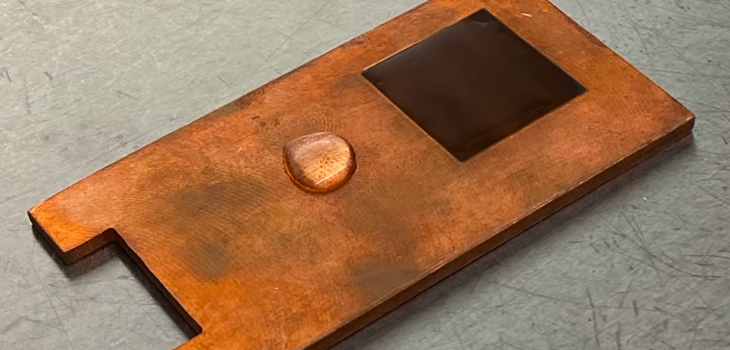
Engineers at Purdue University have found a novel way to imbue metals with significantly effective bacteria killing ability—without adding a separate anti-bacterial compound (like silver) or coating. The innovative process laser etches nano-scale textures on the metal surface and, because of the geometry of the resulting surface topography, imbues implant metals with the ability to rapidly kill gram-positive and gram-negative bacteria. Even drug resistant strains such as Methicillin-Resistant Staphylococcus Aureus (MRSA) fall prey to Purdue’s laser treatment.
Purdue Unlocks Bacterial Killer Potential in Implant Metals
2 min read Premium comments
Secondary#osteoinductive#antibacterial#lasertexture
Surgical site infection is a major contributor to reoperation and revision of orthopedic implants. Infection can result in loosening of implants and subsequent failure. Infection can also lead to life threating conditions, such as sepsis. Surgeons and patients currently rely on copious amounts of antibiotic drugs left in the wound or administered systemically to fight infection.
How Purdue’s Metal Treatment Works
The Purdue system uses an advanced laser treatment to melt a layer of metal and thereby create a nano-scaled, porous surface texture. That new geometry results in a more hydrophilic reducing surface tension when fluids are exposed to the material. The textured metal induces membrane damage, leading to rapid cell death.
The article which explains this remarkable invention, “Hierarchical Micro/Mesoporous Copper Structure with Enhanced Antimicrobial Property via Laser Surface Texturing” was published in the April 8, 2020 edition of Advanced Materials Interfaces.
In addition to the texture induced through the laser treatment, the surface composition was changed as well. Analysis showed significantly higher amounts of oxygen, in the form of copper oxides (CuO, Cu2O), which may contribute to the bactericidal effect.
This research is reminiscent of a study published in 2017 in Applied Surface Science, “Enhancing the antibacterial performance of orthopaedic implant materials by fibre laser surface engineering.” Researchers used fibre laser surface engineering to modify the surface of three common orthopedic implant materials: titanium, a titanium alloy, and cobalt chrome. Cobalt chrome did not change significantly after laser treatment. Pure titanium became the most bactericidal of the three metals, reducing biofilm adhesion by nearly 3/4 compared to untreated titanium. Treated titanium alloy reduced biofilm by about 1/3 compared to the untreated alloy.
Another recent study, “Impact of Laser Structuring on Medical-Grade Titanium: Surface Characterization and In Vitro Evaluation of Osteoblast Attachment” published in Materials (Basel) in April 2020 has shown that osteoblast-like cells adhere and grow into pores created by laser structuring of the surface of titanium better than untreated titanium. Improved adherence and growth of osteoblasts could improve osteointegration, reducing implant failure in fusion constructs for spine, orthopedic and dental applications.
Surface texturing has become a common selling point for orthopedic implants. It is a claim of 3D printed titanium implants and is said to be osteoinductive and to promote osteoblast differentiation and proliferation. Surface texturing of PEEK implants is also available and advertised for the same purpose.
All of the studies summarized here suggest a bright future for laser treatments of metal implants. Laser treatment may be a cost effective and safe way to improve biocompatibility, improve fusion, and reduce surgical site infection.
Author
React:
Discussion
This is a fascinating development. In my practice we've seen similar outcomes with the revised protocol. The key differentiator seems to be patient selection criteria. Has anyone else noticed the correlation with BMI thresholds?
Great point. I'd push back slightly on the conclusion, the sample size in the cited study is too small to draw population-level inferences. That said, the directional signal is compelling and worth a larger RCT.
We implemented a similar approach last year. Early results are promising but we're still gathering 12-month follow-up data. Happy to share our protocol if anyone is interested.
Join the conversation
Orthopedic professionals are discussing this. Sign in and upgrade to read every comment and add your voice.