
Pantheon Spinal LLC announced on May 11, 2020 its acquisition of Incite Innovation, LLC., a Massachusetts-based spine device manufacturer. Terms of the deal were not disclosed.
Pantheon Spinal Makes Another Acquisition With Incite Innovation
1 min read Premium comments
#spinesurgerySecondary#inciteinnovation#pantheonspinal
Pantheon Spinal was formed by Dr. Scott Spann to commercialize the Anterior To Lateral Approach System (A.T.L.A.S.), which uses the Epiphany and Pontus implants. The current acquisition will add modular anchored cervical interbody devices to the Pantheon portfolio. The company will continue to develop its lateral and anterior lumbar systems under Eric Hansen’s leadership as well.
Pantheon plans to continue focusing on modular technology, such as multiple use trays and implant categories to become more sustainable and limit excess in the operating room. Pantheon plans to produce its implants through AR Fabricating, LLC. a “top go-to manufacturer” for the company. AR Fabricating is operated by several individuals previously associated with Summit Spine, which merged with Pantheon in April 2020.
Incite Innovation also produces the Pegasus anchored cervical interbody, which has been exclusively distributed by Alphatec Spine since 2014. The agreement with Alphatec will remain in place after the acquisition is finalized.
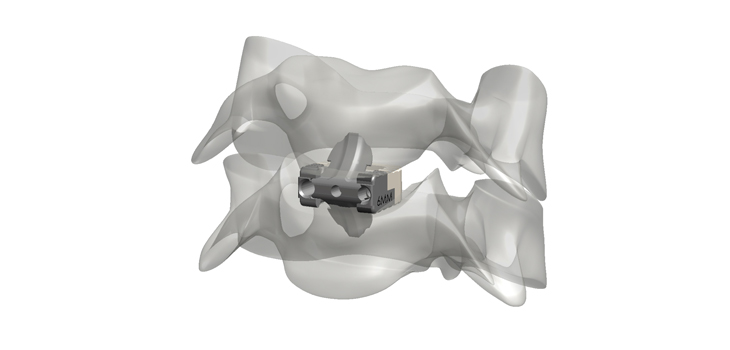
Pantheon’s Chief Executive Officer Eric Hansen says, “We are excited to complete the line with cutting edge implant and instrument technology for anchored lateral and anterior lumbar approaches. We will be adding a modular concept to the entire line, which will include a screw plate option.” An initial offering will be named Trident (pictured), a titanium or PEEK implant that attaches to an anchor. The implant is FDA 510(k) cleared and was previously named the Incite Anchored Cervical Interbody and has already been used in over 1,000 cases. It will soon be available in an anatomic shape in PEEK and titanium. The current iteration requires supplemental fixation. Pantheon expects the acquisition to further its goal to be a company “built by surgeons for surgeons.”
Author
React:
Discussion
This is a fascinating development. In my practice we've seen similar outcomes with the revised protocol. The key differentiator seems to be patient selection criteria. Has anyone else noticed the correlation with BMI thresholds?
Great point. I'd push back slightly on the conclusion, the sample size in the cited study is too small to draw population-level inferences. That said, the directional signal is compelling and worth a larger RCT.
We implemented a similar approach last year. Early results are promising but we're still gathering 12-month follow-up data. Happy to share our protocol if anyone is interested.
Join the conversation
Orthopedic professionals are discussing this. Sign in and upgrade to read every comment and add your voice.