
New data from a long-term patient study of Silicon nitride (Si3N4) in 450 spine fusions started in the 1980s is providing preclinical evidence of osteogenesis and bacteriostasis due to surface chemistry, topography, and hydrophilicity.
New Long-Term, Multicenter Data Supports Silicon Nitride
2 min read Premium comments
Secondary
Silicon nitride is one of the oldest spinal fusion materials under study with a long-term, 30-patient study started in the 1980s. Improvements in pain scores were similar to recent studies, with good initial improvement and reductions in improvement over 10 years.
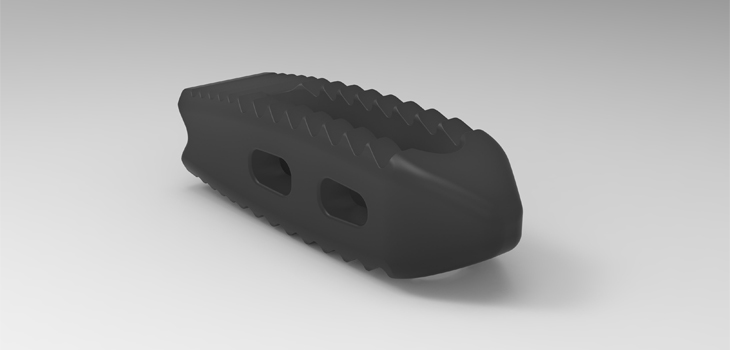
More recent clinical studies of the real-life effectiveness of the material is limited, mainly, to cervical fusion. However, a study published in the March 2020 issue of the Journal of Spine Surgery is the largest multicenter study of silicon nitride for lumbar fusion and found that silicon nitride (Si3N4) interbody spacers performed equivalently to devices of other materials when used in lumbar fusion surgery.
The study, “Clinical outcomes for lumbar fusion using silicon nitride versus other biomaterials,” retrospectively compared 450 instrumented lumbar fusion surgeries conducted at 4 centers using silicon nitride implants with similar surgeries using implants made of other materials. The control group was assembled through a meta-analysis of 1,025 patients from 14 studies. The study devices included the Valeo I and II line of lumbar interbody spacers from CTL Amedica.
The study compared changes in visual analog scale (VAS) pain scores, and complication and reoperation rates. The authors reported equivalent improvements in VAS, and similar rates of complications and reoperations. Recurrent symptoms and adjacent level disease were the most common complications in the silicon nitride cohort. Data on fusion rates were not included in the publication. One potential confounder of the results is the lower rate of smoking in the silicon nitride patients (15.8% versus 30.0%). Smoking is a known risk factor of failed fusion and could potentially bias the results in favor of the silicon nitride implants.
The study was sponsored by SINTX Technologies, Inc. and authors include consulting surgeons to CTL Amedica Corporation and two employees of SINTX Technologies, which is the manufacturer of silicon nitride that is used in CTL Amedica’s Valeo spacers. SINTX Technologies was formed in 2018 when CTL Medical acquired the spine device business of Amedica to become CTL Amedica, the remainder of Amedica’s business was rebranded as SINTX. Despite these potential sources of bias, the data appear to suggest that silicon nitride is an acceptable material to use for lumbar fusion surgery.
Author
React:
Discussion
This is a fascinating development. In my practice we've seen similar outcomes with the revised protocol. The key differentiator seems to be patient selection criteria. Has anyone else noticed the correlation with BMI thresholds?
Great point. I'd push back slightly on the conclusion, the sample size in the cited study is too small to draw population-level inferences. That said, the directional signal is compelling and worth a larger RCT.
We implemented a similar approach last year. Early results are promising but we're still gathering 12-month follow-up data. Happy to share our protocol if anyone is interested.
Join the conversation
Orthopedic professionals are discussing this. Sign in and upgrade to read every comment and add your voice.