
A new study, “Calcific Tendonitis of the Shoulder: Protector or Predictor of Cuff Pathology? A Magnetic Resonance Imaging-Based Study,” published in the April 2020 issue of Arthroscopy, explored whether calcific lesions in the shoulder offered protection against a rotator cuff tear or were a predictor that it would happen.
Calcified Lesions Can Predict Rotator Cuff Tears
1 min read Premium comments
#rotatorcufftearSecondary#shoulder#calcifictendonitis
Calcific tendonitis of the shoulder is a painful condition that can be acute or chronic where calcium deposits build up inside or around the tendons of the rotator cuff. It occurs most commonly in people between the ages of 40 and 60. Women appear to be affected more than men.
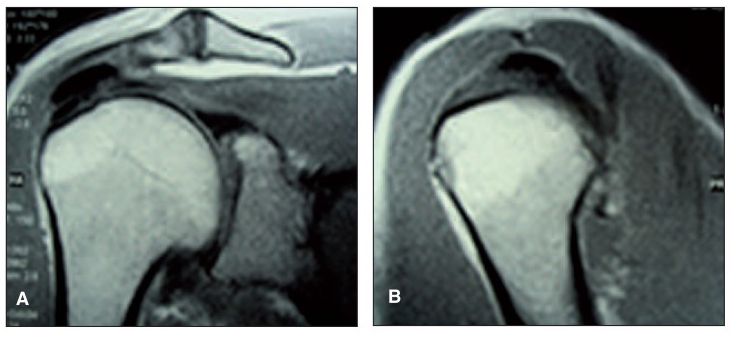
In a retrospective analysis of 318 shoulders with calcific tendonitis, the researchers found that Type III calcification morphology was frequently associated with rotator cuff tears, with an increased odds of tear by a factor of 1.8 (CI95% 1.1-2.9).
For the study, the charts of patients at a single center with a diagnosis of calcific tendonitis between January 2010 and April 2017 were reviewed. A radiologist reviewed anteroposterior radiographic and MRI studies for calcific tendonitis morphology, size, distance from cuff insertion, and any rotator cuff tear. The results were then confirmed by a second radiologist.
In 56% of the shoulders with calcific tendonitis, there were concomitant rotator cuff tears. 164 of the 177 tears were partial-thickness and 13 were of complete thickness.
The researchers wrote, “The incidence of rotator cuff tears in cases of calcific tendonitis in this cohort of patients who underwent MRI is higher than previously reported. Cloudy-appearing calcified lesions showed a significant association with rotator cuff tears with an odds ratio of 1.8.”
They added, “Specific locations or sizes of calcified lesions do not appear to be reliable factors to predict concomitant rotator cuff tears. Interobserver agreement for these radiographic variable ranged from fair to substantial and prompt a cautious interpretation of these results.”
Author
React:
Discussion
This is a fascinating development. In my practice we've seen similar outcomes with the revised protocol. The key differentiator seems to be patient selection criteria. Has anyone else noticed the correlation with BMI thresholds?
Great point. I'd push back slightly on the conclusion, the sample size in the cited study is too small to draw population-level inferences. That said, the directional signal is compelling and worth a larger RCT.
We implemented a similar approach last year. Early results are promising but we're still gathering 12-month follow-up data. Happy to share our protocol if anyone is interested.
Join the conversation
Orthopedic professionals are discussing this. Sign in and upgrade to read every comment and add your voice.