
The office manager and former girlfriend of a New York orthopedic surgeon has sued that surgeon in federal court accusing him of having her followed by a private investigator and arrested on false charges of embezzlement. Included in the lawsuit is their hospital employer, who the office manager claims protected the surgeon.
Ex-Office Manager Claims Ortho Surgeon Framed Her
5 min read Premium comments
#discrimination#embezzlement#retaliation
Susanne Schafmeister, the manager of operations at New York University Langone’s Foot and Ankle Center, filed suit against New York University Langone Orthopedic Hospital and John Kennedy, M.D., an orthopedic surgeon and Professor at NYU Langone Hospitals’ Department of Orthopedic Surgery. In her lawsuit, Schafmeister accuses Dr. Kennedy of “outrageous discriminatory, harassing and threatening behavior”. She also claims their hospital employer’s actions and failure to act subjected her to “blatant and unconscionable retaliation.”
The Complaint
In a complaint filed in the Southern District of New York, Schafmeister details her relationship with prominent surgeon Dr. Kennedy. Schafmeister says their relationship began shortly after she moved to the United States from Germany in 2005. In 2007, she began working for Dr. Kennedy in his private practice as an operations manager. From 2007 until 2018, Schafmeister and Dr. Kennedy continued both their romantic and business relationships.
In 2018, Schafmeister claims “the romantic relationship between Ms. Schafmeister and Dr. Kennedy had soured owing to various lies and deceitful conduct on his part.” During this time, Dr. Kennedy accepted a job with NYU Langone Orthopedic Hospital and requested that Ms. Schafmeister also be hired. In late December 2018, Ms. Schafmeister accepted a position as revenue cycle manager with the Department of Orthopedic Surgery working with Dr. Kennedy.
Schafmeister alleges that Dr. Kennedy began to subject her to “discriminatory harassment and retaliation in the workplace for her decision to end the relationship.” Schafmeister alleges that Dr. Kennedy continued to request Schafmeister perform personal tasks for him, rifled through her desk, and had her followed by a private investigator.
The complaint states that Dr. Kennedy “would reprimand her, deny her vacation requests, assign her near-impossible tasks and bring up her dating life during irrelevant and inappropriate times.” He also made several threats to have her fired and deported.
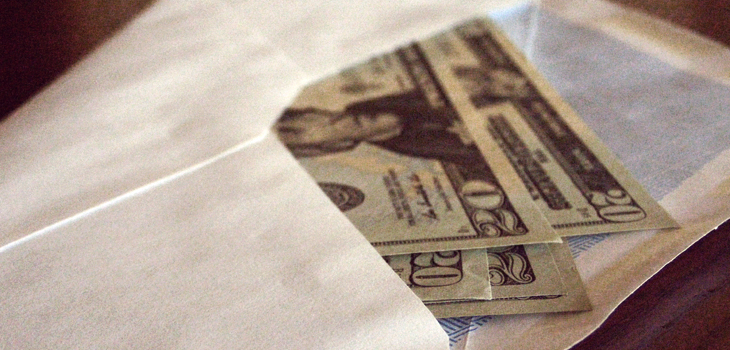
The complaint further alleges that at one point, “Dr. Kennedy instructed Ms. Schafmeister to write herself a $12,000 check from the private practice’s business account to herself in consideration of her guaranteed bonus.” Dr. Kennedy then had Ms. Schafmeister arrested and charged with a felony based on his claims that she had stolen the money from him.
During this time, Schafmeister made a formal complaint about Dr. Kennedy to NYU Langone’s Human Resources department. Schafmeister complained that “Dr. Kennedy began subjecting her to egregious and frightening threats and harassment shortly after the dissolution of their relationship.” NYU Langone’s Human Resources department did not respond to her complaint.
Dr. Kennedy’s Answer
Dr. Kennedy filed a response on April 1, 2020. In his answer, Dr. Kennedy argues that Schafmeister’s lawsuit is an attempt to extort money from him and cover up her actions. Specifically, he asserts that Schafmeister only made her claims after she was caught embezzling money and that her lawsuit is full of false claims intended to damage him and his medical practice.
Dr. Kennedy notes that Schafmeister has been charged with grand larceny in the second degree for writing unauthorized checks to herself and making unauthorized payments from his account to cover personal charges on her American Express bills. Dr. Kennedy claims that the total amount of money and property that Schafmeister improperly converted to herself exceeds $170,000. Specifically, Dr. Kennedy claims that Schafmeister:
- overpaid her own salary by more than $28,000,
- issued 17 checks for more than $130,000 to pay off her own American Express bills,
- issued herself a check for $12,000 while Dr. Kennedy was overseas at his father’s funeral.
Dr. Kennedy claims that Schafmeister acknowledged that she had taken “an inappropriate action…without…anyone’s knowledge” and that she had “made a serious error in judgment” because she was “in financial need.” Dr. Kennedy further noted that Schafmeister agreed to repay most of the money that she had stolen.
Dr. Kennedy claims that Schafmeister lied about the timeline of their romantic relationship—while she claims that the two were together until the end of 2018, Dr. Kennedy claims that he and Schafmeister had not been together since 2013.
Dr. Kennedy noted that he had noticed that Schafmeister’s work performance had declined soon after moving to NYU Langone. He claims that her “behavior around the office and with patients became difficult, aggressive, and erratic.” He also claims that Schafmeister began taking sick days on Fridays and that she began sending inappropriate text messages to his 17-year-old son that he found “disturbing.”
In his answer, Dr. Kennedy made the following claims against Schafmeister: conversion, unjust enrichment, breach of fiduciary duty, and intentional interference with prospective economic advantage. He asks the court to award him all monies taken as well as compensatory and punitive damages.
Dr. Kennedy voluntarily submitted to a polygraph examination, which he attached to his answer. Highlights from the polygraph exam include:
Question: Have you retaliated in any way against Susanne Schafmeister?
Reply: No
Result: No Deception indicated
Question: In the past 7 years, have you had any form of sexual contact with Susanne Schafmeister?
Reply: No
Result: No Deception Indicated
Question: Did you ever authorize Susanne Schafmeister to pay over $135,000 from your business account for her personal expenses?
Reply: No
Result: No Deception Indicated
Question: In July 2019, did you authorize Susanne Schafmeister to issue a check for $12,000 to herself?
Reply: No
Result: No Deception Indicated
The polygraph test used was the Air Force Modified General Question Test, Version 2, which is a validated and approved test by the three national polygraph organizations and the U.S. Government’s Polygraph Institute. The test has a scientific accuracy of up to 95%.
NYU Langone’s Response
NYU Langone filed its answer, objections, and defenses on April 1, 2020. NYU Langone’s response included the affirmative defenses of: failing to state a claim upon which relief may be granted, claims barred by the statute of limitations, waiver, estoppel, laches, unclean hands, failure to mitigate damages, claims barred because defendants owed no duty to plaintiff, failure to exhaust administrative remedies or procedural prerequisites, and that the defendants always had legitimate, non-discriminatory and non-retaliatory business reasons for its decisions that were undertaken in good faith and in compliance with all applicable laws.
OTW reached out to NYU Langone for a comment on the matter. Annie Harris, media relations manager for NYU Langone Health wrote, “Thank you for your inquiry and the opportunity to respond. It is NYU Langone Health’s policy not to comment specifically on pending legal matters. We take seriously all internal allegations of inappropriate behavior and they have been and continue to be investigated. Likewise, we will defend the federal complaint in court at the appropriate time. Inquiries regarding the pending criminal charge and Order of Protection filed against Ms. Schafmeister are referred to the Manhattan District Attorney’s office for comment.”
Dr. Kennedy and Schafmeister continue to work at NYU Langone. According to the complaint, after Schafmeister’s arrest and return to work, she learned that “her job description had been changed and she was stripped of all of her managerial responsibilities.”
Author
React:
Discussion
This is a fascinating development. In my practice we've seen similar outcomes with the revised protocol. The key differentiator seems to be patient selection criteria. Has anyone else noticed the correlation with BMI thresholds?
Great point. I'd push back slightly on the conclusion, the sample size in the cited study is too small to draw population-level inferences. That said, the directional signal is compelling and worth a larger RCT.
We implemented a similar approach last year. Early results are promising but we're still gathering 12-month follow-up data. Happy to share our protocol if anyone is interested.
Join the conversation
Orthopedic professionals are discussing this. Sign in and upgrade to read every comment and add your voice.