
With COVID-19 shutting down non-essential businesses and postponing non-essential surgeries around the world, many medical device companies are experiencing a decreased demand for their products.
Autoclavable, Reusable Titanium 3D-printed N95 Respirator
5 min read Premium comments
#covid19#n95respirator#personalprotectiveequipment
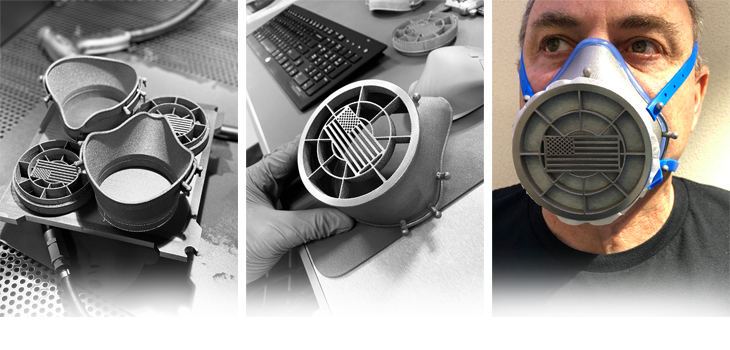
But COVID-19 couldn’t stop the innovators at Theken. They took a problem—a maddening shortage of personal protection equipment (PPE)—and came up with an innovative solution. In less than ten days, the team developed a reusable, autoclavable, titanium 3D-printed N95 respirator that only weighs 60 grams and could potentially replace hundreds of disposable masks. This device, along with Theken’s proprietary N99 filter material, is currently awaiting FDA approval.
A Call to Action
On April 1, 2020, Randy Theken, founder and CEO of Theken Group, a group of four medical device companies based in Akron, Ohio, received a call from Jeff Dulik, D.O., an orthopedic surgeon who asked if his companies could develop a solution for the personal protection equipment shortages in area hospitals. Perhaps there was a way to 3D-print reusable masks?
Theken, whose four medical device companies include NextStep Arthropedix (a developer of total joint replacement products). Slice Mfg, Studios (a design laboratory and contract manufacturing facility), LaunchPoint (Theken’s corporate innovation division) and Ə Ceramics (a developer and manufacturer of advanced ceramics for orthopedic implants) and his teams jumped into action. For more on the Theken Group, see OTW’s “Randy Theken’s New Company and Return to Orthopedics.”
In less than ten days, the team conceptualized and created a reusable, autoclavable, titanium 3D-printed N95 respirator along with a proprietary N99 filter material that has been submitted to the FDA for approval.
From an Idea to a Device in Under Ten Days
OTW spoke with some of Theken’s team to hear how they were able to accomplish this impressive undertaking in such a short period of time.
Theken Chief Technology Officer Cowan Moore described how the respirator went from an idea to a device. Moore explained, “First, the team worked with four different surgeons who gave some insight on how a fit test for an N95 respirator works, how they would use it in the OR, and how they would put it on and take it off. The team worked with Jeff Dulik, D.O., an orthopedic surgeon, Steven Ochs, M.D., a urological surgeon, Ian Dickey, M.D., an orthopedic surgeon, and Don Voltz, M.D., an anesthesiologist.”
The team used a 3D-scanner to take scans of a variety of faces and create a model of the respirator. They then used an FDM 3D-printer to print over 20 iterations of the respirator in plastic over a four-day period, making adjustments each time. Once the team was happy with the plastic prototype, they used a $1 million dollar GE Arcam EBM metal 3D-printer to create 50 titanium respirators in one build.
For a glimpse of how this magical process takes place, watch this video.
The finished product is a lightweight reusable surgical respirator that helps reduce wearer exposure to airborne particles. It is designed to be sterilized with steam in hospital settings and uses a silicone seal that is detachable and also sterilizable by steam. The respirator has adjustable silicone face straps to allow users with vary face shapes to adjust the fit and maintain the airtight seal.
Moore noted that a typical surgical mask is not N95-rated. Medical N95 respirators need to be fit and validated to confirm that there are no leaks around the edges. He said, “We realized that if we have a frame that is validated, we have the option of putting in other materials that are approved for N95 classification. And in addition, the doctor can take other types of material—for example regular surgical mask material—when needed to create other options. It’s very versatile in how it can be adopted. The intention is to supply filter inserts that can be swapped out in about 15 seconds. When you’re done, you just throw the old one [filter] away.”
Garrett Spurgeon, Director of Product Development for NextStep Arthropedix, explained why they chose titanium. “By using the same material that we use in our highly complex orthopedic implants that contain structures that are very difficult to clean, we knew that we had a material that was lightweight, it could be cleaned and sterilized in almost any hospital setting because it doesn’t necessarily represent a new worst case burden for the hospital to clean it. We have a wealth of data that was part of previous orthopedic device submissions that helps back this up. Titanium was the most efficient and functional choice because we were able to leverage a lot of the data that already exists for our complex orthopedic implants.”
FDA Clearance
Once the team had finalized the respirator, it was time to submit it for expedited FDA 510(k) clearance. Spurgeon spearheaded that task.
Spurgeon told OTW that he had “just answered questions from our FDA reviewer on what we do and how we would expect these devices to be cleaned and sterilized in the hospital. We provided those answers along with the other mechanical test data with the filter material. The FDA is in the process of reviewing it all. Our end goal is to get the device cleared and on the market under emergency use authorization. That process is for Class II medical devices. The FDA is allowing us to enjoy an expedited review period—hopefully within a week or two timeframe instead of the standard 90 days—and then we can get these to our end users who are in desperate need of these devices.”
Takeaways From the Experience
What has the Theken Group learned from working on this project?
Moore told OTW that he was surprised that, “so many people are doing this in plastic. What we are creating could be the first autoclavable 3D-printed respirator to ever be developed. I’ve yet to see any other instance where a 3D-printed autoclavable respirator has been developed and submitted to the FDA.”
Moore continued, “We are all very excited to work on a project like this where we get to interface with surgeons on something new. When you have a chance to solve a problem, that’s a good thing. When you have a chance to solve a problem to help people, you realize you truly can make an impact.”
Spurgeon noted, “There are silver linings everywhere. Even though a lot of folks are out of a job right now and elective surgeries have stopped, there are always ways to innovate. Being able to sink our teeth into something like this, where we are able to apply our engineering skills to go beyond what we do every day and solve unique challenges has been so rewarding.”
Tremendous Interest in Respirator
There has been tremendous interest in the respirator. Randy Theken posted about the respirator on his LinkedIn, and in less than a week, there were over 1,700 reactions and 150 comments. GE reached out and offered to donate the titanium powder needed. Ohio Governor Mike DeWine’s office along with various hospital institutions have expressed interest in purchasing this device.
Theken told OTW, “I’m proud of the way the team came together to develop this respirator. Hundreds of man hours went into this project. The last item is waiting for FDA clearance.” Once the respirator has been cleared, Theken plans to manufacture and donate respirators to area hospitals.
Author
React:
Discussion
This is a fascinating development. In my practice we've seen similar outcomes with the revised protocol. The key differentiator seems to be patient selection criteria. Has anyone else noticed the correlation with BMI thresholds?
Great point. I'd push back slightly on the conclusion, the sample size in the cited study is too small to draw population-level inferences. That said, the directional signal is compelling and worth a larger RCT.
We implemented a similar approach last year. Early results are promising but we're still gathering 12-month follow-up data. Happy to share our protocol if anyone is interested.
Join the conversation
Orthopedic professionals are discussing this. Sign in and upgrade to read every comment and add your voice.