
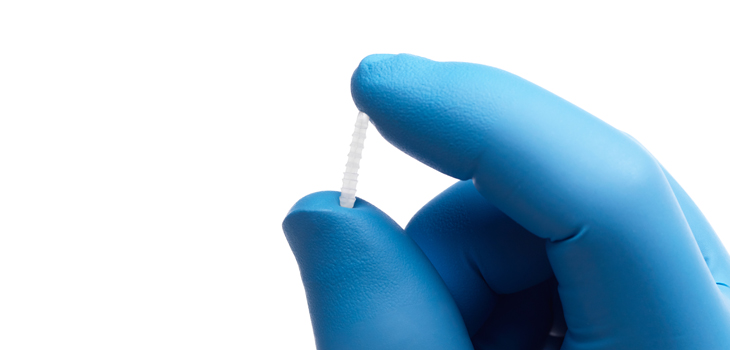
Israeli-based OSSIO, Inc. received a new 510(k) clearance from the FDA on March 6, 2020 for the company’s Hammertoe Fixation System.
Second Device Clearance Using OSSIOfiber Material
2 min read Premium comments
#fda510kclearanceSecondary#ossio#biointegrativematerials
It wasn’t the clearance that caught our attention as much as the length of time the FDA took to grant the clearance. The company submitted the 510(k) notification to the FDA in March 2019. That’s a very long time between submission and clearance.
We asked the company why it took so long.
A company spokesperson told us the system is a “very standard, low risk procedure.” However, the real innovation is in the OSSIOfiber material which, according to the company, leaves nothing permanent behind.
Extra FDA Scrutiny
According to the spokesperson, the FDA is looking deep into all materials, both permanent (including metal) and non-permanent, “to ensure short- and long-term bio-compatibility. In fact, the FDA now has a heightened sensitivity to upstream suppliers of raw materials, therefore putting a burden on manufacturers to prove there are no single compounds or manufacturing impurities that could impact bio-compatibility. Although this has caused about a year delay in our program, we are very proud and excited that we have been successful in working with the FDA to clear two sources of our raw material, thus clearing the path for several new product platforms to the U.S. market in the next 18 months, which will drive significant growth for Ossio.”
“New Category” Material
The company says its fiber bone regeneration technology is a new category of fixation material that “combines unparalleled mechanical strength and natural bone healing in a non-permanent implant. Made from a proprietary natural mineral fiber matrix, its bio-integrative material properties provide surgeons with a more biologically friendly way to restore patient stability and mobility” allowing for the leaving nothing permanent behind claim.
This isn’t the company’s first 510(k) clearance. In January 2019, the FDA cleared the company’s pin product which, according to the FDA documents, “is made of degradable poly (L-lactide-co-D, Llactide) (PLDLA) reinforced with continuous mineral fibers. The polymer content degrades by hydrolysis into alpha-hydroxy acids that are metabolized by the body. The mineral fibers are made from materials that are incorporated into bone.”
In 2019, the company completed enrollment in its European multi-center clinical trial designed to assess the safety and performance of the OSSIOfiber system.
“Trial results,” according to the company, “demonstrated fusion rates well above historical literature, dramatic improvements in pain and quality-of-lifescores from baseline, radiographic evidence of good bio-integration with the surrounding anatomy, and no evidence of adverse biological response or serious adverse events associated with the OSSIOfiber implant at six months follow-up.”
Stuart Miller, M.D., orthopedic surgeon at MedStar Union Memorial Hospital and assistant professor at Johns Hopkins University School of Medicine, Baltimore, Maryland, said back in 2019, the technology has the potential to “shift the paradigm in orthopedic fixation with promise for wide-ranging applications across the continuum of orthopedic surgery. An implant that maintains its strength through the known healing timeline and is then completely integrated into the surrounding anatomy with no adverse inflammation, is a real breakthrough for surgeons and the patients we treat.”
Author
React:
Discussion
This is a fascinating development. In my practice we've seen similar outcomes with the revised protocol. The key differentiator seems to be patient selection criteria. Has anyone else noticed the correlation with BMI thresholds?
Great point. I'd push back slightly on the conclusion, the sample size in the cited study is too small to draw population-level inferences. That said, the directional signal is compelling and worth a larger RCT.
We implemented a similar approach last year. Early results are promising but we're still gathering 12-month follow-up data. Happy to share our protocol if anyone is interested.
Join the conversation
Orthopedic professionals are discussing this. Sign in and upgrade to read every comment and add your voice.