
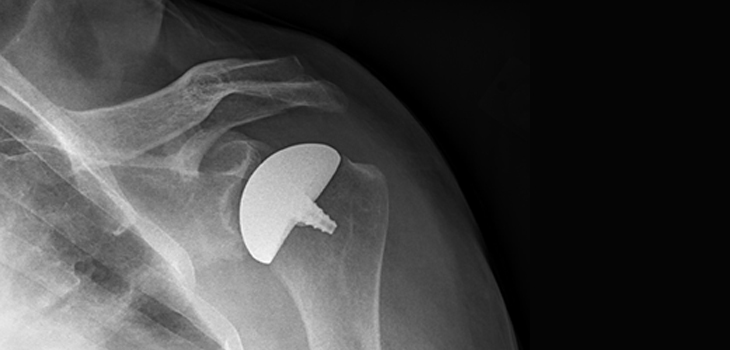
New research from Rush University Medical Center tackled that question in a new study of inlay glenoid shoulder arthroplasty components in young, active patients. Their conclusion was that treating patients with an Inlay Glenoid Shoulder Arthroplasty System, got patients back to their regular activities, including sports, quicker with increased range of motion.
How Do Inlay Glenoid Components Perform in Young Patients?
2 min read Premium comments
Secondary#glenohumeralosteoarthritis#arthrosurface
The study, “Anatomic total shoulder arthroplasty with an inlay glenoid component: clinical outcomes and return to activity,” published in the Journal of Shoulder and Elbow Surgery also demonstrated other clinical benefits of the system including pain relief, improved clinical outcomes, and no reoperations or radiographic loosening.
“Treatment of young, active patients with glenohumeral osteoarthritis is the subject of considerable debate,” said Gregory P. Nicholson, M.D., of Rush’s Department of Orthopaedic Surgery.
“While the demand for [total shoulder arthroplasty] in patients younger than 55 is projected to grow at a rate of 8.2 percent per year, clinical data for an anatomic total shoulder arthroplasty (TSA) with inlay glenoid components has been lacking. This study shows the numerous benefits of using the Arthrosurface OVO with Inlay Glenoid Shoulder Arthroplasty System as a primary solution for achieving pain relief and excellent functional improvements for patients eager to return to normal activity levels and regain quality of life.”
The retrospective review was conducted on 24 patients with primary or post-traumatic glenohumeral osteoarthritis. Total shoulder arthroplasty performed in 27 shoulders. In an average follow-up of 40.4 months, patients had significantly improved outcome measures as well as active forward flexion and external rotation.
Eighty-five percent of the patients reported that their fitness level was the same or better than before surgery.
“Almost 20 years ago, our surgeon advisory board brainstormed about improving TSA outcomes by focusing on the failure mode of glenoid loosening,” Steven Ek, president and chief executive officer of Arthrosurface, said.
“This surgeon panel arrived at a concept of a smaller glenoid implant set into the surface of the glenoid, shielding it from the loosening loads of more traditional glenoid designs. It has been very rewarding to watch this process of surgeon innovation, product development, clinical validation and industry adoption. At the end of the day, getting people back to work and their lifestyle is what it’s all about.”
Author
React:
Discussion
This is a fascinating development. In my practice we've seen similar outcomes with the revised protocol. The key differentiator seems to be patient selection criteria. Has anyone else noticed the correlation with BMI thresholds?
Great point. I'd push back slightly on the conclusion, the sample size in the cited study is too small to draw population-level inferences. That said, the directional signal is compelling and worth a larger RCT.
We implemented a similar approach last year. Early results are promising but we're still gathering 12-month follow-up data. Happy to share our protocol if anyone is interested.
Join the conversation
Orthopedic professionals are discussing this. Sign in and upgrade to read every comment and add your voice.