
This amazing, virtual reality seminar is part of the Global Spine Congress which is being held in Rio de Janeiro from May 20-23, 2020. If you want to be part of this groundbreaking event, you surely can.
100 Surgeons, Cadaver-Less Training, in Rio de Janeiro. Yes!
2 min read Premium comments
Secondary#precisionos#oculusquest
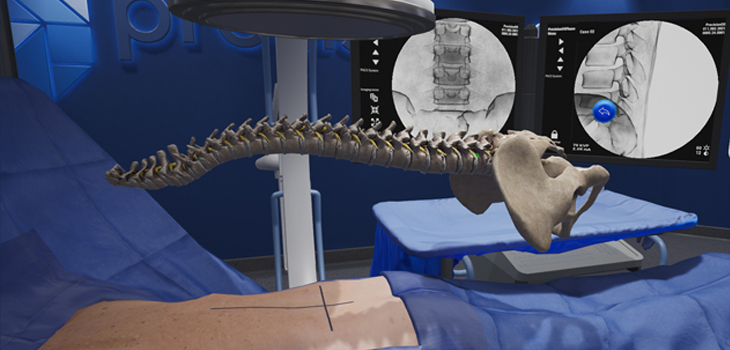
More than 100 surgeons are expected to assemble for what is probably the world’s first cadaver-free, virtual reality training session. The session is being hosted at the Global Spine Congress by Vancouver, British Columbia-based Precision OS Technology which hopes to impress the attending physicians with their new mobile platform, the Oculus Quest.
According to Precision OS Technology, the virtual reality educational modules, built on the Unreal Engine by Precision OS, enable the user to learn concepts faster. The company claims that its technology results in a 570% improvement in efficiency over traditional approaches to training AND enhances decision-making and technical skill by 150%.
“The Global Spine Congress is very excited to offer a novel course on spinal procedures using the Precision OS virtual reality platform to replace cadavers and teach complex spinal procedures,” said Dr. Jeffrey Wang, course chairman and professor of orthopaedic surgery and neurosurgery, University of Southern California Spine Center. “It appears the future of surgical simulation is now available, and we are extremely pleased to offer this unique opportunity to utilize modern technology and optimize the educational experience.”
“We considered how to improve patient outcomes very carefully when creating our surgeon training platform,” said Danny Goel, M.D., an orthopedic shoulder surgeon and CEO of Precision OS. “Being in the operating room and understanding the challenges we face as surgeons is how we approached our model. There are critical unmet needs with current models of simulation that are required for surgeons to become experts—and we feel our method helps to fill those gaps.”
“Advanced immersive technologies are allowing us to rethink the entire educational paradigm which has been in place for the last several hundred years,” Dr. Goel said. “Being able to provide this level of value to surgeons from around the world, while having their trust and confidence in our product is a great honor. There is a linearity that exists in our current training models that is being challenged with personalized education. We are harnessing and utilizing virtual reality to its maximum potential to really drive this competency-based curriculum.”
Speaking of their efforts to bring the future into the present, Dr. Goel told OTW, “The surgeon experience in the Precision OS platform provides easy to use, extremely unique and realistic case-based scenarios. It focuses on personalized learning while enhancing your skill towards expertise with deliberate practice.”
Author
React:
Discussion
This is a fascinating development. In my practice we've seen similar outcomes with the revised protocol. The key differentiator seems to be patient selection criteria. Has anyone else noticed the correlation with BMI thresholds?
Great point. I'd push back slightly on the conclusion, the sample size in the cited study is too small to draw population-level inferences. That said, the directional signal is compelling and worth a larger RCT.
We implemented a similar approach last year. Early results are promising but we're still gathering 12-month follow-up data. Happy to share our protocol if anyone is interested.
Join the conversation
Orthopedic professionals are discussing this. Sign in and upgrade to read every comment and add your voice.