
Dunn at SI-BONE, Keith Valentine at SeaSpine, Neel Anand at Cedars Sinai and Todd Albert at HSS—in orthopedics..
Profiles in Leadership: Dana Curtis Covey
6 min read Premium comments
#danacovey#leadershipaward#militaryorthopedicsurgery
What is this ethereal notion of leadership?
Among the most prestigious awards given by the American Academy of Orthopaedic Surgeons (AAOS) is the annual William W. Tipton Jr., M.D. leadership award. Why does AAOS have an award for leadership?
William W. Tipton M.D., for whom the award is named, was an orthopedic surgeon, educator, and former chair of the AAOS Board of Councilors. Dr. Tipton also served as the executive vice president of AAOS and was the CEO of the organization for nearly 10 years. The William W. Tipton Jr, M.D. Leadership Award was created to honor Dr. Tipton and those like him who demonstrate a sustained commitment to leadership excellence.
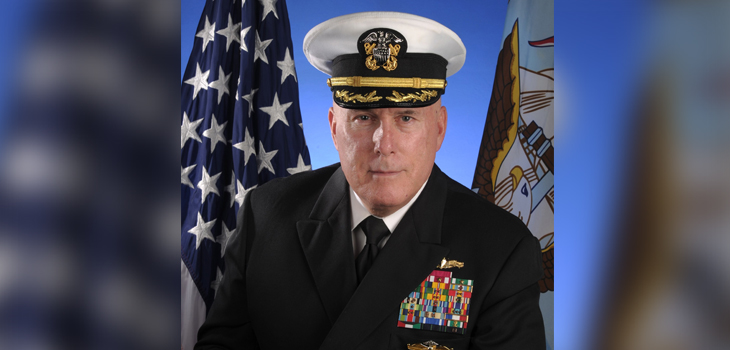
At a time when, we think, leadership excellence has never been as important as it is now, we decided to profile the 2019 winner of the William W. Tipton Jr., M.D. leadership award—Captain Dana C. Covey, M.D.
Dr. Covey’s career is a profile of duty, honor, patients, colleagues and country. A profile, in other words, in leadership.
Wartime Doctor…Deployed 10 (!) Times
Captain Covey’s exposure to orthopedic trauma was a literal baptism of fire. “I was deployed for the first Gulf War—Operation Desert Storm—in 1991. After a bombing campaign, the ground war was over in roughly 100 hours and thus there weren’t many casualties. During that deployment, I served in a field hospital in Saudi Arabia, and aid stations in Kuwait, and Iraq. I was then deployed to the Balkans in 1994 as part of the United Nations Protection Force (UNPROFOR). I was a ‘blue helmet’ UN surgeon in Velica Gorica, Croatia, and in Sarajevo, Bosnia, as one of a handful of Americans present during its siege.”
“In the Balkans we primarily treated civilians. It was particularly hard to witness because these were people who were formerly neighbors had split along ethnic and religious lines. The Serbs and the Bosnian Muslims who had once lived alongside one another in peace, were killing each other. This internecine fighting dated back hundreds of years and so had been a powder keg for some time.”
…and Humanitarian
“I spent seven months in Haiti in 1997 doing humanitarian work in a Navy field hospital. Our involvement in Haiti at that time was a consequence of U.S. engagement following the country’s change from military to civilian rule. In my capacity as second in command of the field hospital we cared not only U.S. personnel, but thousands of Haitian nationals with treatments ranging from vaccinations to amputations.”
From 2001 to 2004, Captain Covey and his family lived in Okinawa, Japan, where he served as chief of surgery at the Navy’s largest overseas hospital. “It was a very enjoyable experience and I found Japan an interesting contrast to the U.S. culture. Americans tend to have big houses, big cars, etc. But in Japan due to a high population density, people pay attention to the utility of each space. For example, a living room by day becomes a bedroom at night.”
Iraq and Afghanistan
“In 2004 I was deployed to Iraq with the Marine Corps as officer-in-charge of a forward surgical team. We worked in Al Anbar Province and Fallujah where there were numerous casualties. The following year I was deployed to Al Asad, Iraq; and in 2010 and 2011 to Helmand province in Afghanistan. When the Marines planned to do a sweep or other kinetic operations, our surgical team would be sent ahead of time to the region to prepare to receive casualties. Afghanistan was eye opening. It is a country of fiercely independent tribes. Oftentimes, the men would bring injured children to us (the women were not allowed to do so). They were quite gracious when we took care their family’s injuries.”
Dr. Covey was chairman of the Department of Orthopedic Surgery at the Naval Medical Center in San Diego for seven years, during which time he oversaw the education of many residents and medical students. “It has been gratifying to see those who I’ve mentored become outstanding orthopedic surgeons.” Dr. Covey continues training residents in his current position as an orthopedic surgery faculty member at University of California San Diego.
The Original Leader…His Dad
Dr. Covey’s father, a retired Marine, worked in agriculture and subsequently in education to support his eight children. “My upbringing was rather humble, but my parents imbued me with the values of service to country and to be the best one could be. One evening during my junior year in high school my parents said they couldn’t afford to send me to college, but suggested I look at the U.S. Naval Academy.”
Fortunately, Dana Covey’s potential was evident to the military. “I was appointed to the Naval Academy where becoming a leader is woven into the fabric of the culture.”
His father’s core principles of being a servant leader and taking care of one’s people were immediately palpable in this new environment. “Being truthful, forthright, and transparent were of the utmost importance.”
Fascinated with the complexities of the human body, in 1980 Dana Covey entered medical school, receiving his degree with honors from the University of Washington in 1984. “I then undertook an orthopaedic surgery internship and residency at Louisiana State University Medical Center in 1989. Because this was the era of no resident work hour restrictions, I basically lived at the hospital and learned by doing. This experience prepared me well for my fellowship at the University of Pennsylvania.”
Few Awards He Hasn’t Received…
Dr. Covey is the recipient of an array of awards and honors, including the Legion of Merit (two awards), Bronze Star, Meritorious Service Medal with two Gold Stars, Navy and Marine Corps Commendation Medal with Gold Star, Navy and Marine Corps Achievement Medal with Gold Star, Combat Action Ribbon, and Joint Meritorious Unit Award with Oak Leaf Cluster. He also has received the Sir Henry Wellcome Medal and Prize for outstanding medical research, the Colonel Brian Allgood Award for Leadership in Orthopaedic Surgery, the Chairman of the Joint Chiefs of Staff Award for Excellence in Military Medicine, and an AAOS Presidential Commendation.
To those considering military orthopedic surgery, Dr. Covey states, “Staffing levels rise and fall, and it is difficult to determine when and where there might be a need. It is a phenomenal way to serve your country, enhance your skills, travel the world, and represent the U.S. in a favorable way. Military medical personnel are often viewed differently from combatants in the minds of the local population. Even though there is ongoing war, they much appreciate the medical care they receive.”
Usually.
“Although we strove to provide everyone with the same level of service—even the Taliban fighters—sometimes these combatants did not appreciate their treatment and could be violent. But this was not the norm.”
Proudest Achievement?
His proudest professional achievement has been contributions made to far forward care of battlefield injuries. While Dr. Covey has been awarded more than 13 grants, he is most proud of the multimillion-dollar grant that was used for the planning and construction of the Surgical Training Laboratory (STL) at Naval Medical Center, San Diego. “We built this stellar facility to train residents as well as surgical teams tasked to deploy to combat zones. They are able to practice emergency procedures on mannequins or cadavers, and as a result are better prepared to intervene and save the lives of our injured service members.”
Serving as the senior orthopedic consultant for the U.S. Navy, Dr. Covey mentored and assigned Navy orthopedic surgeons worldwide. “In this role, I had to ensure that the Navy and Marine Corps had the orthopaedic support they needed. I also had to decide who deploys where and what skills were needed in what location (a ship or forward surgical team, for example). It was vital that I assign deployments in as fair of a manner as possible.”
Indeed, asked what his civilian surgeon colleagues might not understand about being a military orthopedic surgeon, Dr. Covey states, “Military orthopaedic surgeons are uniquely aware of the toll prolonged family separation takes on those at home, and on the deployed family member. With the average deployment lasting an average of 7-12 months, it means a lot of missed family bonding opportunities such as birthdays, Christmases, etc. The truth is that the deployments are always hardest on the ones at home because of the uncertainty involved. While orthopaedic surgeons are not Seals kicking down doors, we may still be in danger at certain times.”
Now retired from the Navy, Dr. Covey and his family no longer have such concerns. “My wife of 34 years and I have four children, three daughters in their 20s and a son in high school. We have had the opportunity of living in different places at home and abroad and thus have had the great fortune of exposing our children to different people and cultures. My wife and I enjoy bicycling, hiking, and traveling, and are planning to take our son to Colonial Williamsburg for the first time.”
Captain Dana C. Covey…a profile in duty, honor, patients and country and an example for all future leaders in this magnificent community of orthopedic caregivers.
Author
React:
Discussion
This is a fascinating development. In my practice we've seen similar outcomes with the revised protocol. The key differentiator seems to be patient selection criteria. Has anyone else noticed the correlation with BMI thresholds?
Great point. I'd push back slightly on the conclusion, the sample size in the cited study is too small to draw population-level inferences. That said, the directional signal is compelling and worth a larger RCT.
We implemented a similar approach last year. Early results are promising but we're still gathering 12-month follow-up data. Happy to share our protocol if anyone is interested.
Join the conversation
Orthopedic professionals are discussing this. Sign in and upgrade to read every comment and add your voice.