
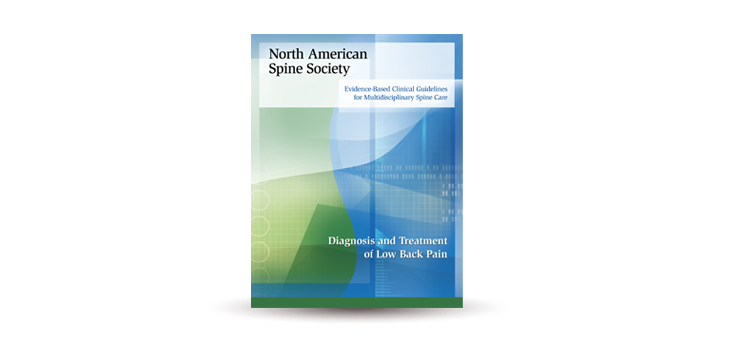
Based on 45,000 clinical studies, 82 clinical questions and 100 recommendation statements, this is the most comprehensive review of the diagnosis and treatment for low back pain ever assembled.
NASS Issues Massive Back Pain Treatment Review
2 min read Premium comments
Secondary#lowbackpain#evidencebasedguidelines
The remarkable effort and indispensable reference for spine and neurosurgeons was the collective effort of 11 physician societies dedicated to improving the diagnosis and treatment of low back pain.
According to North American Spine Society (NASS), “Compared to a typical NASS guideline with 400-600 literature search results and approximately 30 clinical questions, the Diagnosis and Treatment of Low Back Pain guideline resulted in over 45,000 literature search results and contains 82 clinical questions with over 100 recommendation statements.”
The new book is divided into seven sections:
- Diagnosis
- Imaging
- Medical and Psychological Treatment
- Physical Medicine and Rehabilitation
- Interventional Treatment
- Surgical Treatment
- Cost Utility
Each guideline recommendation earned a grade from the work group depending on the strength of the available scientific evidence:
A = Recommended
B = Suggested
C = May be Considered
I = Insufficient or Conflicting Evidence
NASS representatives put the book into context by saying, “This document does not represent a standard of care, nor is it intended as a fixed treatment protocol. It is based on a systematic review of the evidence and reflects treatment concepts for non-specific low back pain above the knee as found in the highest quality clinical literature available as of February 2016.”
Paul Matz, M.D., a neurosurgeon and co-chair of the Evidence-Based Guideline Development Committee said, “It’s important to understand the inclusion and exclusion criteria for this guideline in order to correctly interpret the recommendations. This guideline is focused on a subset of low back pain care as opposed to low back pain in its entirety.”
Asked about the challenges involved in developing the guideline, Scott Kreiner, M.D., a physiatrist and co-chair of NASS’ Evidence-Based Guideline Development Committee, and the NASS Research Council Director, told OTW, “The largest challenge was the breadth and volume of the literature that needed to be reviewed in order to make appropriate recommendations. This, along with the fact that the process was done entirely by volunteers of varying specialties, extended usual timeliness with guideline completion.”
Orthopedic surgeons will find this information helpful in the treatment of the back pain patients who show up in their office who aren’t clear surgical candidates. This guideline provides evidence-based recommendations for a spectrum of treatment options in patients with back pain.”
Author
React:
Discussion
This is a fascinating development. In my practice we've seen similar outcomes with the revised protocol. The key differentiator seems to be patient selection criteria. Has anyone else noticed the correlation with BMI thresholds?
Great point. I'd push back slightly on the conclusion, the sample size in the cited study is too small to draw population-level inferences. That said, the directional signal is compelling and worth a larger RCT.
We implemented a similar approach last year. Early results are promising but we're still gathering 12-month follow-up data. Happy to share our protocol if anyone is interested.
Join the conversation
Orthopedic professionals are discussing this. Sign in and upgrade to read every comment and add your voice.