
A new study successfully quashes the age-old myth that open hand injuries must be treated surgically within hours.
Myth Buster: Time to Hand Surgery Won’t Affect Infection Rate
1 min read Premium comments
#surgicalsiteinfectionSecondary#journalofhandsurgery#openhandinjury
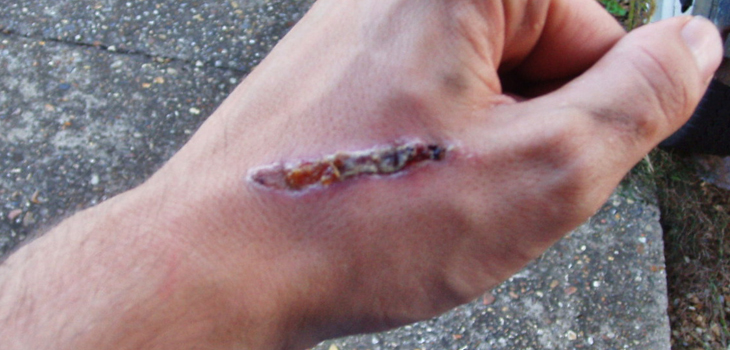
In “Time to Surgery for Open Hand Injuries and the Risk of Surgical Site Infection: A Prospective Multicenter Cohort Study,” published on February 17, 2020 in the Journal of Hand Surgery, Ryckie G. Wade, a hand surgeon with Leeds General Infirmary, Leeds Teaching Hospitals in the UK and colleagues found that the risk for surgical site infection was not affected by the time to surgery (adjusted RR 1.0 [95% CI: 1.0 to 1.0]) or preoperative antibiotics (adjusted RR 1.8 [95% CI: 0.2 to 13]), which 95% of patients received. However, skin loss did increase the risk of infection (adjusted RR 2.6 [95% CI: 1.3 to 5.0]).
Wade told OTW that delaying surgery for open hand injuries by four days does not appear to increase the risk of surgical site infection.
The prospective cohort study included 983 consecutive adults with open hand injuries that were treated surgically over a year. The type of surgical technique was not a factor in the analysis.
Wade said, “The cases included in this study were garden-variety hand injuries which are typically treated in similar ways. The recruiting centers are nearby and all us surgeons do things much the same way. The operative variability wasn’t measured but any differences are likely to be small (perhaps negligible) I believe. We have no evidence to suggest that operative techniques affect the risk of infection in hand surgery.”
On why skin loss did increase the risk of surgical site infection, he added, “The answer is probably multifactorial, and the mechanism has not been fully elucidated. We observe the same phenomenon throughout the body—where the skin is missing, the risk of infection is increased. The only way to mitigate the risk of infection from skin loss (so far as I see it) is to reconstruct the defect.”
Author
React:
Discussion
This is a fascinating development. In my practice we've seen similar outcomes with the revised protocol. The key differentiator seems to be patient selection criteria. Has anyone else noticed the correlation with BMI thresholds?
Great point. I'd push back slightly on the conclusion, the sample size in the cited study is too small to draw population-level inferences. That said, the directional signal is compelling and worth a larger RCT.
We implemented a similar approach last year. Early results are promising but we're still gathering 12-month follow-up data. Happy to share our protocol if anyone is interested.
Join the conversation
Orthopedic professionals are discussing this. Sign in and upgrade to read every comment and add your voice.