
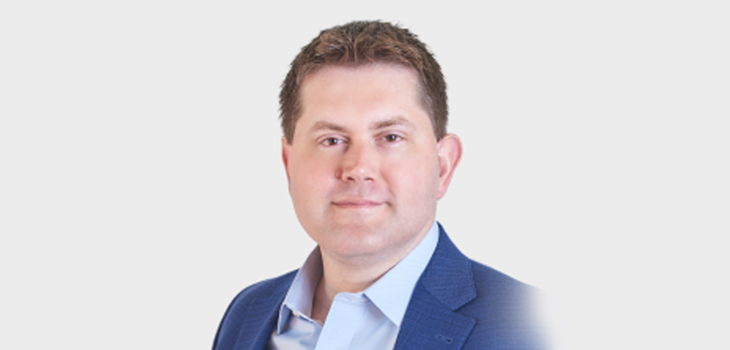
Luis Alvarez, Ph.D. represents a new generation of orthopedic CEOs—someone whose background and expectations are different from the leaders who emerged in the 1980s and 1990s.
Luis Alvarez, Ph.D.: The New Generation Orthopedic CEO
7 min read Premium comments
#theradaptive#bonerepair#tissueregeneration#growthfactors#luisalvarez
In some respects, he may be what orthopedics will look like in 10-15 years.
For one thing, he has more degrees than a protractor.
For another, he’s a decorated veteran of the Iraq war. Retired at the rank of Lieutenant Colonel. Bachelor’s in chemistry from West Point, MS in chemical engineering and Ph.D. in biological engineering from Massachusetts Institute of Technology (MIT).
A Hertz Foundation fellow at MIT.
Dr. Alvarez, the founder and CEO of a very interesting emerging growth company named “Theradaptive, Inc.,” is particularly well suited for a future centered around regenerative, precision and data driven medicine.
From Miami to MIT to Iraq and back to start one of orthopedics more interesting regenerative medicine companies (and capturing the interest of top researchers like Cleveland Clinic’s George Muschler) Dr. Alvarez’s journey is an incredible story.
The Boy From Miami
Alvarez’s father is from Spain, his mother fled Castro’s Regime in Cuba. His father ran a successful Miami construction company, building buildings and houses and his mother ran a successful family.
Alvarez’s interest in science started early and was fueled by, in his words, exceptional teachers from elementary school through middle school and then a co-ed Catholic school. Luckily, his high school offered an atypical level of science curriculum including two semesters of organic chemistry.
Miami wasn’t going to hold onto Alvarez. “I had early stirrings to leave Miami. I wanted to serve in the military and study science. That prompted me to seek out opportunities outside of Miami.”
From Miami, Alvarez earned a place at an institution founded in 1802 along the Hudson River in New York state.
Duty, Honor, Country
When Alvarez told OTW that he joined the Army to get an engineering education, it didn’t make immediate sense. Then he said two words. West Point.
Four years at the Military Academy. It’s hard. The Plebe Alvarez had his share of doubts and second thoughts. But West Point forges leaders while educating them with an Ivy-League caliber education.
Persevering in the face of incredible challenges paid off.
Shortly after graduating from The Point, Alvarez applied for and was granted a fellowship courtesy of the Hertz Foundation to continue his engineering education at the Massachusetts Institute of Technology (MIT).
Not many West Pointers ends up at MIT. Another who did also walked on the moon—Buzz Aldrin.
Alvarez spent two years at MIT. As he explained to OTW, due to Army time limits on graduate education he could “only” get a master’s degree in chemical engineering. After that, he returned to active U.S. Army duty for six years—an obligation he had incurred even though it did not come with a paid-up MIT tuition.
He served in armored and infantry units as an intelligence officer. He was stationed for a while in South Korea. Later he was assigned to Fort Hood, Texas, with the 1st Cavalry Division. And then he was deployed to Iraq. For his service, he was awarded a Combat Action Badge and the Bronze Star.
The Crucible of Iraq
Service in Iraq profoundly affected Alvarez. He returned stateside with a new career perspective and purpose. “When I got back, after seeing the injuries that our soldiers were suffering during the conflict and after they came back, the delayed amputations, I decided to change my career track from military intelligence to research and development.”
To make these changes, he filled out and sent to his superiors in the Army a one-page form with the following outrageous requests.
“Reassign me to graduate school so that I can return to MIT to complete a Ph.D. in biological engineering. Change my branch from Military Intelligence to Acquisition / R&D. After MIT assign me to Natick Army Labs.”
The Army laughed.
Alvarez’s back up plan was to appeal to his commanding officer, then Colonel Stephen Lanza, who, it turned out, had served as his commander in Iraq.
Colonel Lanza said, “give me ten minutes.”
One phone call later, Alvarez had his new assignment.
The rest, we think, will be history. Orthopedic history.
Return to MIT
Back at MIT, Alvarez earned a Ph.D. In biological engineering.
As a side project, he worked with a team of engineers to develop a “blast sensor.” This device consists of two sensors measuring pressure and acceleration. The pressure sensor measures the force of the blast and the accelerometer measures how much your head is jostled around. These measurements indicate whether a threshold has been crossed and if there’s a likelihood of concussion. “Almost like a dosimeter for blasts instead of radiation.” The sensor which is half the size of a deck of cards, is “velcroed” into the helmet of the soldier.
After MIT he was assigned to Natick Army Labs. He worked in the “human performance group,” researching on human subjects. Then on to Fort Detrick. Here he served as a program officer for pharmaceutical programs for “chem bio-defense.” Then he worked for the regenerative medicine program at the Department of Defense (DOD).
Forged in War
Arguably, modern orthopedics was forged in World War II as that generation of surgeons, led by Charnley, Kuntscher, Insall, Harrington and Urist laid the foundation for today’s surgical treatment of musculoskeletal disorders.
There is little doubt that 19 years of war in the Middle East has influenced post-2000 orthopedic science.
While serving in Iraq, Alvarez was involved in a very difficult situation when his HMMWV (Humvee) as hit by an IED attack. While most of his comrades were protected by the armour and safety glass, the gunner was not.
“We were driving in southern Baghdad. The video I was filming showed two men who hid behind a pedestrian overpass a few seconds before the blast.”
“The bomb was composed of several artillery shells hidden in a car parked on the side of the road. As we drove by it was detonated by remote control. It destroyed the HMMWV and injured our gunner who was exposed through the top of the vehicle. He suffered severe injuries.”
“We stabilized him with first aid and waited on the side of the road for a MEDEVAC. There was no MEDEVAC available, but an Iraqi ambulance came to offer a ride to the combat support hospital in central Baghdad. We did not know if this was a legitimate ambulance or part of an ambush but I decided to go in the ambulance with the injured gunner and I asked our armed medic to come as well in case we would have to fight our way out of a bad situation or continue tending to our injured gunner.”
“After several tense minutes, we arrived at the combat support hospital and military physicians quickly stabilized him.”
“That experience and several others like it crystallized in my mind the need to devote the rest of my career to figuring out how to restore injured service members to their pre-injury state.”
Theradaptive
As part of his Ph.D. research, Alvarez tackled a project to tether biological proteins to synthetic materials without relying on chemical methods. His idea was to improve the precision of tissue regeneration with targeted biologic retention that permitted persistent local presentation of bioactivity. In his view, this was exactly what is needed for controlled tissue repair.
Alvarez retired from the U.S. Army as a Lieutenant Colonel.
He then licensed his Ph.D. tissue repair research from MIT and founded Theradaptive.
Theradaptive became an official company in 2017.
The Department of Defense provided initial funding. More DOD contracts followed. So far, Theradaptive has won $9 million in DOD grants and contracts and $600,00 in grants from the State of Maryland.
Theradaptive is based in Fredrick, Maryland, and has extended its platform technology to create variants of recombinant proteins that can coat implants and make them bioactive. The coating process is very simple to apply, similar to a paint, and, critically, can be targeted to precise locations. This addresses the challenge with current recombinant biologics that cannot be targeted to specific locations in the body.
Theradaptive has completed large-animal testing of several bone repair and spinal fusion products and has beaten the standard of care in every study they have conducted thus far. Their first product will enter clinical trials in 18 months.
Of course, Theradaptive has a pipeline of device-binding therapeutics for various indications. These include:
- Long bone repair
- Spinal fusion
- Osteochondral repair
- Dental & facial bone repair
- Soft tissue repair
- Targeted oncology
Indeed, this technology could be a game changer in any situation where tissue regeneration is needed. For example, to save limbs that would otherwise be amputated.
Before moving to Boston Dr Alvarez taught biochemistry and molecular cell biology, at West Point, to mostly pre-grad medical students.
When asked why he didn’t take the easy route and work for his father he said “If I had followed in my father’s footsteps, I would be sipping cool drinks on a beach right now. That would not be any fun, now would it?”
Hmmm…
Asked about his educational ordeal he said, “Next time I will have the good sense to drop out of high school and sail around the world.”
We see a pattern emerging.
For a man who served in Iraq, met the challenges of West Point and MIT, he’s well-grounded and, yes, humble. He constantly stresses teamwork “after all they have to sweat it too.”
The future of orthopedics is in good hands.
React:
Discussion
This is a fascinating development. In my practice we've seen similar outcomes with the revised protocol. The key differentiator seems to be patient selection criteria. Has anyone else noticed the correlation with BMI thresholds?
Great point. I'd push back slightly on the conclusion, the sample size in the cited study is too small to draw population-level inferences. That said, the directional signal is compelling and worth a larger RCT.
We implemented a similar approach last year. Early results are promising but we're still gathering 12-month follow-up data. Happy to share our protocol if anyone is interested.
Join the conversation
Orthopedic professionals are discussing this. Sign in and upgrade to read every comment and add your voice.