
Bamboo as a bone substitute?
Bamboo Bone Graft Receives CE Mark
1 min read Premium comments
Secondary#bonegraft#bamboobonegraft#greenboneortho
It may not be as far-fetched as it sounds if you’ve ever seen bamboo grow out of control.
On January 30, 2020, Italy-based GreenBone Ortho srl announced approval under the CE Mark for its GreenBone Substitute bone graft. Bone grafts can be autologous (bone harvested from the patient’s own body, often from the iliac crest), allograft (cadaveric bone usually obtained from a bone bank), or synthetic (often made of hydroxyapatite or other naturally occurring and biocompatible substances).
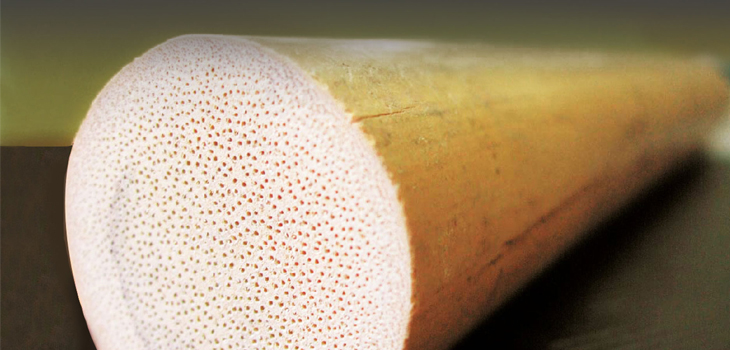
GreenBone’s graft, according to the company, is a “nature-inspired biomimetic graft mimicking the chemical composition (not-sintered calcium phosphate phases) and the 3D porous architecture of natural bone.” The product is derived from biomorphic transformation of rattan wood, and “is endowed with osseointegration, osteoconduction and osteoinduction properties as needed for an effective and physiological healing also of large bone damages.”
A YouTube video shows a piece of wood being heated in a special oven for eight hours until it becomes charcoal. The carbon-based charcoal is then turned into a calcium-based product through a nanotechnology process.
The product offers physicians and patients a new solution to avoid surgical and postoperative complications from the surgical process of harvesting a patient’s own bone graft. Company CEO Lorenzo Pradella said he believe GreenBone bone substitute will become “a most useful, cost-effective bone reconstructive solution.”
The company’s website states that preclinical studies “confirmed biocompatibility and safety of GreenBone scaffold material in conformity to ISO10993 Standards Series for long term implants. Robust evidence of safety and new bone formation has been achieved in a sheep study with large bone loss in load bearing bone.”
Two multinational first-in-man pre-market clinical studies in patients with non-loaded (iliac crest) and load-bearing long bone (extremities) defect (2cm plus) are ongoing to meet requirements of European medical device regulators.
The company, founded in 2014 to develop and market a “new generation of 3D bone substitutes inspired by nature,” said future developments will be in spinal surgery and other skeleton defects and diseases.
Author
React:
Discussion
This is a fascinating development. In my practice we've seen similar outcomes with the revised protocol. The key differentiator seems to be patient selection criteria. Has anyone else noticed the correlation with BMI thresholds?
Great point. I'd push back slightly on the conclusion, the sample size in the cited study is too small to draw population-level inferences. That said, the directional signal is compelling and worth a larger RCT.
We implemented a similar approach last year. Early results are promising but we're still gathering 12-month follow-up data. Happy to share our protocol if anyone is interested.
Join the conversation
Orthopedic professionals are discussing this. Sign in and upgrade to read every comment and add your voice.