
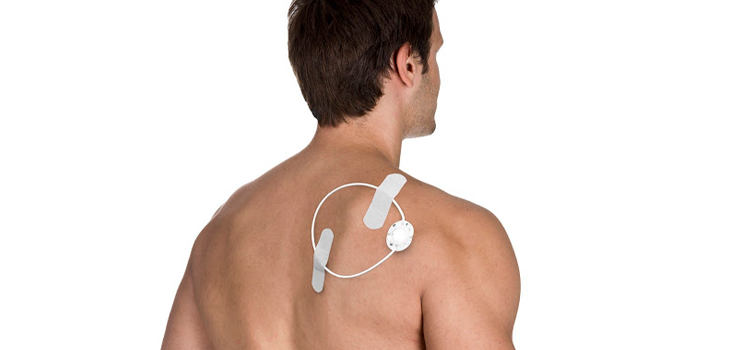
In 2017, the FDA 510(k) cleared BioElectronics Corporation’s ActiPatch, a drug-free therapy for over-the-counter (OTC) treatment of knee osteoarthritis (OA) and heel pain. On February 3, 2020, the company announced additional FDA clearance for “adjunctive treatment of musculoskeletal pain,” including pain in the back, knees, wrists, hips, elbows and ankles. In the company’s words, the clearance expands these indications to cover “all musculoskeletal pain complaints.”
ActiPatch Now Cleared for “All” Musculoskeletal Pain
2 min read Premium comments
#fda510kclearanceSecondary#bioelectronics#jointpain
It took the agency a little over five months to clear the additional indications.
ActiPatch
The device, according to the clearance document, is a pulsed shortwave therapy device. “The circuitry consists of low voltage(3V) digital/analog electronics that control all timing functions to produce the therapeutic radiofrequency(RF) field, where the antenna is placed directly above the therapeutic site. This closed loop system of the antenna, low energy signal generator circuit, and battery power supply, transfers the RF energy to the target tissue as a localized therapy with no far field effects.”
Again, according to the clearance document, the device operates at 27.12MHz shortwave frequency, pulsing at a 1000 pulses per second with a pulse width of 100μsecs. The duty cycle is therefore 10%. The power source is a 3Vbatter (CR2032), producing a peak spatial power density of 73 microWatts/cm2.
For the original clearance, the company’s website cited a clinical study published on December 24, 2015 by Rheumatology (“Pulsed electromagnetic fields in knee osteoarthritis: a double blind, placebo-controlled, randomized clinical trial”). The study tested the effectiveness of a wearable pulsed electromagnetic fields (PEMF) device in the management of pain in knee OA patients.
Sixty-six patients were included, and 60 completed the study. After one month, according to the company, “PEMF induced a significant reduction in VAS (Visual Analog Scale) pain and WOMAC (Western Ontario and McMaster Universities Osteoarthritis Index) scores compared with placebo. Additionally, pain tolerance, as expressed by PPT changes, and physical health improved in PEMF-treated patients. A mean treatment effect of -0.73 (95% CI – 1.24 to – 0.19) was seen in VAS score, while the effect size was -0.34 (95% CI – 0.85 to 0.17) for WOMAC score. Twenty-six per cent of patients in the PEMF group stopped NSAID/analgesic therapy. No adverse events were detected.”
The company is not shy about touting the benefits.
The company website states the patch provides “advanced long-lasting chronic pain relief” and “works great for back pain, knee pain, muscle & joint pain, arthritis, sciatica, fibromyalgia, strains, sprains and more.” The company claims the patch is “safe for continuous use” and can be used while taking any other medication. Unlike a TENS machine, “you will not feel heat or vibration. In fact, ActiPatch® is completely sensation free, so the only thing you are going to feel is better.”
In addition to the ActiPatch, the company also offers the RecoveryRx devices for chronic and post-operative wound care and Allay Menstrual Pain Therapy.
Author
React:
Discussion
This is a fascinating development. In my practice we've seen similar outcomes with the revised protocol. The key differentiator seems to be patient selection criteria. Has anyone else noticed the correlation with BMI thresholds?
Great point. I'd push back slightly on the conclusion, the sample size in the cited study is too small to draw population-level inferences. That said, the directional signal is compelling and worth a larger RCT.
We implemented a similar approach last year. Early results are promising but we're still gathering 12-month follow-up data. Happy to share our protocol if anyone is interested.
Join the conversation
Orthopedic professionals are discussing this. Sign in and upgrade to read every comment and add your voice.