
Researchers from Mayo Clinic have examined 4,555 primary non-cemented total hip arthroplasties (THAs) in order to more precisely define the failure etiologies of such procedures.
Mayo Study: Mitigate Failures at Time of Primary THA
1 min read Premium comments
#totalhiparthroplastySecondary#periprostheticfractures#asepticloosening
Their work, “What Are the Contemporary Etiologies for Revision Surgery and Revision After Primary, Non-cemented Total Hip Arthroplasty?” appears in the December 15, 2019 edition of the Journal of the American Academy of Orthopaedic Surgeons.
The authors analyzed 4,555 primary, non-cemented THAs which were performed by subspecialty trained arthroplasty surgeons at the Mayo Clinic between 2000 and 2012. The authors only included revision surgeries and revisions that occurred after THAs were initially performed at Mayo.
Co-author Matthew Abdel, M.D., professor of orthopedic surgery at the Mayo Clinic College of Medicine, explained the objective of the study to OTW, “Despite the proven success of primary total hip arthroplasty (THA), revision THA is growing. As such, it is essential to understand contemporary failure etiologies.”
“Unfortunately, most epidemiologic data in this arena are flawed given that it includes the bias of a particular referral practice. As such, we investigated the epidemiology of contemporary primary THA failures as defined by those requiring revisions with all index arthroplasties performed at The Mayo Clinic (Rochester, Minnesota) by adult reconstruction specialists.”
“We found that the two most common reasons for any reoperation were wound healing issues and periprosthetic fractures, whereas the most common reasons for revision of at least one modular component were hip instability and PJI [periprosthetic joint infection].”
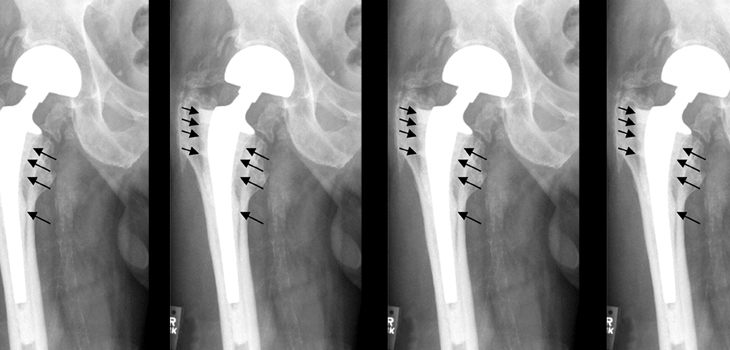
“The most common reasons for revising at least one non-modular component revised were periprosthetic fracture and aseptic loosening. As such, surgeons should focus on strategies to mitigate these failure mechanisms at the time of index primary THA.”
Author
React:
Discussion
This is a fascinating development. In my practice we've seen similar outcomes with the revised protocol. The key differentiator seems to be patient selection criteria. Has anyone else noticed the correlation with BMI thresholds?
Great point. I'd push back slightly on the conclusion, the sample size in the cited study is too small to draw population-level inferences. That said, the directional signal is compelling and worth a larger RCT.
We implemented a similar approach last year. Early results are promising but we're still gathering 12-month follow-up data. Happy to share our protocol if anyone is interested.
Join the conversation
Orthopedic professionals are discussing this. Sign in and upgrade to read every comment and add your voice.